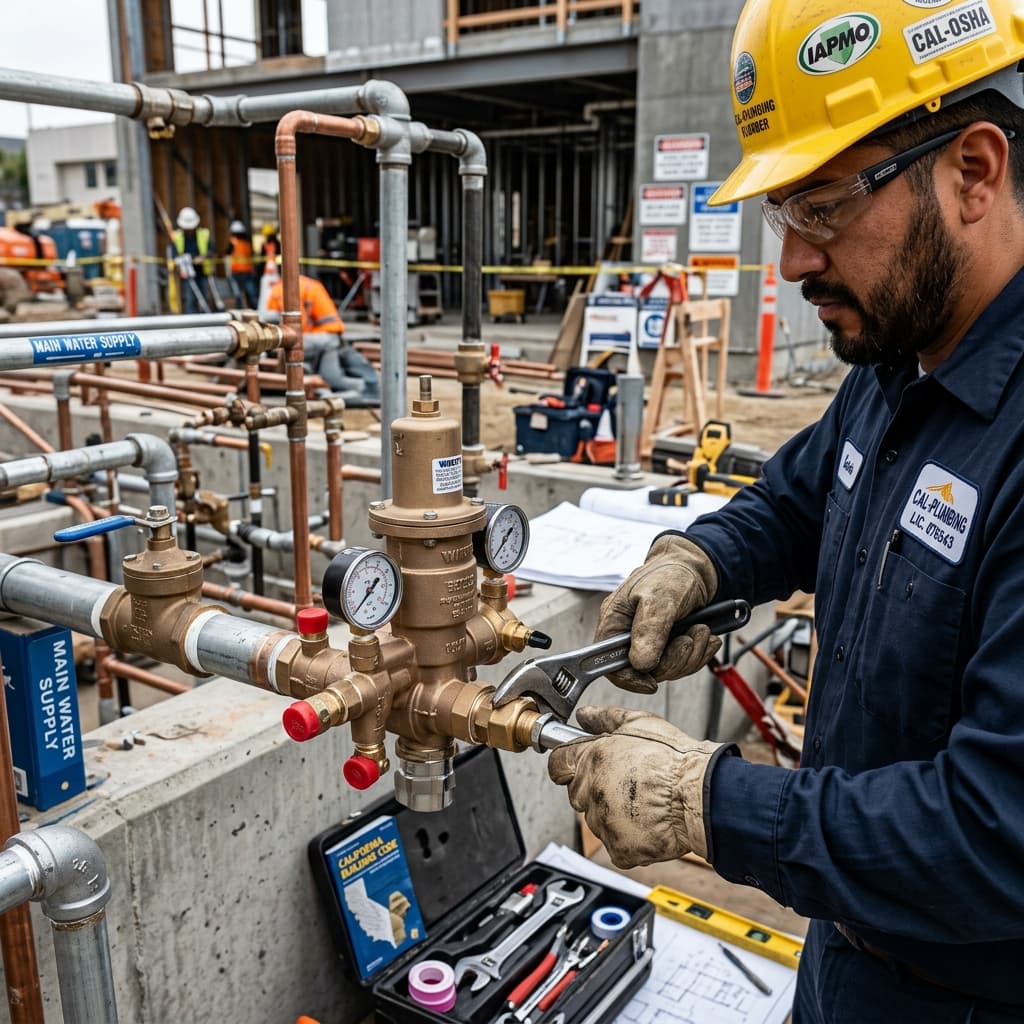

# Water Supply System Design: Pressure Regulation and Backflow Prevention for C-36 Exam Success
Water supply system design california standards form the backbone of safe plumbing installations. As a C-36 plumbing exam candidate, understanding pressure regulation and backflow prevention isn't just about passing the test—it's about protecting public health and preventing contamination of drinking water supplies. This comprehensive guide covers the essential concepts you need to master Part 4 of the California plumbing exam.
Understanding Water Supply System Design Fundamentals
What Defines a Complete Water Supply System?
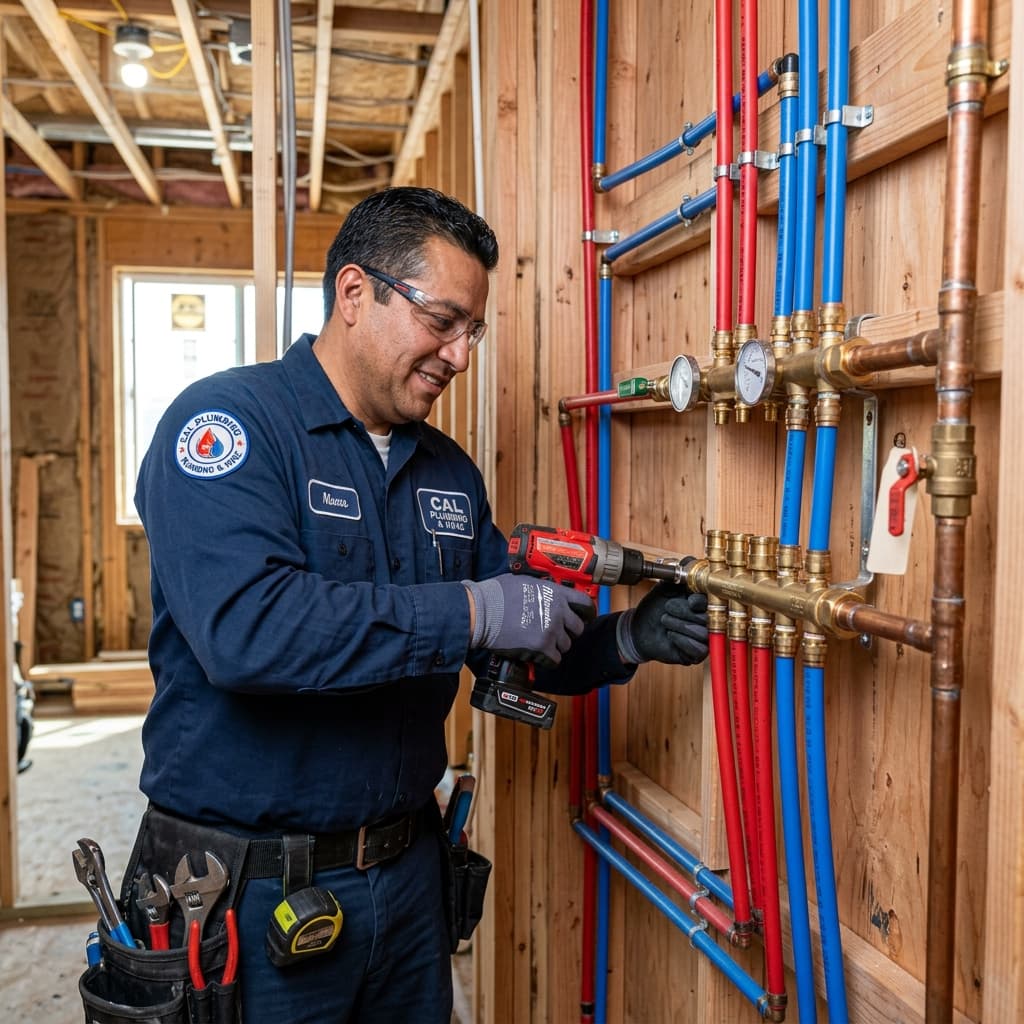
A properly designed water supply system must deliver potable water safely and efficiently while preventing any possibility of contamination. According to the California Plumbing Code, every water supply system must include:
- A source of supply (public main or private well)
- A delivery system with appropriate sizing
- Backflow prevention devices where required
- Pressure regulation equipment
- Shut-off valves and access points
- Testing and inspection provisions
Key System Components You'll See on the Exam
Water Meter: Measures consumption and serves as a point of connection from the public main. Main Shut-off Valve: Required within 18 inches of where the water supply enters the building (CPC Section 609.1). Check Valves: Prevent reverse flow in specific applications. Pressure Reducing Valves: Limit excessive incoming pressure. Backflow Prevention Devices: The most heavily tested component on the C-36 exam.Pressure Regulation: Meeting California Plumbing Code Requirements
Minimum and Maximum Pressure Standards
Understanding pressure regulation plumbing code requirements is critical for C-36 exam success. The California Plumbing Code establishes specific pressure parameters:
Minimum Pressure (CPC Section 604.5):- 20 psi (pounds per square inch) to any fixture
- 35 psi minimum to satisfy water closets and urinals
- Pressure must be maintained at the most remote fixture
- 80 psi at the meter or point of connection
- If street pressure exceeds 80 psi, a pressure reducing valve is mandatory
- Failure to install pressure reduction when required is a code violation
When Pressure Reducing Valves Are Required
Your exam will test scenarios where you must identify when pressure regulation is necessary. Installation is mandatory when:
- Incoming street pressure exceeds 80 psi—even occasionally, a reducing valve must be installed
- System serves solar collectors or alternative water sources with variable pressure
- Mixed use buildings with basement connections and high-rise service
- Booster pump systems installed after initial supply connection
How Pressure Reducing Valves Function
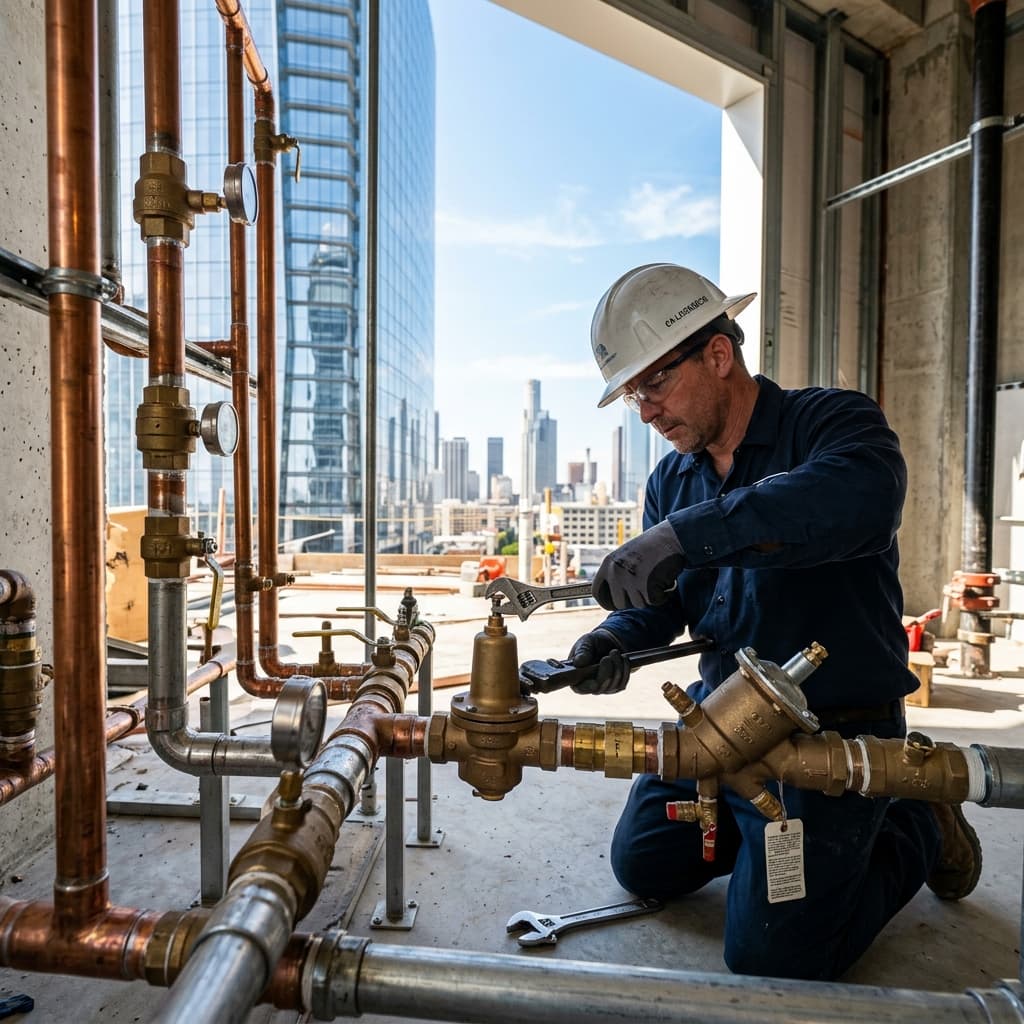
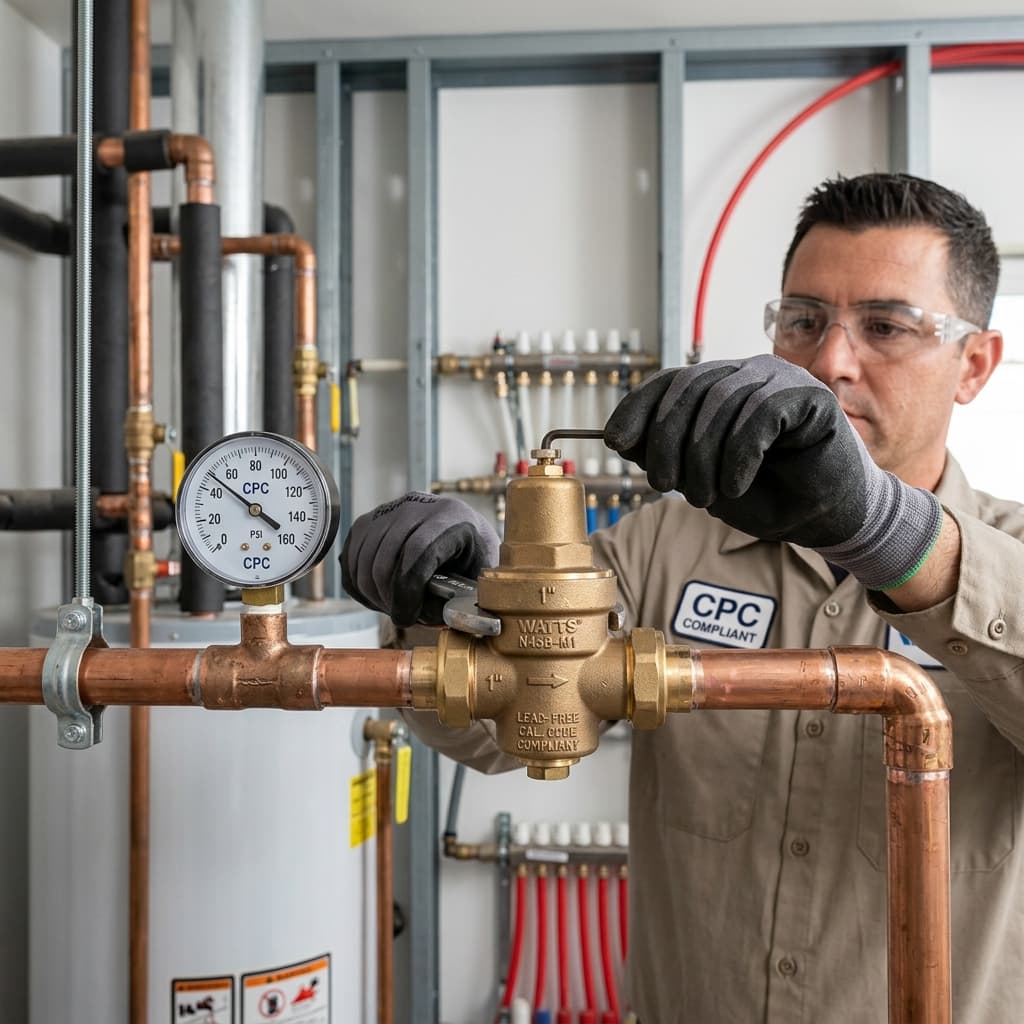
A pressure reducing valve automatically closes internal ports when downstream pressure reaches the set point (typically 50-75 psi). The valve:
- Senses pressure on the outlet side
- Reduces inlet pressure proportionally
- Maintains consistent downstream pressure
- Opens to full flow when demand increases
- Closes when pressure reaches setpoint
Pressure Regulation and Backflow Prevention Interaction
One critical concept often tested: A pressure reducing valve does NOT serve as a backflow prevention device. Many candidates mistakenly believe pressure reduction eliminates contamination risk. This is false. A separate backflow prevention device must be installed regardless of pressure regulation.Backflow Prevention Requirements: The Core CPC Standards
Understanding Backflow and Backpressure
Backflow occurs when non-potable water or contaminants flow backward into the potable water supply. Two mechanisms create backflow: 1. Backsiphonage: A drop in supply line pressure creates a vacuum that pulls contaminated water backward. Example: A water main break upstream. 2. Backpressure: Higher pressure in a secondary system pushes contaminated water into the primary supply. Example: A boiler connected to supply line with no check valve.Backflow Prevention Requirements CPC: The Three Tiers
The California Plumbing Code establishes a hierarchy of backflow prevention based on contamination risk:
#### Tier 1: Air Gap (Maximum Protection)
An air gap is physical separation between the highest water level in a receiving vessel and the outlet of the supply pipe. Minimum distance per CPC Section 608.1:- 2 times the supply pipe diameter
- Minimum 1 inch
- Maximum 2 inches for most applications
- Fixture supplied by hose (CPC Section 608.13.2)
- Indirect waste receptors (sinks in commercial kitchens)
- Laboratory sinks and clinical facilities
- Equipment with immersion risk
#### Tier 2: Reduced Pressure Principle Device (RPP or RPPD)
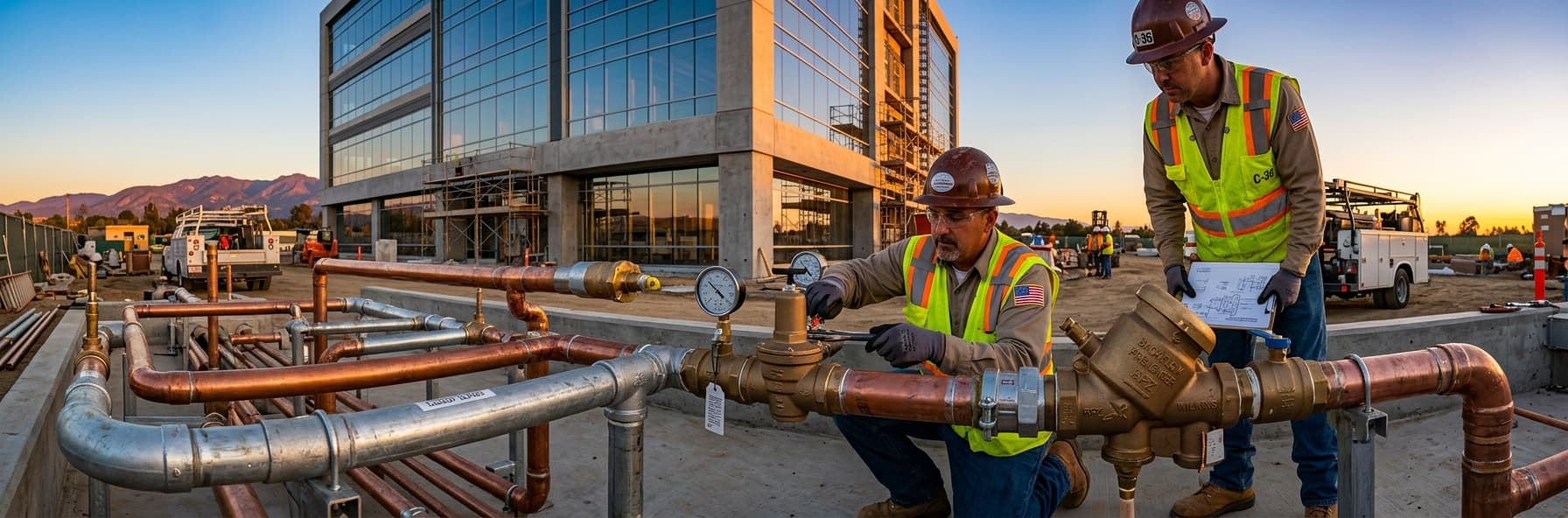
The reduced pressure principle device provides the highest level of mechanical backflow prevention without air gaps. Per CPC Section 608.2:
Components:- First check valve (closest to supply)
- Pressure relief valve
- Second check valve (at outlet)
- Test cocks on each end
- Drain port
The middle relief valve is the critical feature. It maintains supply-side pressure approximately 2 psi higher than the outlet side. If contaminated water attempts to backflow:
- Second check valve closes
- Relief valve opens and drains contaminated water to waste
- System remains protected
- Where there is unprotected cross-connection
- High-hazard applications (chemical storage areas)
- Laboratory and medical facilities
- Irrigation systems with pesticide injection
- Boiler systems
- Processes with contamination potential
- Accessible test cocks for inspection
- A drain valve directed to waste
- Check valves (gate valves are not acceptable)
- Ball valves upstream and downstream
- Proper clearance for testing
Double check valve assemblies provide moderate protection and are permitted in low-hazard situations:
Components:- Two independent check valves in series
- Test cocks between and downstream of valves
- Shutoff valves upstream and downstream
- Booster pump outlets (not boiler systems)
- Irrigation systems without chemical injection
- Fire suppression systems
- Low-hazard service lines
Cross-Connections: The Primary Contamination Risk
Identifying Cross-Connections
A cross-connection exists when a non-potable source connects, either directly or indirectly, to a potable supply. Common scenarios on the exam:
Direct Cross-Connections (Most Hazardous):- Garden hose submerged in a pool or bucket
- Boiler supply line connected without check valve
- Pesticide injection system connected to irrigation supply
- Toilet supply line connected below water surface
- Equipment drain connected to potable supply
- Sump pump discharge line positioned over a sink
- Condensate line from HVAC draining into waste pipe that's not sealed
Three Steps to Prevent Cross-Connections
- Eliminate the cross-connection (ideal solution—disconnect incompatible systems)
- Install appropriate backflow prevention (air gap or mechanical device)
- Label and test annually (maintenance requirement per CPC Section 608.12)
Backflow Prevention Installation and Testing Requirements
Proper Installation Standards (CPC Section 608.1)
Backflow prevention devices must be:
- Installed in an accessible location with adequate clearance for maintenance
- Protected from freezing temperatures
- Installed with shutoff valves on both inlet and outlet sides
- Installed with drain valve directed to waste (for RPP devices)
- Tagged with permanent identification of device type
Annual Testing Requirements (CPC Section 608.12)
Who can test backflow devices?- Certified backflow prevention assembly tester
- Plumber holding a valid C-36 license or higher
- Reduced pressure principle devices: Annually required
- Double check valve assemblies: Annually required (some jurisdictions allow 3 years)
- Air gaps: Visual inspection only
- First check valve operation
- Second check valve operation
- Relief valve functionality (RPPD only)
- Proper seating of all components
- No leakage at test cocks
Practical Exam Scenarios You'll Encounter
Scenario 1: High-Rise Building with Municipal Supply
Situation: A 15-story office building in Los Angeles receives water from the city main at 95 psi. Water closets on the upper floors occasionally surge. Your Tasks:- Identify the pressure problem: 95 psi exceeds 80 psi maximum
- Specify the solution: Pressure reducing valve installed at point of entry (CPC Section 604.4)
- Set pressure: Typically 50-75 psi for mixed use buildings
- Backflow protection: Install separate backflow prevention device (pressure reducer doesn't prevent backflow)
Scenario 2: Restaurant with Three-Compartment Sink
Situation: A commercial kitchen receives a new three-compartment sink with a hose supply. Your Tasks:- Identify contamination hazard: Immersion risk—hose could be submerged
- Specify backflow prevention: Air gap required (CPC Section 608.1)
- Determine air gap distance: 2 times pipe diameter, minimum 1 inch
- Installation location: Above the flood rim of the sink
Scenario 3: Building with Boiler System
Situation: A commercial building's boiler system requires water supply for operation. Your Tasks:- Identify hazardous contamination: Boiler contains treated water and additives—high hazard
- Specify backflow prevention: Reduced pressure principle device required (CPC Section 608.1)
- Installation requirements: RPPD with test cocks, drain valve, and shut-off valves
- Maintenance requirement: Annual testing by certified tester
Study Tips for Backflow Prevention Questions
Memory Aid: "HAD-DCR"- Hazardous applications → need RPPD or air gap
- Air gap → highest protection, no mechanical parts
- Double check → lower protection, low-hazard only
- Direct cross-connections → most dangerous
- Certified testing → annual required
- Relief valve → distinguishes RPPD from DCVA
Common Exam Mistakes to Avoid
- Assuming pressure reduction prevents contamination - It doesn't; you need a separate backflow device
- Using DCVA for hazardous applications - Only RPPD or air gaps work for high-hazard situations
- Forgetting test cocks - All mechanical devices must have test cocks for annual testing
- Neglecting drain valves - RPPD devices must drain to waste, not back to the system
- Incorrect air gap measurements - Remember: 2× pipe diameter or 1 inch minimum
Key CPC Code Sections for Your Study Guide
- CPC Section 604.4: Maximum water pressure (80 psi)
- CPC Section 604.5: Minimum water pressure (20 psi to fixtures, 35 psi to water closets)
- CPC Section 608.1: Backflow prevention requirements and device selection
- CPC Section 608.2: Reduced pressure principle device standards
- CPC Section 609.1: Main shut-off valve location (within 18 inches of entry)
- CPC Section 608.12: Testing requirements for backflow devices
Conclusion: Mastering Water Supply System Design for C-36 Success
Water supply system design, pressure regulation, and backflow prevention represent foundational knowledge that separates passing candidates from failing ones. The California Plumbing Code establishes clear requirements because the consequences of failure—contaminated drinking water affecting entire communities—are severe.
Your success on the C-36 exam requires understanding not just the "what" but the "why" behind pressure and backflow requirements. When you see a question about water supply design, think through the contamination risk first, then match the appropriate CPC solution.
Practice identifying scenarios where each device applies: air gaps for immersion risks, RPPD for high-hazard cross-connections, DCVA for low-hazard booster systems, and pressure reduction for municipal supplies exceeding 80 psi.
Review CPC Sections 604, 608, and 609 repeatedly. Take practice exams that focus specifically on pressure and backflow scenarios. The effort invested now will translate directly to C-36 exam success and competent work protecting California's water supply.
---
Ready to test your knowledge? Review the practical scenarios presented above and identify the correct backflow prevention device and installation requirements for each situation before checking the answers provided.