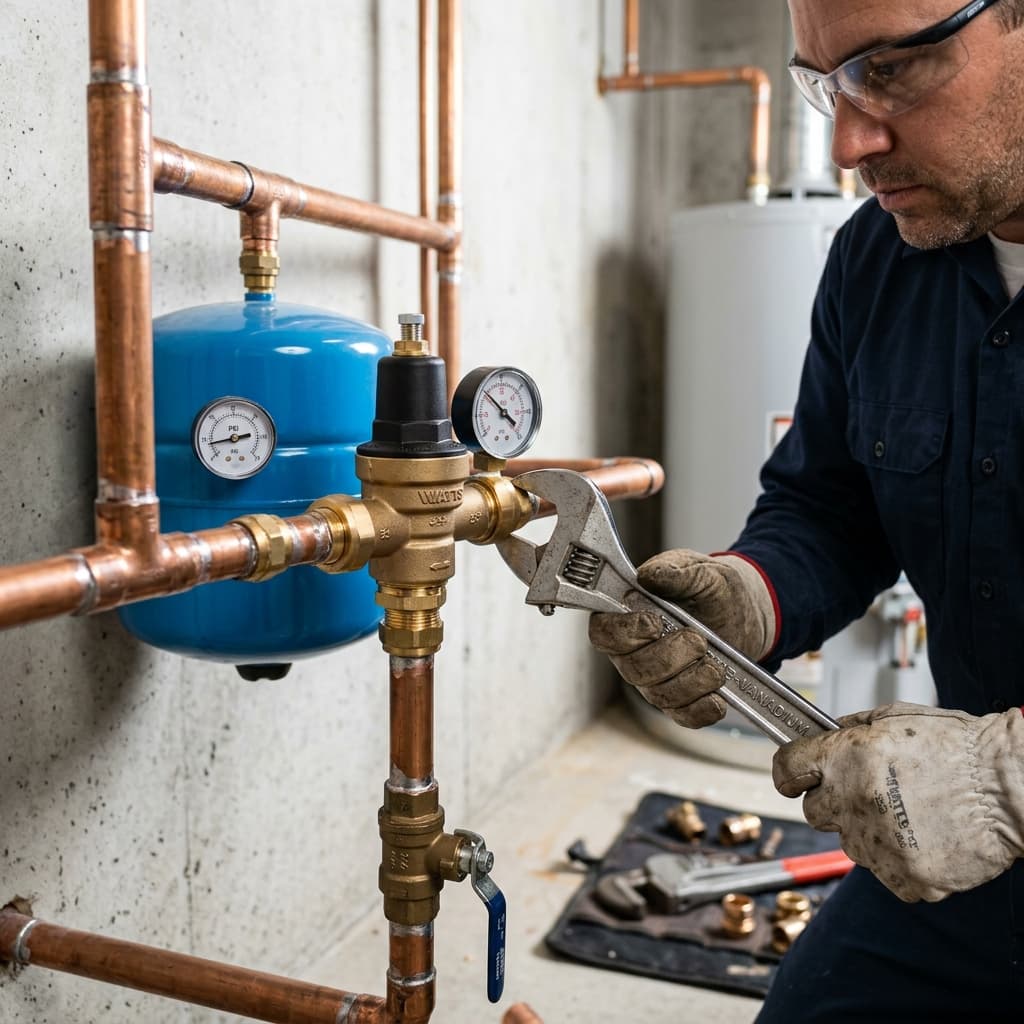

# Water Supply Pressure Regulation: CPC Section 422 Compliance for C-36 Exam
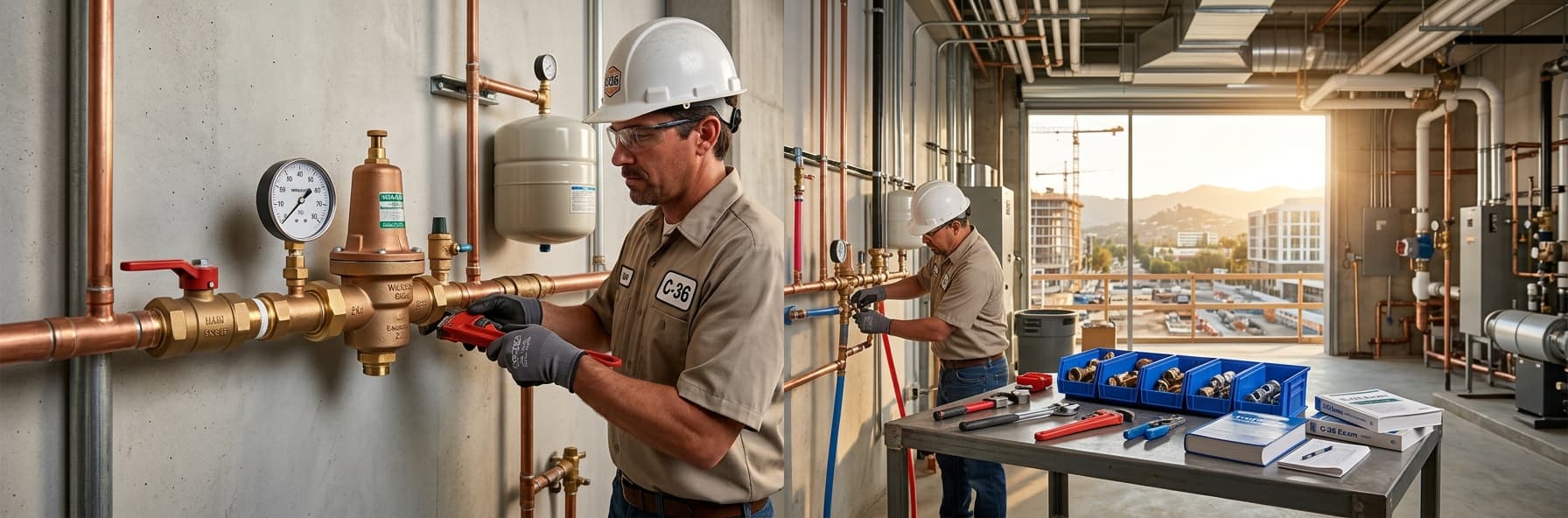
Water supply pressure regulation california plumbing code requirements are essential knowledge for any professional preparing for the C-36 plumbing contractor exam. The California Plumbing Code's Section 422 establishes mandatory requirements for controlling water supply pressure to protect residential and commercial plumbing systems. This comprehensive guide walks you through every aspect of pressure-reducing valve installation and water supply system design pressure compliance.
Understanding CPC Section 422: The Foundation
CPC Section 422 addresses the critical necessity of regulating water pressure entering building supply systems. This section directly supports the broader water supply and distribution requirements covered in Part 5 of the C-36 exam.
Why Pressure Regulation Matters
Water pressure entering a building can vary dramatically based on municipal supply conditions, elevation changes, and demand fluctuations. Without proper regulation:
- Fixture Damage: High-pressure water stresses faucets, valves, and connections
- Accelerated Wear: Seals deteriorate faster under excessive pressure
- Noise and Vibration: Water hammer effects damage piping infrastructure
- Leaks and Failures: Connections fail prematurely when pressurized beyond design limits
- Appliance Failure: Water heaters and washing machines have specific pressure ratings
CPC Section 422.1: Pressure-Reducing Valve Requirements
CPC Section 422.1 establishes the primary requirement: When water supply pressure exceeds 80 pounds per square inch (psi), a pressure-reducing valve (PRV) must be installed at the point of entry to the building.Key Pressure Thresholds
The 80 psi threshold is critical for exam purposes:
- Below 80 psi: PRV installation is optional but recommended
- At or above 80 psi: PRV installation is mandatory
- Recommended operating range: 50-75 psi for optimal fixture performance
Design Pressure Ratings
Understanding design pressure ratings prevents specification errors:
- Standard fixtures: Rated for 80 psi maximum
- Water heaters: Typically 150 psi maximum
- Supply lines: Often rated for 100-150 psi
- Faucets and valves: Usually 80-125 psi
Pressure-Reducing Valve Installation CPC Requirements
The California Plumbing Code provides specific installation requirements for pressure-reducing valves to ensure effectiveness and compliance.
Location Requirements (CPC Section 422.1)
Primary Location Mandate:- Install PRVs at the main point of water service entry
- Must be installed on the building side of the water meter (where applicable)
- Positioned before any branch or distribution lines
Installation Direction and Flow
PRVs have specific directional requirements:
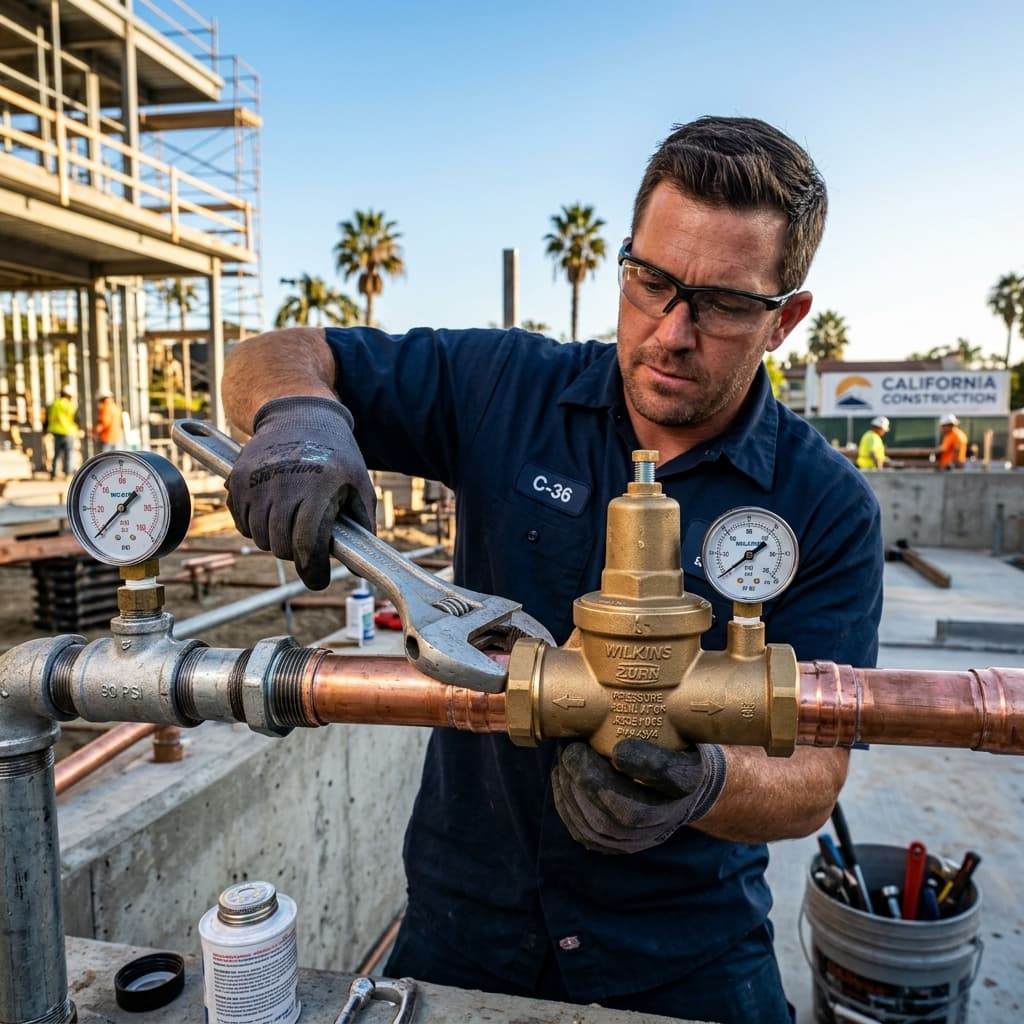
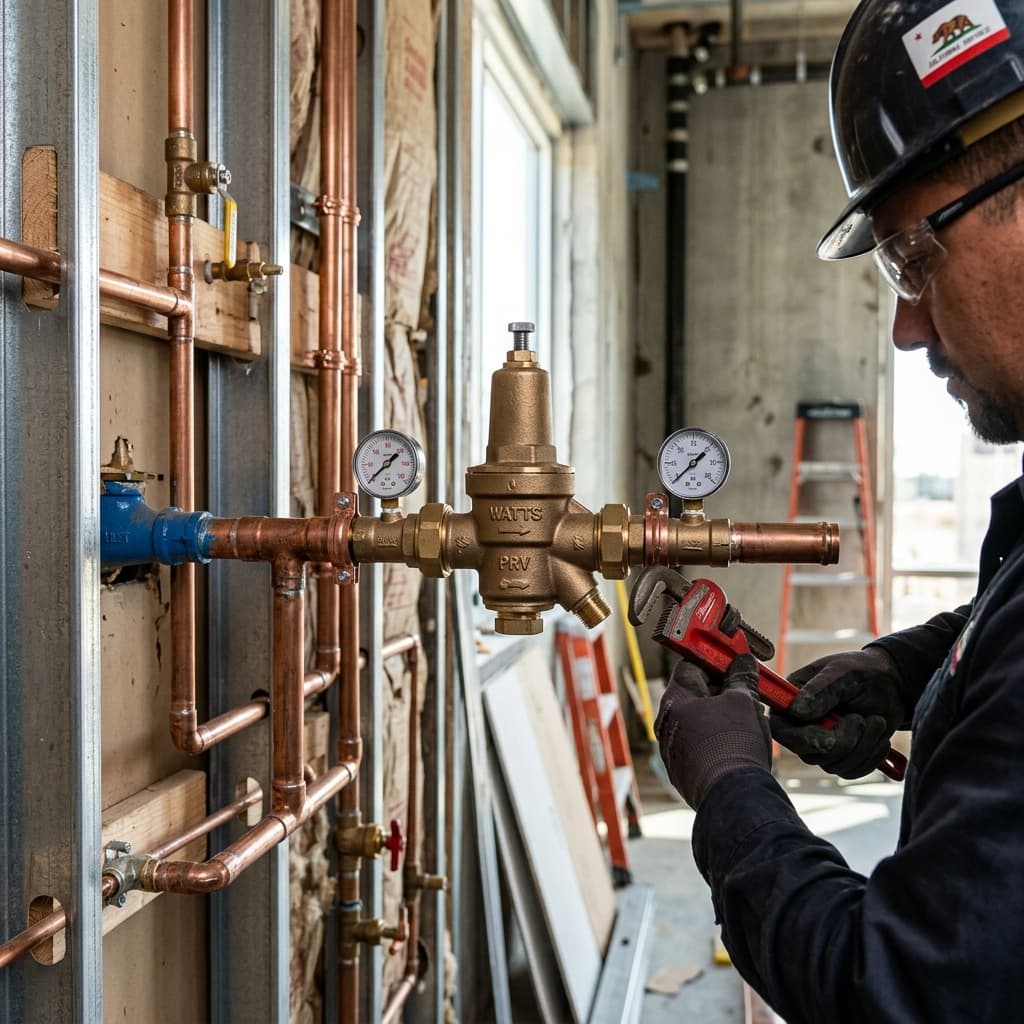
- Flow arrow: Must be installed in the direction of water flow (clearly marked on valve body)
- Orientation: Follow manufacturer specifications for horizontal or vertical mounting
- Accessibility: Install in accessible locations for maintenance and adjustment
- Support: Provide adequate pipe support to prevent stress on valve connections
Connection Requirements
Proper connection installation is essential for CPC compliance:
- Threaded or soldered connections: Must meet CPC Section 605 standards for joining
- No unions at inlet: Prevents accidental valve separation
- Strainer installation: A strainer must precede the PRV to protect internal mechanisms
- Outlet line: Must be appropriately sized and pitched for drainage
Pressure Gauges and Monitoring (CPC Section 422.1)
CPC Section 422 requires pressure monitoring capabilities:
Gauge Installation Requirements
Inlet gauge:- Must be installed upstream of the PRV
- Monitors incoming supply pressure
- Helps diagnose supply-side problems
- Installed downstream of the PRV
- Monitors regulated pressure
- Verifies PRV effectiveness
Gauge Specifications
- Pressure range: Typically 0-160 psi for standard applications
- Accuracy: ±3% accuracy recommended
- Connection: Usually installed via gauge cocks or tees
- Isolation: Can include ball valves for removal without draining
Backflow Prevention Integration with PRVs
CPC Section 422 requirements intersect with backflow prevention requirements in CPC Section 608.
Combined Protection Systems
Many modern installations combine PRV and backflow prevention:
- PRV-backflow combination units: Integrated devices provide both functions
- Separate installations: PRV upstream, backflow preventer downstream
- Check valve interaction: Some PRVs include integral check valves
Important Distinction
A pressure-reducing valve is NOT a backflow prevention device. Both may be required:
- PRV controls pressure
- Backflow preventer prevents reverse flow
- Separate devices required when both functions needed
Pressure Relief Outlet Requirements
CPC Section 422 addresses what happens to water diverted by the PRV.
Outlet Discharge
Requirement: The PRV outlet must discharge to an appropriate location:- Interior discharge: To a sink, floor drain, or lavatory
- Exterior discharge: To a storm drain or ground-level discharge point
- No siphoning: Outlet must not be submerged or create siphon conditions
- Visibility: Discharge location must be readily observable
Why Outlet Design Matters
The outlet allows the valve to function properly during pressure spikes. A blocked or improperly designed outlet prevents the valve from relieving excess pressure, defeating its purpose.
Adjustment and Maintenance Requirements
Proper PRV operation requires correct adjustment and regular maintenance.
Initial Adjustment (CPC Section 422.1)
Contractor responsibility:- Adjust PRV to deliver 50-75 psi outlet pressure
- Verify with pressure gauge
- Document adjustment pressure
- Provide adjustment instructions to building owner
Maintenance Considerations
Regular inspection:- Annual pressure gauge verification
- Check for water leaks at connection points
- Monitor outlet discharge for continuous operation
- Listen for unusual valve sounds indicating malfunction
Exceptions and Special Circumstances
CPC Section 422 provides limited exceptions worth understanding for the C-36 exam.
When PRV May Not Be Required
- Pressure-reducing regulators on individual fixtures (not system-wide)
- Buildings where supply pressure naturally stays below 80 psi
- Some irrigation systems and pool fills (specific code sections)
Where Additional Pressure Control May Be Needed
- Booster pump systems: May require downstream pressure regulation
- High-rise buildings: May need zone-based pressure control
- Low-pressure applications: May require pressure-sustaining valves
Common C-36 Exam Questions on CPC Section 422
Understanding typical exam questions helps preparation:
Question Type 1: "At what water supply pressure must a pressure-reducing valve be installed?"- Answer: 80 psi and above
- Answer: At the point of service entry, before any branch lines
- Answer: 50-75 psi
- Answer: A sediment strainer
Practical Installation Scenario
To reinforce learning, consider this practical installation example:
Scenario: A building receives 95 psi supply pressure from the municipal water system. Requirements:- Install pressure-reducing valve at service entry (CPC 422.1)
- Install inlet strainer before PRV
- Install inlet gauge to monitor 95 psi supply
- Install outlet gauge to monitor regulated pressure
- Adjust PRV outlet to 65 psi
- Provide unrestricted outlet discharge
- Support piping properly per CPC Section 605
Integration with Broader Water Supply Requirements
Understanding CPC Section 422 within the larger context improves exam performance. Water supply pressure regulation connects to:
- CPC Section 605: Water Supply and Distribution Piping - Connection and support requirements
- CPC Section 608: Backflow Prevention - Contamination protection
- CPC Section 610: Water Supply Fixture Connections - Fixture protection requirements
- CPC Section 503: Meters and Measuring Devices - Pressure documentation
Preparing for the C-36 Exam
For comprehensive Part 5 exam preparation, focus on:
- Memory: 80 psi threshold as the critical dividing point
- Application: Recognizing when PRV installation is required based on scenarios
- Installation: Proper PRV location, orientation, and supporting components
- Safety: Understanding why pressure regulation protects both systems and occupants
- Integration: How CPC Section 422 works with related code sections
Key Takeaways for Exam Success
- CPC Section 422 mandates PRV installation when supply pressure exceeds 80 psi
- Install at the point of service entry before any branch lines
- Include inlet strainer, gauges, and proper outlet discharge
- Adjust to 50-75 psi outlet range for optimal performance
- Document pressure settings and provide maintenance guidance