# Water Supply Line Material Selection and Sizing: CPC Section 422 Requirements for C-36 Exam Success
Understanding water supply line sizing california requirements under CPC Section 422 is essential for passing your C-36 plumbing exam. This comprehensive guide breaks down material selection, sizing calculations, and code compliance that will appear on Part 2 of your examination.Understanding CPC Section 422: The Foundation
CPC Section 422 governs the materials, design, and installation of water supply systems throughout California. This section directly impacts approximately 15-20% of Part 2 exam questions, making it one of the most critical areas of study for aspiring contractors.The California Plumbing Code Section 422 requires that all water supply piping be designed and installed to:
- Deliver adequate water volume at required pressures
- Prevent contamination and backflow
- Minimize noise and vibration
- Account for future expansion and modifications
Key Code Principles
The foundation of CPC section 422 water supply begins with understanding three core principles:- Adequate Supply: Systems must deliver minimum flow rates at terminal fixtures
- Proper Pressure: Maintaining 20-80 PSI under normal conditions (per CPC Section 422.1)
- Code-Compliant Materials: Only approved materials for intended applications
Approved Water Supply Line Materials in California
California plumbing code accepts several materials for water supply applications, each with distinct advantages and limitations. Understanding where each material applies is crucial for exam success.
Copper Tubing: The Traditional Standard
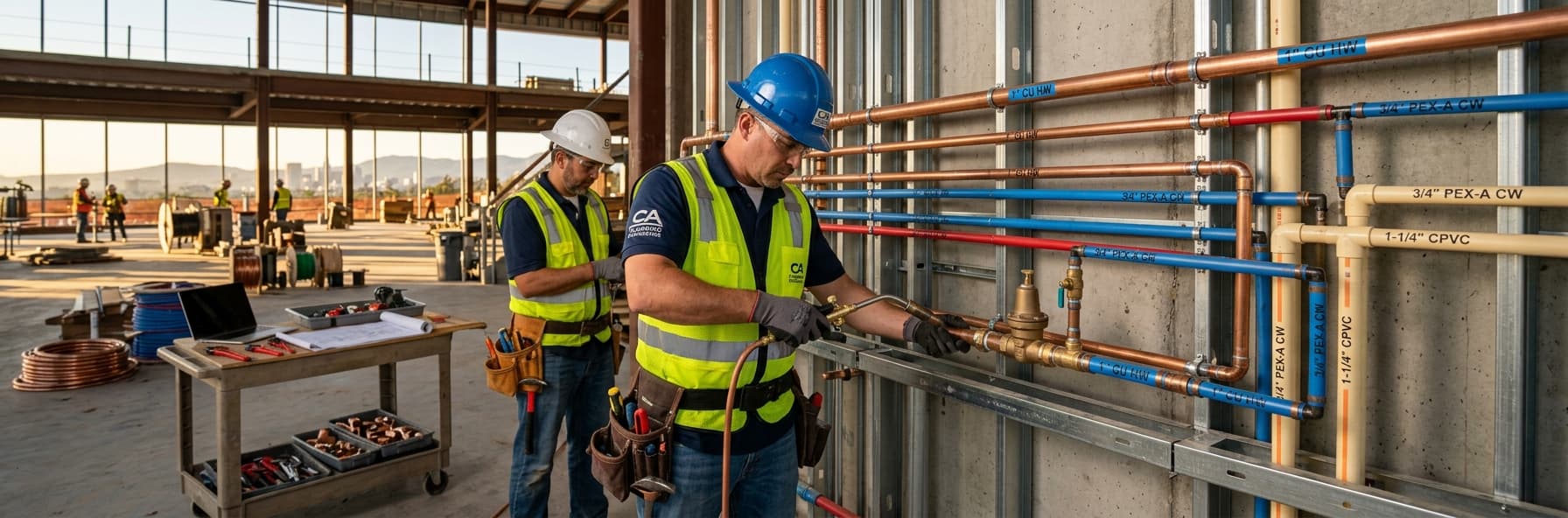
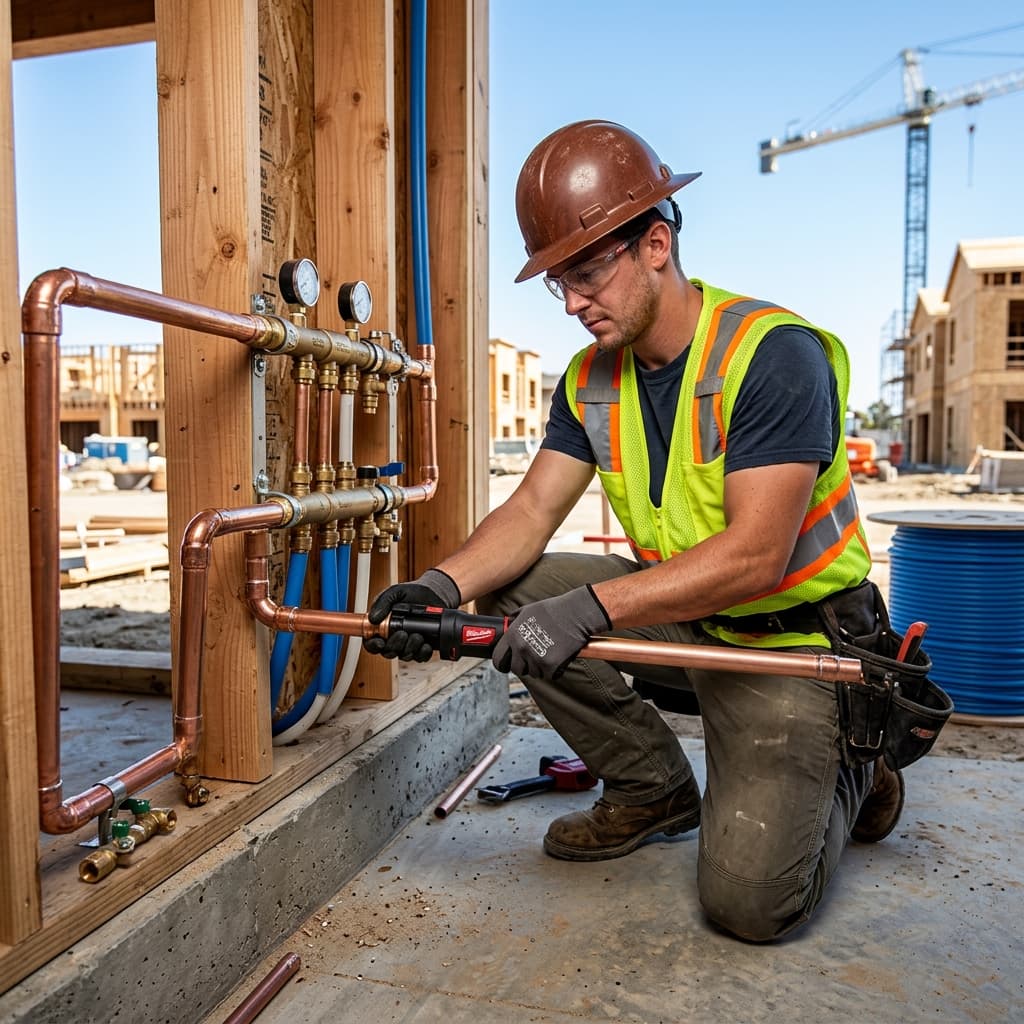
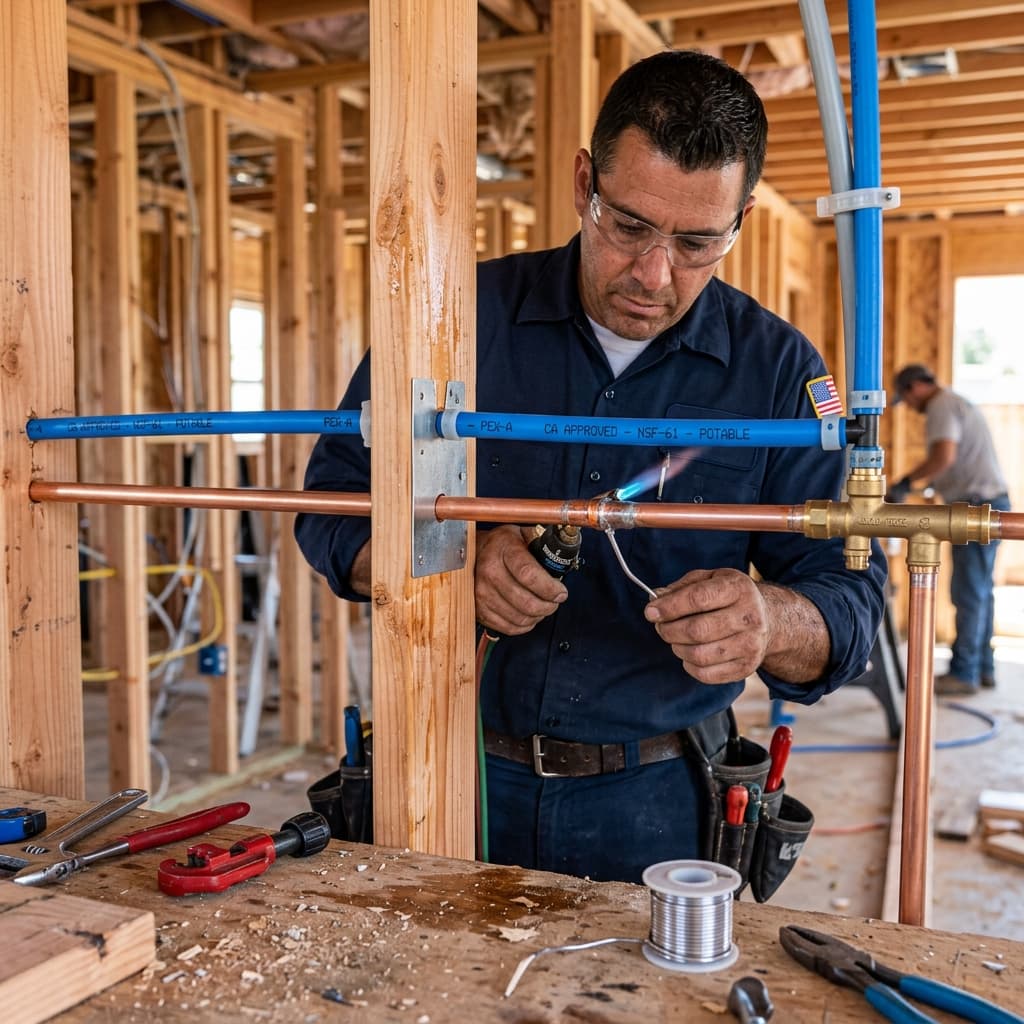
Copper remains the most widely recognized water supply material in California plumbing applications. CPC Section 422 recognizes three types of copper tubing:
Type K Copper (thickest walls)- Used for underground and general-purpose applications
- Highest corrosion resistance
- Greater durability in aggressive soil conditions
- Exam tip: Memorize Type K for underground installations
- Most common for residential and commercial interior installations
- Balances cost and durability
- Suitable for exposed and concealed applications
- This is the standard material in 70% of California installations
- Limited use; primarily for indoor applications only
- Cannot be used underground
- Lower pressure ratings than Types K and L
- Rarely tested on C-36 exams due to limited application
PEX (Cross-Linked Polyethylene): Modern Alternative
PEX has gained significant acceptance under plumbing material requirements california and now represents approximately 40% of new residential installations. Code Approval Parameters:- Must be NSF/ANSI 52 or NSF/ANSI 61 certified
- Permitted for hot and cold water supply
- Cannot be used for outdoor exposed applications
- Freeze protection required in climate zones per CPC Section 422.3
- Smaller diameters than copper for equivalent flow rates
- Flexibility reduces fitting requirements
- Easier installation reduces labor costs
- Important for C-36 exam: Understand equivalent sizing vs. copper
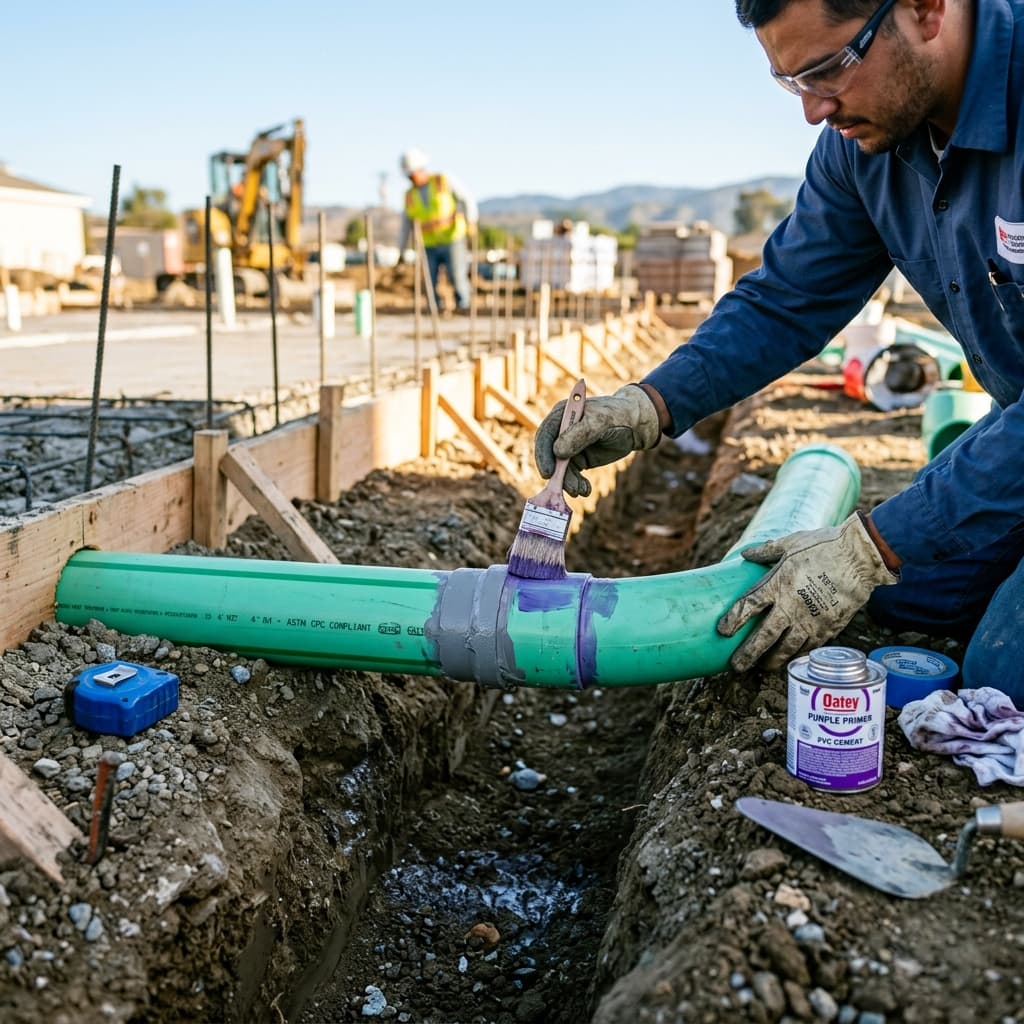
CPVC (Chlorinated Polyvinyl Chloride)
CPVC is approved for hot water supply up to 180°F under CPC Section 422.1.
Application Limitations:- Not approved for water service lines (exterior)
- Interior applications only
- Requires proper support spacing per CPC Section 422.5
- Cannot be used below grade
Polybutylene: NOT Approved
A critical exam point: Polybutylene piping is NOT approved under current CPC Section 422. If you encounter a question about polybutylene, the answer regarding new installations is always "not permitted."Water Supply Line Sizing: Calculations and Tables
Proper water supply line sizing prevents pressure loss, water hammer, and system inefficiency. The C-36 exam includes multiple calculation questions requiring understanding of CPC sizing methodology.The Three-Step Sizing Process
#### Step 1: Determine Fixture Unit Values (FU)
Every fixture has assigned fixture units based on flow demand:
| Fixture Type | Fixture Units (Cold) | Fixture Units (Hot) | |---|---|---| | Lavatory | 0.5 | 0.5 | | Water Closet (gravity tank) | 3.0 | — | | Bathtub | 1.0 | 1.0 | | Shower | 1.0 | 1.0 | | Kitchen Sink | 1.0 | 1.0 | | Washing Machine | 2.0 | 2.0 | | Hose Bibb | 0.5 | — |
Exam Strategy: Create flashcards for common fixture units. Questions frequently ask for total FU calculations on floor plans.#### Step 2: Apply CPC Section 422 Demand Tables
CPC Section 422, Table 422.1 converts fixture units to gallons per minute (GPM):
- 1-2 FU = 0.5 GPM
- 3-6 FU = 1.0 GPM
- 7-10 FU = 1.25 GPM
- 11-20 FU = 1.5 GPM
- 21-40 FU = 2.0 GPM
- 41-60 FU = 2.5 GPM
- 61+ FU = 3.0 GPM
#### Step 3: Select Pipe Diameter Using Velocity Method
CPC Section 422 recommends maintaining velocity between 2-8 feet per second. Most California jurisdictions enforce a maximum of 8 FPS to reduce noise and water hammer.
Copper Tubing Sizing Table (at 6 FPS velocity):| Nominal Size | Actual ID (inches) | GPM at 6 FPS | |---|---|---| | 1/2" | 0.527" | 1.04 | | 3/4" | 0.745" | 2.09 | | 1" | 0.995" | 3.73 | | 1 1/4" | 1.245" | 5.86 | | 1 1/2" | 1.481" | 8.30 |
Example Calculation:- House with 35 fixture units total demand
- CPC Table 422.1 shows 35 FU = 2.0 GPM required
- 2.0 GPM ÷ 6 FPS = 0.333 square inches
- 3/4" copper type L (ID 0.745") = 0.436 square inches
- Answer: Use 3/4" copper line
PEX vs. Copper Sizing Comparison
A critical exam topic: copper vs PEX plumbing code sizing differences.PEX requires smaller nominal diameters due to smoother interior walls and different flow characteristics. Many questions test whether you understand:
- 1/2" PEX ≈ 5/8" copper in flow capacity
- 3/4" PEX ≈ 7/8" copper in flow capacity
- PEX allows two pipe sizes smaller than copper for equivalent service
Pressure Loss Calculations in CPC Section 422
While not always tested directly, understanding pressure loss validates your sizing decisions. CPC Section 422.2 requires maintaining 20 PSI minimum at the most remote fixture.
Factors Affecting Pressure Loss:- Pipe Length: Every 100 feet of copper loses approximately 2-3 PSI
- Pipe Diameter: Smaller pipes lose more pressure (exponential relationship)
- Material Type: PEX has lower friction losses than copper
- Fitting Count: Each fitting adds equivalent length (10-20 feet per fitting)
Support and Protection Requirements
CPC Section 422.5 establishes spacing requirements for water supply piping:
Copper Tubing Support Spacing:- Horizontal: Maximum 6 feet between supports
- Vertical: Maximum 10 feet between supports
- Elbows and tees require support within 12 inches
- Horizontal: Maximum 32 inches between supports
- Vertical: Maximum 4 feet between supports (PEX more flexible)
- Requires additional support at direction changes
Backflow Prevention and CPC Section 422.6
CPC Section 422.6 mandates backflow prevention under specific conditions—frequently tested on Part 2 exams.
Devices Required:- Atmospheric vacuum breakers (simplest, most common)
- Pressure vacuum breakers (higher pressure applications)
- Reduced pressure principle (RP) devices (highest contamination risk)
- Double check valves (limited scenarios)
- All hose bibbs require vacuum breaker (or integral anti-siphon valve)
- Chemical dispensers require RP devices
- Lawn irrigation systems require backflow prevention per CPC 422.6
Insulation Requirements Under CPC Section 422.7
Hot water piping insulation is mandated in California under specific conditions:
Required Insulation:- All hot water supply piping in unconditioned spaces
- Pipe runs exceeding 20 feet from water heater
- Minimum R-value: 3.0 (typically 1/2" foam)
- Piping within insulated walls (where wall insulation ≥ R-3)
- Water heater outlet piping within 2 feet of heater
Service Lines and Meter Requirements (CPC Section 422.4)
The service line from street main to building is governed by specific code sections:
Material Selection:- Copper Type K (preferred for underground)
- PVC (requires pressure rating certification)
- Plastic composite (newer approved material)
- Never: Galvanized steel (no longer approved for new installations)
- Required for all potable water services (unless exempted)
- Located within 3 feet of building foundation
- Protection from freezing mandatory
- Bypass requirements when meter installed
Common Exam Scenarios and Solutions
Scenario 1: Multi-Story Building with High Demand
Question: "A 4-story residential building has 80 total fixture units. Using CPC Section 422 tables, what size main supply line is required?" Solution Process:- Find 80 FU in Table 422.1 = 3.0 GPM demand
- Select pipe diameter maintaining 6 FPS velocity
- 3.0 GPM at 6 FPS requires approximately 0.75 square inches
- 3/4" copper (0.436 sq in) is insufficient
- Answer: 1" copper Type L (0.785 square inches)
Scenario 2: PEX Retrofit Installation
Question: "Existing 3/4" copper main supply serves 45 fixture units. Upgrading with PEX—what size PEX is adequate?" Solution Process:- 45 FU = 2.0 GPM (CPC Table 422.1)
- Existing 3/4" copper = 2.09 GPM capacity (adequate)
- PEX sizing: Use 3/4" PEX (equivalent to larger copper)
- Answer: 3/4" PEX is adequate (exceeds 2.0 GPM requirement)
Scenario 3: Pressure Loss Over Distance
Question: "A 1/2" copper line serves a fixture 120 feet away. Initial pressure is 60 PSI. Will minimum 20 PSI be maintained at the fixture?" Solution Process:- Estimate pressure loss: 120 feet ÷ 100 × 2.5 PSI = 3.0 PSI loss
- Remaining pressure: 60 - 3.0 = 57 PSI
- Answer: Yes, 57 PSI exceeds 20 PSI minimum
Study Tips for C-36 Exam Success
Master These Critical Tables
- CPC Section 422.1: Fixture Unit to GPM demand conversion
- Pipe sizing tables: Diameter selection by GPM and velocity
- Support spacing requirements: Material-specific intervals
- Fitting equivalent lengths: For pressure loss calculations
Practice Calculation Formats
The exam includes:- Multiple choice: Material identification and code reference questions
- Calculation problems: Sizing scenarios requiring step-by-step work
- Code reference questions: "Which CPC Section addresses...?"
Common Wrong Answers to Avoid
- Confusing Type K and Type L copper applications (Type K underground)
- Forgetting 20 PSI minimum pressure requirement
- Incorrectly applying copper fixture unit tables to PEX systems
- Overlooking support spacing differences between materials
- Miscalculating fixture units on floor plans
Conclusion
Mastering CPC Section 422 water supply requirements is non-negotiable for C-36 exam success. Focus your study on:- Material selection applications and limitations
- Three-step sizing calculation process
- Pressure and velocity requirements
- Support spacing and protection rules
- Code-compliant backflow prevention
---
Ready to test your knowledge? Review CPC Section 422 in your California Plumbing Code, then work through sizing calculations using real building plans. The exam format mirrors practical scenarios you'll face as a licensed plumbing contractor.