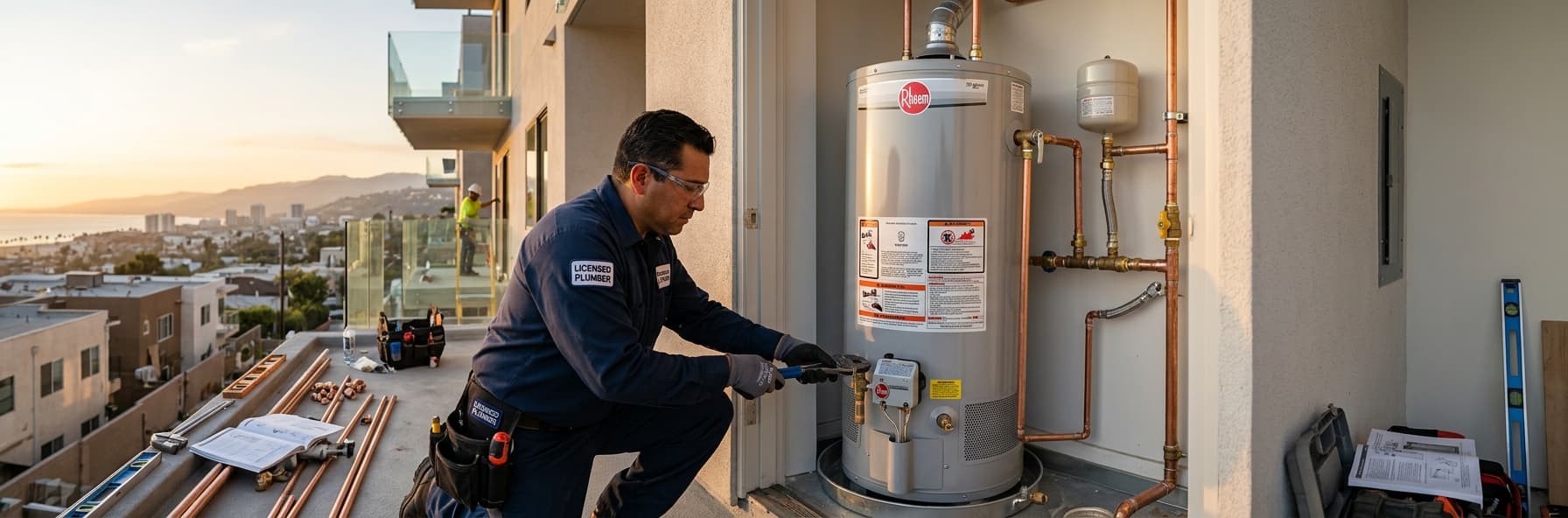
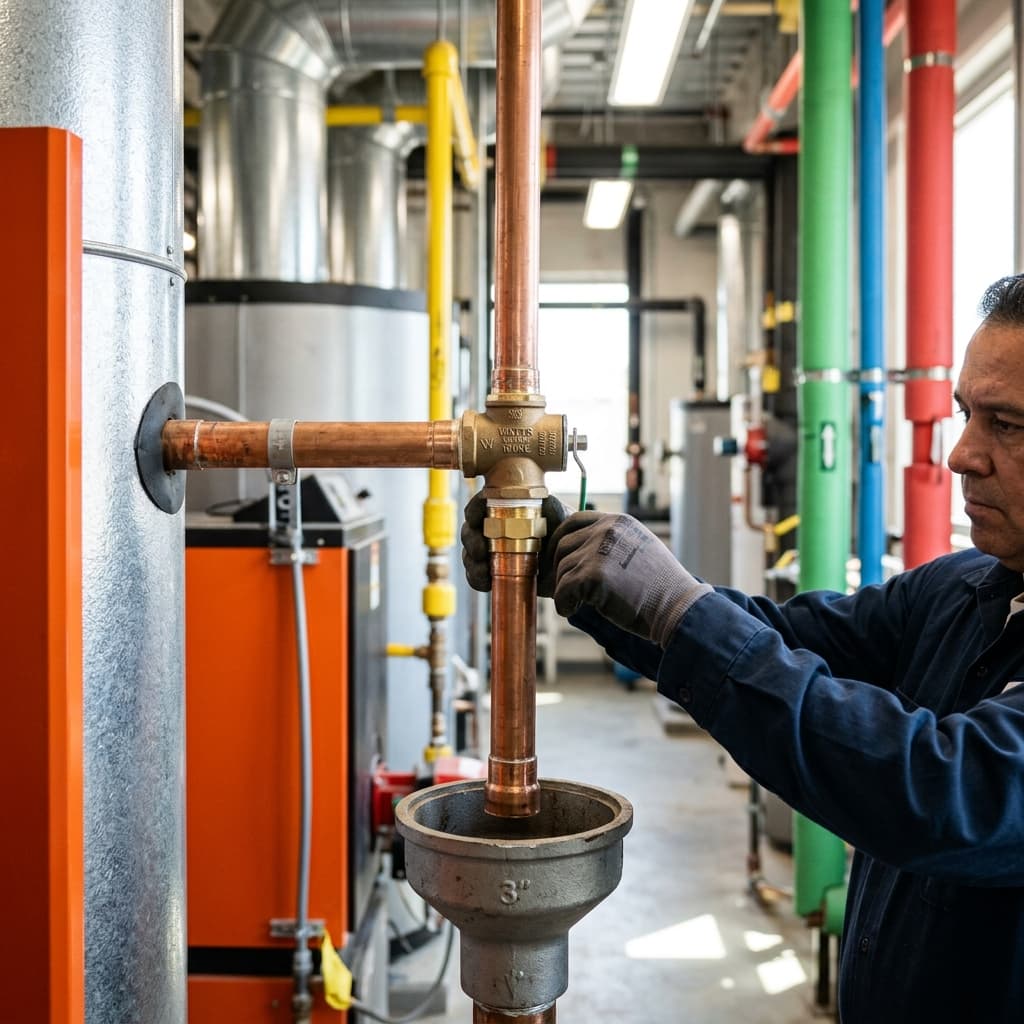

# Water Heater Installation: Temperature and Pressure Relief Valve Requirements Under CPC Section 422
Water heater installation requirements in California are governed by rigorous safety standards designed to protect occupants and property. The California Plumbing Code (CPC) Section 422 provides comprehensive guidelines for water heater installation requirements in California, with particular emphasis on temperature and pressure relief valve sizing, discharge requirements, and pressure regulation mechanisms. Understanding these requirements is essential for C-36 plumbing exam success and real-world installation compliance.
Understanding CPC Section 422: The Foundation of Water Heater Safety
CPC Section 422 establishes the minimum standards for water heater installation, focusing on safety devices that prevent dangerous pressure and temperature buildup within storage tanks. This section recognizes that improper installation of water heaters poses significant risks of explosion, scalding, and property damage.The core principle behind Section 422 is straightforward: every storage-type water heater must be equipped with devices that automatically limit both pressure and temperature to safe operating levels. The temperature and pressure relief valve sizing must match the specific characteristics of the installation, including tank capacity, heating method, and system configuration.
Why Relief Valves Matter
Modern water heaters operate under conditions that can rapidly create dangerous pressure levels. When water is heated, it expands—a phenomenon called thermal expansion. Without proper relief mechanisms, this expansion has nowhere to go, and pressure increases exponentially. CPC Section 422 requires relief devices to discharge excess pressure and temperature before dangerous conditions develop.
Temperature and Pressure Relief Valve Sizing Requirements
CPC Section 422.1 requires that every storage-type water heater be equipped with a temperature and pressure relief valve that meets specific sizing criteria. This valve must be sized according to the water heater's:- Storage capacity (measured in gallons)
- Maximum input rating (measured in BTU per hour)
- Operating pressure and temperature ranges
The Sizing Formula
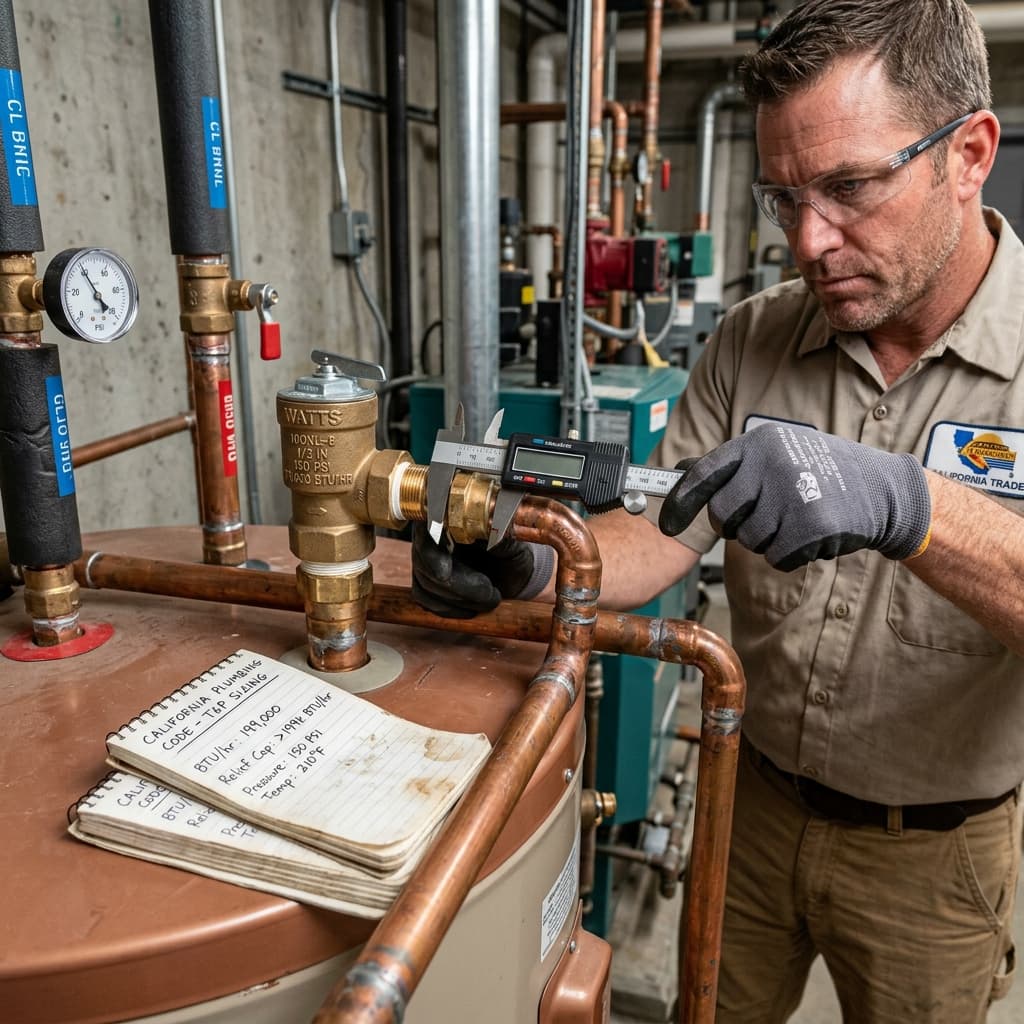
The capacity of a relief valve is expressed in BTU per hour (BTU/hr) at 210°F with 75 psi differential. CPC Section 422 specifies that the relief valve capacity must be equal to or greater than the water heater's maximum input rating. For example:- A 50-gallon water heater with a 40,000 BTU/hr input rating requires a relief valve rated for at least 40,000 BTU/hr capacity
- An 80-gallon water heater with an 80,000 BTU/hr input rating requires a relief valve rated for at least 80,000 BTU/hr capacity
Relief Valve Installation Location
According to CPC Section 422.1(a), the temperature and pressure relief valve must be:- Located on the water heater itself – typically installed in the side or top of the tank
- In direct contact with the water being heated – not isolated by check valves or isolation devices upstream
- Positioned to sense both temperature and pressure changes within the tank
Discharge Piping Requirements: Critical Safety Considerations
One of the most frequently tested aspects of CPC Section 422 involves proper discharge piping for relief valves. The discharge line is not optional—it's a required safety component.
Discharge Pipe Material and Size
CPC Section 422.1(c) specifies:- Material: Copper, galvanized steel, or other approved materials rated for the expected temperatures and pressures
- Minimum diameter: Must match the relief valve outlet size; typically 3/4-inch for residential installations
- Maximum length: Should be as short as practical, generally not exceeding 25 feet
- Slope: Must slope downward toward the discharge point at a minimum pitch of 1/4-inch per 10 feet
Discharge Termination Points
Where the relief valve discharge terminates is critical for both safety and compliance:
- Condensing temperature range: The discharge must terminate where:
- Residential installations: Often discharge to a nearby floor drain or exterior location with proper drainage
- Public areas: Discharge must be visible and prevent occupant contact
Pressure Regulation and Water Heater Pressure Regulation
Understanding System Pressure in Water Heater Installations
Water heater pressure regulation in California requires understanding how system pressure affects relief valve operation. Most residential water heaters operate at pressures between 40-80 psi, with a typical relief valve set point around 150 psi.
CPC Section 422.2 addresses situations where the water supply pressure exceeds 80 psi. In such cases, a pressure reducing valve must be installed on the water supply line upstream of the water heater to reduce incoming supply pressure to acceptable levels.The Role of Expansion Tanks
When water heats, it expands. In a closed system (typical of modern homes with check valves on the main water supply line), this thermal expansion increases pressure. CPC Section 422 requires consideration of expansion control through:
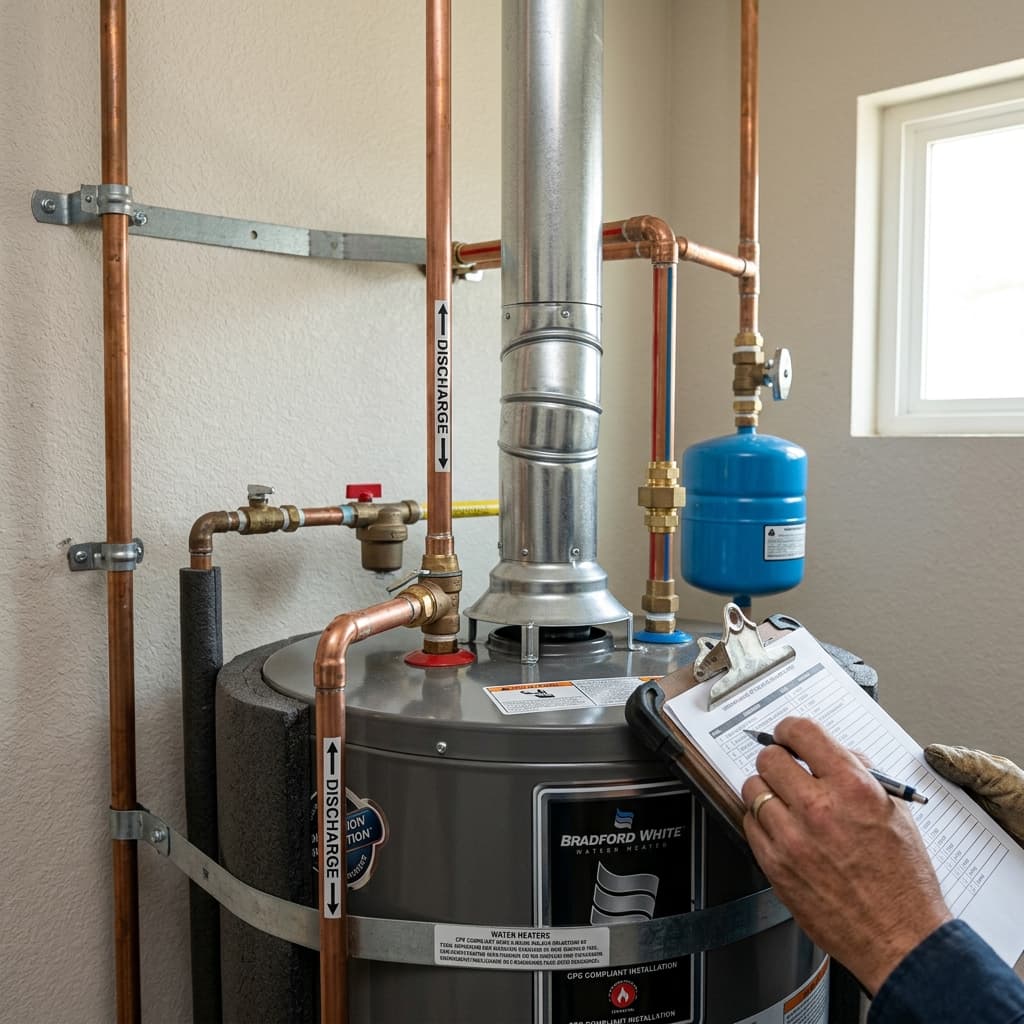
- Expansion tanks – Accept displaced water during heating cycles
- Relief valve discharge – Allows excess water/pressure to escape
- Proper system design – Ensures expansion is managed safely
Temperature and Pressure Relief Valve Settings
CPC Section 422 specifies:
- Relief valve pressure setting: Typically 150 psi for residential installations
- Temperature sensing: Valve must open if water temperature reaches approximately 210°F (98.9°C)
- Dual-function operation: Modern combination T&P valves operate as either a pressure relief OR temperature relief, whichever condition is reached first
Common Installation Mistakes and Code Violations
Understanding what NOT to do is equally important for exam preparation:
Violation 1: Isolation of the Relief Valve
Installing a shut-off valve between the water heater and relief valve is a direct violation of CPC Section 422.1. This prevents the valve from protecting the tank during heating cycles.Violation 2: Undersized Relief Valves
Selecting a valve with less capacity than the water heater's input rating violates sizing requirements and creates dangerous conditions. This is frequently tested on C-36 exams.Violation 3: Improper Discharge Connections
Connecting relief valve discharge directly to sanitary sewer without an air gap violates CPC Section 308.1 (Water Quality and Sanitation) as well as Section 422 requirements.Violation 4: Missing Discharge Piping
Some installers rely solely on the relief valve without proper discharge piping. The discharge pipe is integral to the safety system, not optional.Violation 5: Relief Valve in Check Valve Position
Installing a check valve downstream of the relief valve discharge can trap hot water and create a dead-leg hazard—a violation of both Section 422 and general code principles.Specific Requirements by Water Heater Type
Storage Tank Water Heaters
Storage tanks require full compliance with CPC Section 422 requirements for T&P relief valves, discharge piping, and pressure regulation. These are the most straightforward applications covered on C-36 exams.Tankless Water Heaters
Tankless water heaters operate differently and may have alternative relief valve requirements. Always verify manufacturer specifications against CPC Section 422 applicability.Combination Systems
When water heaters are part of combination heating/domestic hot water systems, relief valve sizing may need to account for the full system's BTU input, not just the domestic hot water portion.Installation Steps for CPC Section 422 Compliance
Following this sequence ensures compliant installations:
- Verify water supply pressure – If exceeding 80 psi, install pressure reducing valve first
- Select properly-sized relief valve – Match valve capacity to water heater BTU input rating
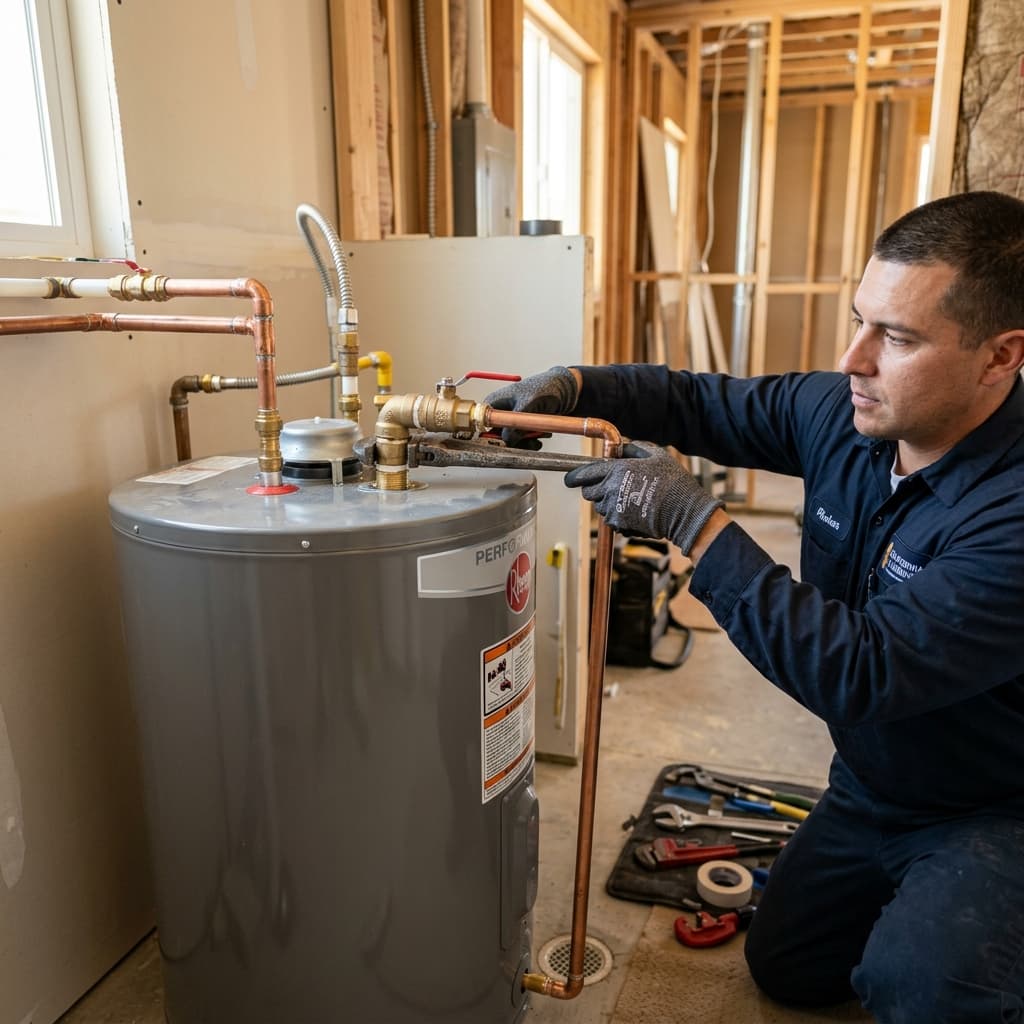
- Install relief valve directly on tank – Typically in top or side opening
- Connect discharge piping – Using approved materials, minimum proper diameter, sloped downward
- Route discharge to safe termination – Floor drain, exterior location, or approved collection point
- Test operation – Ensure valve functions properly before placing system in service
- Document installation – Retain records showing valve capacity, model numbers, and installation details
Exam-Focused Review Questions
To prepare for C-36 plumbing exam questions on CPC Section 422:
Question 1: A 75-gallon residential water heater has a maximum input rating of 60,000 BTU/hr. What is the minimum required relief valve capacity?- Answer: 60,000 BTU/hr or greater
- Answer: In direct contact with the heated water, typically on the top or side of the tank, with an outlet that can safely discharge when the valve opens
- Answer: 80 psi (CPC Section 422.2)
- Answer: No—this violates CPC Section 422.1 and prevents the valve from protecting the tank
Key Code References for CPC Section 422 Compliance
Understanding these specific code sections strengthens exam performance:
- CPC Section 422.1: Relief valve installation and sizing requirements
- CPC Section 422.1(a): Relief valve location specifications
- CPC Section 422.1(c): Discharge pipe material and routing
- CPC Section 422.2: Pressure reducing valve requirements for high-pressure systems
- CPC Section 308.1: Sanitation requirements applicable to relief valve discharge
Professional Best Practices Beyond Code Minimums
While the C-36 exam focuses on code minimums, professional practice often exceeds these standards:
- Using full-port ball valves on supply lines for easier maintenance access
- Installing union connections at relief valve discharge for easier replacement
- Providing accessible relief valve test levers for annual functional testing
- Using flexible discharge piping in seismic zones to accommodate movement
- Selecting certified relief valves from recognized manufacturers
Conclusion: Mastery for Exam and Practice
CPC Section 422 water heater installation requirements, particularly temperature and pressure relief valve sizing and discharge requirements, represent critical safety knowledge for California plumbers. These regulations prevent explosions, scalding injuries, and property damage—serious consequences of improper installation.
For C-36 plumbing exam success, remember:
- Relief valve capacity must match water heater BTU input
- Relief valve must be in direct contact with heated water
- Discharge piping is required and must terminate safely
- Pressure reducing valves are mandatory above 80 psi supply pressure
- Never isolate relief valves with shut-off valves