
# CPC Section 422: Water Supply System Pressure Regulation and Backflow Prevention Testing Requirements
Introduction to CPC Section 422
The California Plumbing Code (CPC) Section 422 is one of the most critical sections for C-36 exam candidates to master. This section establishes comprehensive requirements for water supply system pressure regulation and backflow prevention testing throughout California. Whether you're preparing for your certification exam or seeking to understand practical plumbing installation requirements, CPC Section 422 provides the foundational guidelines that protect public health and ensure system reliability.Section 422 directly addresses two essential components of safe water distribution: maintaining appropriate pressure levels throughout the supply system and preventing contaminated water from flowing backward into the public water supply. Understanding these requirements isn't just about passing the exam—it's about protecting California's water infrastructure.
Understanding Water Supply Pressure Regulation Requirements
Maximum Pressure Limits Under CPC Section 422
The cornerstone of water supply system pressure regulation California begins with understanding maximum allowable pressures. According to CPC Section 422.1, the water pressure supplied to a building shall not exceed 80 psi (pounds per square inch) under normal conditions. This pressure limit exists for several critical reasons:- Equipment Protection: Fixtures and appliances are rated for specific pressure ranges. Excessive pressure damages washers, valves, and connections
- Noise Reduction: High pressure creates water hammer and system noise
- Safety: Reduced pressure minimizes the risk of ruptures in pipes and connections
- Longevity: Proper pressure extends the lifespan of the entire distribution system
Minimum Pressure Requirements
While maximum pressure receives significant attention, CPC Section 422 also establishes minimum pressure requirements. The water pressure shall be at least 20 psi at the highest point of the building's water distribution system under normal conditions. This ensures adequate pressure for fixture operation throughout the structure, particularly in multi-story buildings.
The 20 psi minimum applies to all fixtures simultaneously. However, individual fixture requirements must also be met:
- Toilets: Minimum 15 psi
- Sinks and lavatories: Minimum 15 psi
- Showers: Minimum 20 psi
- Lawn irrigation: Minimum 20 psi
Pressure Reducing Valve Installation Requirements
When PRV Installation Is Mandatory
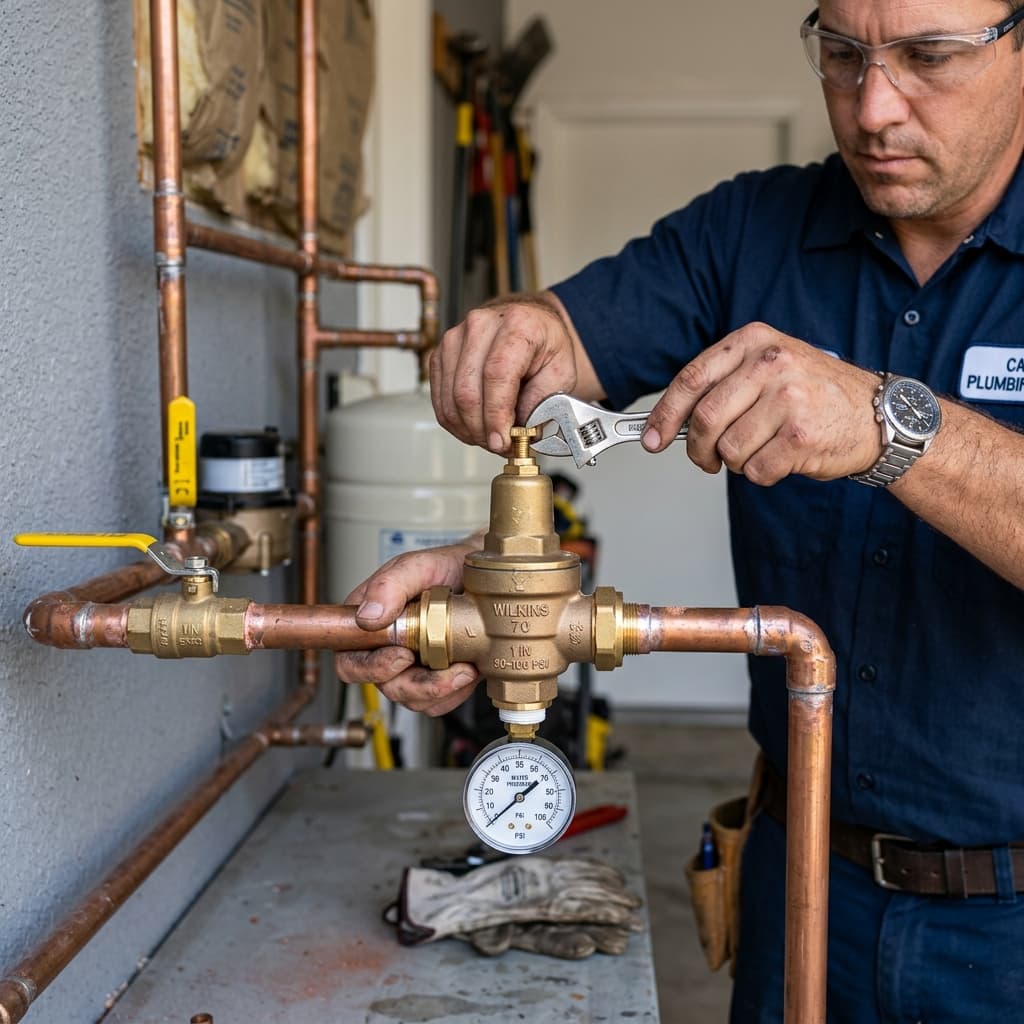
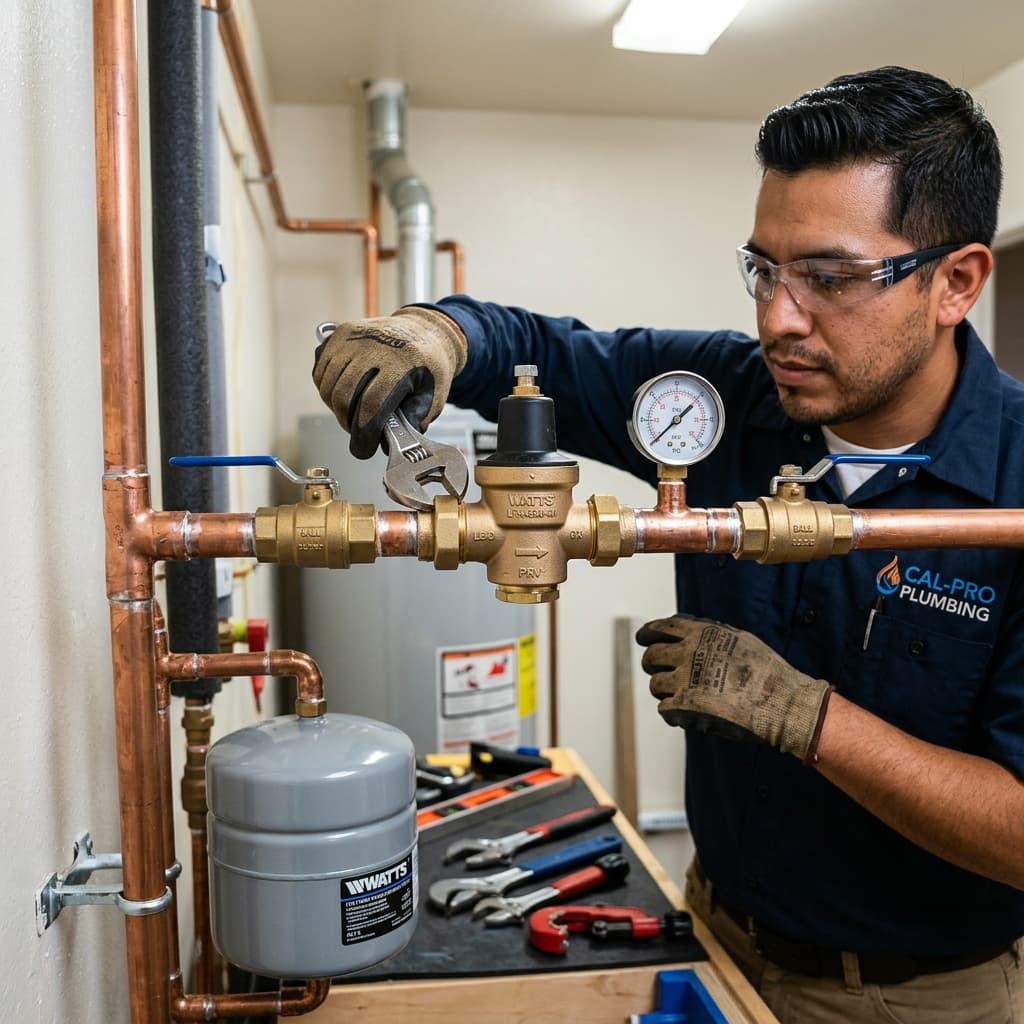
According to CPC Section 422.2, pressure reducing valve installation becomes mandatory when the water supply pressure exceeds 80 psi. The CPC does not give plumbers discretion on this matter—if pressure exceeds the threshold, a PRV must be installed.The location of the PRV is equally important. CPC Section 422.2 specifies that the pressure reducing valve shall be installed:
- As close as practical to the water meter or service entrance
- Before the water distribution system branches into the building
- In an accessible location for maintenance and testing
- With proper protection from freezing conditions
PRV Selection and Sizing
The pressure reducing valve must be appropriately sized for the building's water demand. An undersized PRV cannot deliver adequate flow during peak demand periods. An oversized PRV becomes difficult to regulate and may cause pressure fluctuations.
CPC Section 422.2 requires that the PRV be rated for:
- Minimum flow capacity of 1.5 times the maximum demand
- Maximum inlet pressure rating of the water supply
- Outlet pressure set to deliver 50-80 psi under normal conditions
Relief Valve Installation Requirements
CPC Section 422.3 requires a relief valve on the downstream side of the pressure reducing valve. This relief valve serves a critical safety function: if the PRV fails and downstream pressure exceeds 100 psi, the relief valve opens to prevent damage to the building's distribution system.
The relief valve must:
- Be set to open at 100 psi
- Discharge to a safe location (typically a floor drain)
- Be clearly labeled and accessible
- Have capacity equal to or greater than the water supply line
Backflow Prevention Testing Requirements Under CPC Section 422
Understanding Backflow Prevention Fundamentals
Backflow prevention testing is required by CPC Section 422 to ensure that contaminated water cannot flow backward into the public water supply. Backflow occurs when pressure conditions reverse, potentially allowing polluted water from building systems to enter the public distribution system.Two main types of backflow exist:
Backsiphonage: Occurs when the public water pressure drops below atmospheric pressure, creating a siphon that pulls water backward through the system Backpressure: Occurs when pressure within the building system exceeds public water pressure, forcing contaminated water backward into the supplyCross-Connection Control Requirements
CPC Section 422.4 establishes comprehensive cross-connection control requirements. A cross-connection is any actual or potential connection between the public water supply and any nonpotable water source or contaminant.
Common cross-connections include:
- Irrigation system connections to drinking water supplies
- Hot water heater mixing connections
- Laboratory or medical equipment water supplies
- Swimming pool and spa fill connections
- Chemical treatment system connections
Backflow Prevention Device Types and Testing
CPC Section 422.5 recognizes several types of backflow prevention devices:
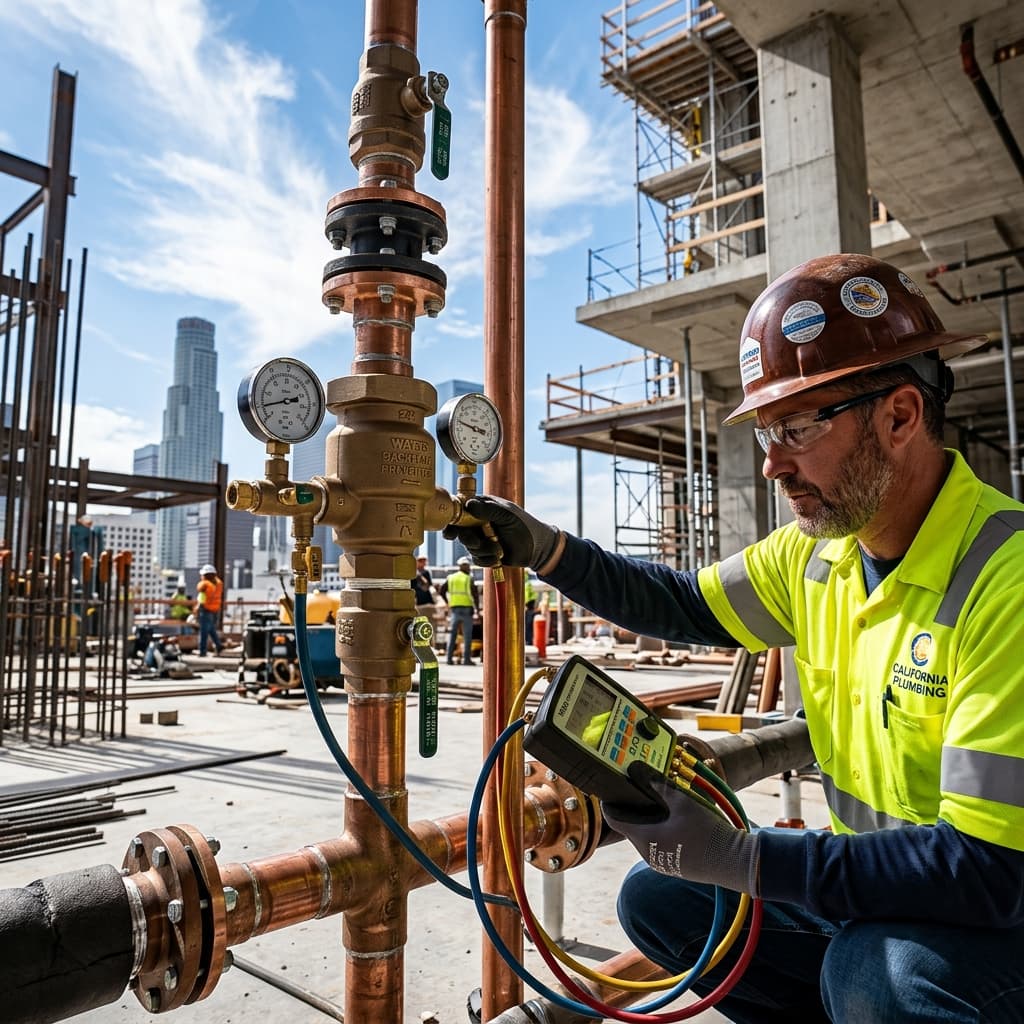
Atmospheric Vacuum Breakers (AVB): Suitable for low-hazard situations where backpressure cannot occur. AVBs are not testable and cannot be used in high-hazard applications. Dual Check Valves (DCV): Provide protection against both backsiphonage and backpressure. These devices are testable and suitable for most applications. Reduced Pressure Principle (RPP) Assemblies: Offer maximum protection with two check valves and a relief valve. RPP assemblies are required for high-hazard cross-connections and must be tested annually. Pressure Vacuum Breakers (PVB): Protect against backsiphonage but not backpressure. PVBs are testable and commonly used for irrigation systems.Annual Testing and Certification
CPC Section 422.5 mandates that all testable backflow prevention devices must be tested annually by a certified backflow prevention technician. California recognizes three primary certifications:
- Backflow Prevention Device Inspector (BPDI): Can test and repair devices
- Backflow Prevention Device Technician (BPDT): Can test devices
- Backflow Prevention Assembly Tester: State-specific certification
- AWWA M14: Installation, Testing, and Maintenance of Backflow Prevention Devices
- AWWA C506: Reduced Pressure Principle Backflow Preventer
- All check valves operate freely in the correct direction
- Relief valves open at the correct pressure setting
- The device has no leaks
- Proper installation and accessibility
- Correct pressure readings at inlet and outlet
Installation Best Practices for Exam Success
Proper Installation Configuration
CPC Section 422 requires specific installation configurations that appear frequently on C-36 exams:
Pressure Reducing Valve Setup:- Install shutoff valve upstream of the PRV
- Install the PRV with flow arrow pointing toward the building
- Install a relief valve downstream
- Install shutoff valve downstream of the relief valve
- Install a pressure gauge on both sides of the PRV
- Ensure proper sediment strainer upstream
- Install shutoff valves on both sides of the assembly
- Install test cocks at inlet and outlet
- Install pressure gauges at inlet and outlet (for RPP assemblies)
- Provide adequate clearance for testing and maintenance
- Locate in a protected, accessible area
- Post clear signage indicating the device type and test date
Common Installation Mistakes to Avoid
Exam candidates often miss critical installation details. These common mistakes appear on multiple-choice questions:
- Installing a PRV downstream of the water meter instead of at the service entrance
- Using a single check valve instead of a dual check valve for high-hazard cross-connections
- Failing to install the required relief valve
- Installing backflow prevention devices without accessible test cocks
- Placing devices in inaccessible locations
- Using unrated or undersized valves
CPC Code References and Exam Connections
Related Code Sections
Understanding CPC Section 422 requires familiarity with related sections:
- CPC Section 308: Water Supply and Distribution fundamentals
- CPC Section 309: Water quality and treatment
- CPC Section 311: Backflow prevention plan requirements
- CPC Section 312: Water service entrance requirements
- CPC Section 422.1: Maximum pressure limits (80 psi)
- CPC Section 422.2: Pressure reducing valve requirements
- CPC Section 422.3: Relief valve requirements
- CPC Section 422.4: Cross-connection control
- CPC Section 422.5: Backflow prevention device requirements
Exam Question Patterns
Part 5 of the C-36 exam tests CPC Section 422 through several question types:
Installation Requirement Questions (35%): "Where must a pressure reducing valve be installed according to CPC Section 422.2?" Pressure Limit Questions (25%): "What is the maximum allowable water pressure in a residential building?" Device Type Questions (20%): "Which backflow prevention device is suitable for high-hazard cross-connections?" Testing and Maintenance Questions (20%): "How often must a reduced pressure principle assembly be tested according to CPC Section 422?"Key Takeaways for C-36 Exam Preparation
Essential Concepts to Master
- Maximum Pressure Rule: 80 psi is the absolute maximum allowed water pressure in any building
- PRV Mandates: When supply pressure exceeds 80 psi, PRV installation is mandatory, not optional
- Relief Valve Protection: Always install a relief valve downstream of a PRV
- Testing Requirements: All testable backflow prevention devices require annual certification testing
- Hazard Classification: Device selection depends on the hazard level of the cross-connection
- Installation Location: Devices must be installed at service entrance and accessible for testing
Practice Exam Questions
To strengthen your understanding, ask yourself:
- What is the location requirement for pressure reducing valve installation?
- Which backflow prevention device type requires annual testing?
- What pressure relief valve setting is required downstream of a PRV?
- How does CPC Section 422 define a cross-connection?
- What certifications does California recognize for backflow prevention testing?
Conclusion
CPC Section 422 establishes the foundational requirements for water supply system pressure regulation and backflow prevention testing that protect both individual buildings and California's public water system. For C-36 exam candidates, mastering these requirements is essential—this section directly impacts 8-12% of your Part 5 exam score.The combination of pressure regulation (keeping supply pressure at or below 80 psi) and backflow prevention (stopping contaminated water from flowing backward) creates a comprehensive safety system that every California plumber must understand and implement correctly.
As you prepare for your exam, review the installation configurations, pressure requirements, and device testing procedures outlined in this guide. Focus on understanding not just the "what" but the "why" behind each requirement—this deeper comprehension will help you tackle unfamiliar exam questions with confidence.
For additional exam preparation resources, review CPC Section 308 Water Supply Fundamentals and Backflow Prevention Device Selection Guide.