
# CPC Section 422: Soil, Waste, and Vent Pipe Materials for C-36 Exam
Understanding soil waste vent pipe materials is critical for passing the California C-36 plumbing exam. CPC Section 422 establishes the material selection standards and installation requirements that govern all drainage systems in California. This comprehensive guide breaks down the approved materials, their applications, and the specific code requirements you need to master for Part 2 of your exam.Understanding CPC Section 422 Overview
CPC Section 422 defines the acceptable materials for soil, waste, and vent (DWV) systems throughout California. This section is foundational to the drainage systems portion of the C-36 exam and directly impacts how you specify materials on job sites as a licensed plumber.
The California Plumbing Code drainage standards in Section 422 recognize that different materials perform differently based on:- Building location and environmental factors
- Type of waste being conveyed (sanitary vs. storm)
- Exposure to corrosive substances
- Temperature variations
- Installation method and accessibility
Historical Context of Material Standards
The CPC has evolved material standards over decades, moving from exclusively cast iron systems to accepting multiple alternatives that meet performance standards. This evolution reflects improvements in material science, installation techniques, and long-term performance data from California installations.
Approved Pipe Materials Under CPC Section 422
Cast Iron Pipe: The Traditional Standard
Cast iron remains one of the most durable and approved materials under CPC Section 422. The code recognizes two types: Hub and Spigot Cast Iron- Traditional rolled or cast material
- Requires oakum and lead joint sealing
- Excellent sound dampening
- Highly corrosion-resistant in most environments
- Proper installation involves caulking hubs with approved tools
- CPC Section 422.2 specifies joint requirements
- Uses stainless steel bands with neoprene gaskets
- Faster installation than hub and spigot
- No caulking required
- Superior for retrofit applications
- Must meet ASTM A888 standards per CPC Section 422.2
- Must be supported every 4 feet vertically
- Horizontal runs require support every 10 feet
- Pitch requirements of 1/4 inch per foot minimum apply
- Hangers must allow for thermal expansion
PVC (Polyvinyl Chloride) Pipe
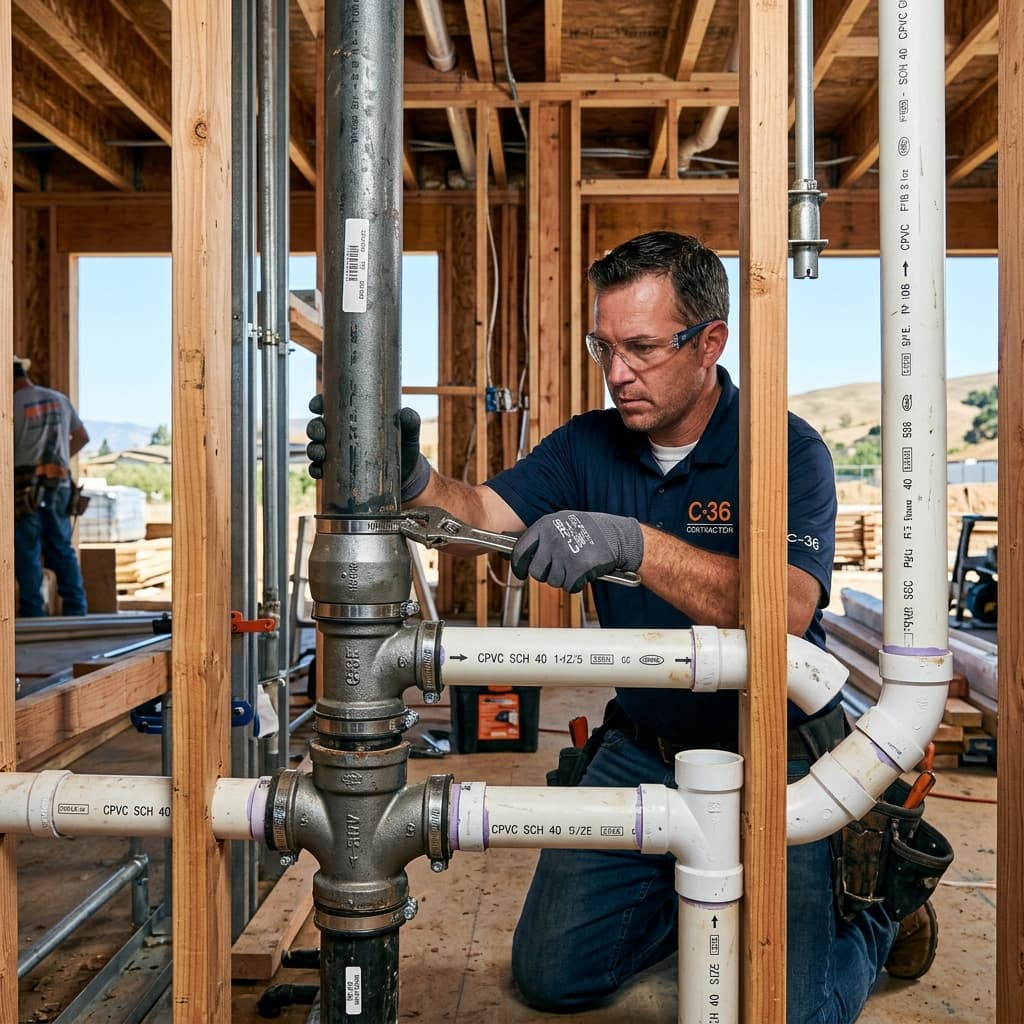
PVC dominates modern plumbing installations and is fully approved under CPC Section 422. It offers significant advantages that have made it the most commonly specified material.
Approved Schedule:- Schedule 40 PVC is standard for DWV applications
- Schedule 80 may be required for special applications or corrosive environments
- Must comply with ASTM D2665 standards
- CPC Section 422.2 requires approval of all fittings
- Lightweight and easy to handle
- Excellent corrosion resistance
- Smooth interior surface reduces clogs
- Lower installation costs than cast iron
- Adequate sound dampening with proper insulation
- Flame spread rating of 25 or less (fire code requirement)
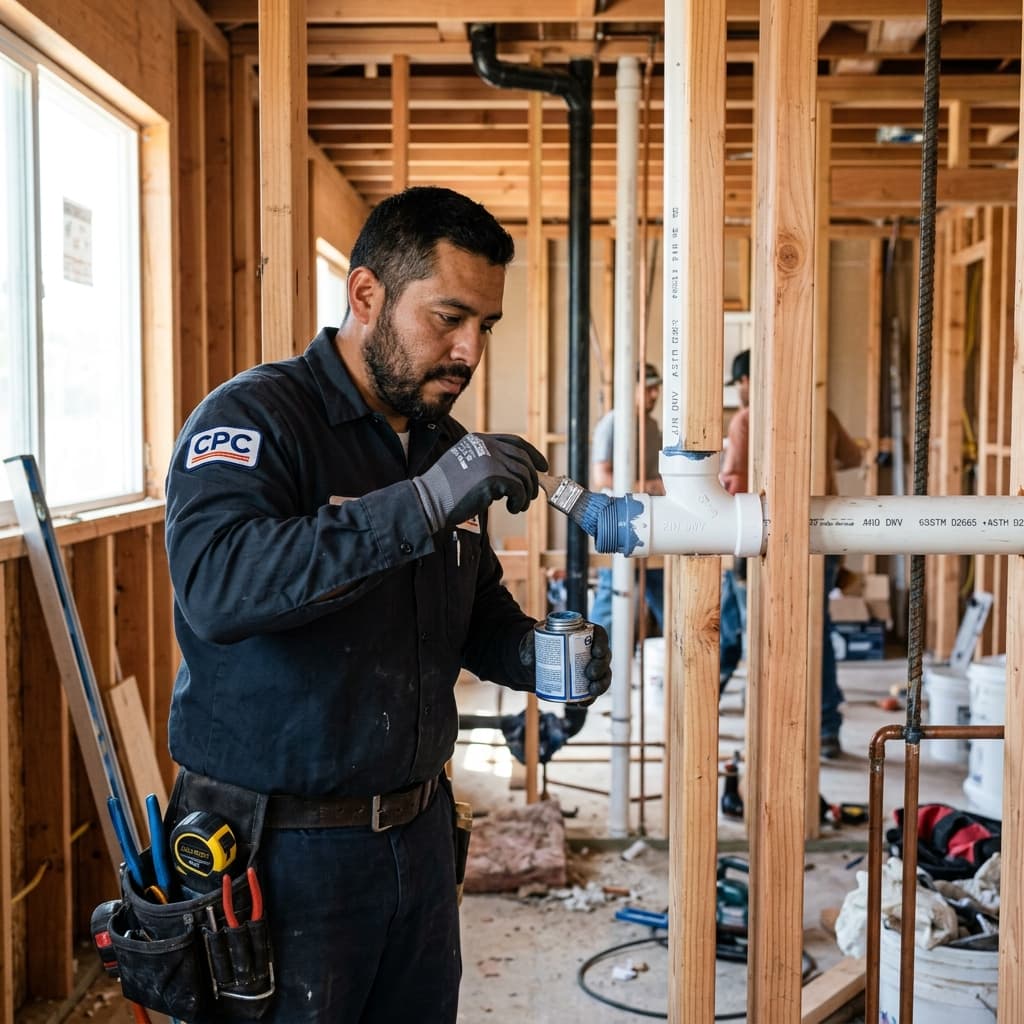
- Solvent welded joints require proper primer and cement application
- Must be supported every 4 feet vertically
- Horizontal support spacing every 32 inches for suspended installations
- Temperature considerations: PVC can expand/contract significantly
- Cannot be exposed in certain cosmetic applications without covering
ABS (Acrylonitrile Butadiene Styrene) Pipe
ABS is approved under CPC Section 422 and is similar to PVC but with different chemical properties.
Key Characteristics:- Slightly more impact-resistant than PVC
- Better performance at lower temperatures
- Different solvent welding procedures than PVC
- Must comply with ASTM D2661 standards
- CPC Section 422.2 requires separate approval of ABS components
- Installations in colder climates or unheated spaces
- Areas subject to mechanical stress or impact
- Specific building code requirements in certain jurisdictions
Copper Pipe
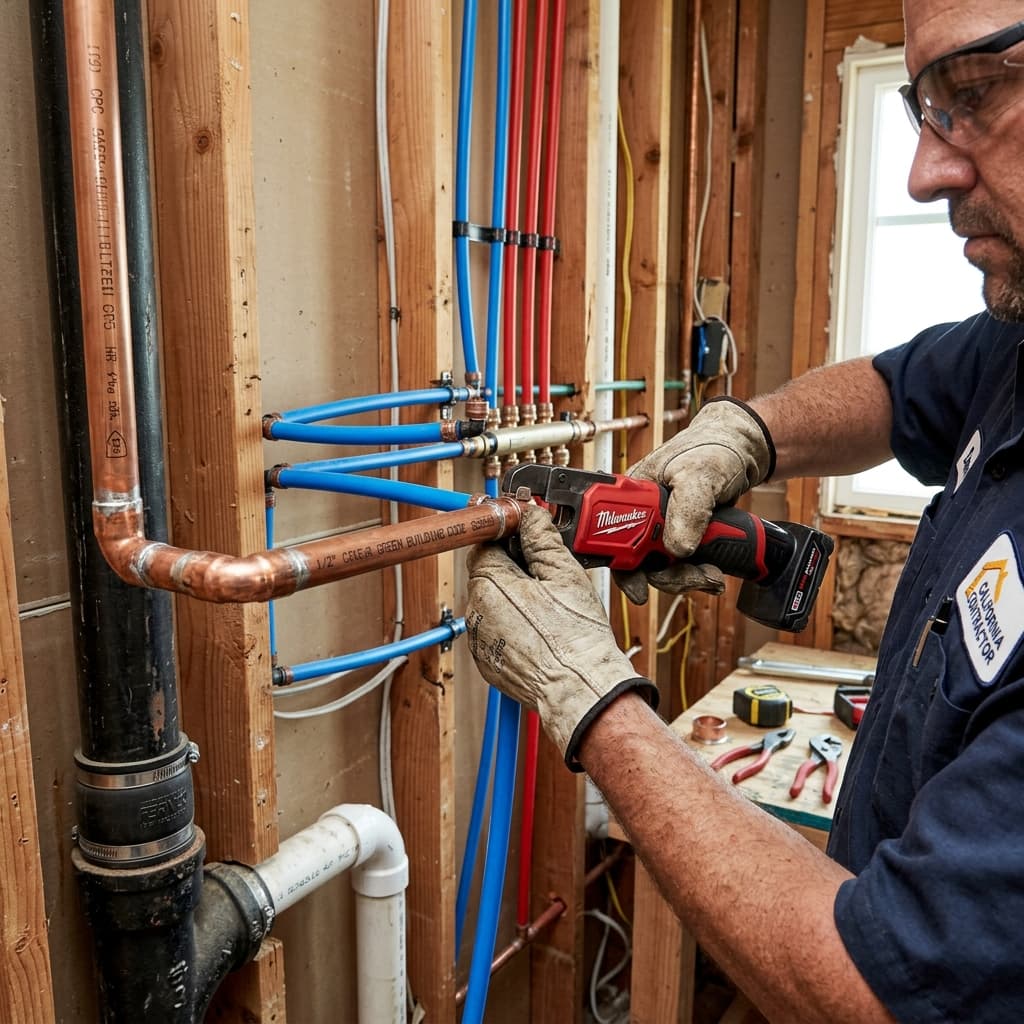
Copper is an approved alternative under CPC Section 422, particularly for smaller diameter applications and premium installations.
Types of Copper for DWV:- Type K (thickest wall) - rare for DWV
- Type L (medium wall) - sometimes used for durability
- Type M (thinnest wall) - standard for DWV applications
- Drainage, Waste & Vent (DWV) copper - specific designation per CPC
- Must comply with ASTM B306 standards
- Require solder joints (50/50 lead-free solder) per CPC Section 422.4
- Excellent corrosion resistance in most environments
- Connections via solder joints or approved mechanical fittings
- Significantly higher material cost
- Requires skilled installation for proper soldering
- Limited use in residential construction due to expense
- CPC Section 422 requires specific testing of solder materials
Material Restrictions and Special Conditions
CPC Section 422.3: Materials Not Approved
The code explicitly prohibits certain materials in DWV systems:
- Galvanized steel - Subject to corrosion and interior scale buildup
- Uncoated steel - Rusts quickly, creates flow problems
- Lead - Health hazards (except for existing installations)
- Aluminum - Corrodes in many environments
- Concrete - Not suitable for internal drainage
- Orangeburg pipe - Historical material, completely prohibited
Corrosive Environments
CPC Section 422.6 addresses materials in aggressive environments:
- Industrial applications with chemical drainage
- High-temperature environments requiring heat-resistant materials
- Coastal installations where salt spray causes corrosion
- Cast iron and copper typically required in these situations
- Specific approvals may be required from the local AHJ (Authority Having Jurisdiction)
Installation Standards for Different Materials
Support Requirements by Material Type
CPC Section 427 works in conjunction with Section 422 to establish support requirements:| Material | Vertical Support | Horizontal Support | |----------|-----------------|-------------------| | Cast Iron (hub/spigot) | Every 4 feet | Every 10 feet | | Cast Iron (no-hub) | Every 4 feet | Every 10 feet | | PVC (vertical) | Every 4 feet | N/A | | PVC (horizontal) | Every 32 inches | Every 32 inches | | ABS | Every 4 feet | Every 32 inches | | Copper | Every 4 feet | Every 32 inches |
Pitch and Slope Requirements
All materials must maintain proper pitch per CPC Section 422.1:- Minimum slope: 1/4 inch per linear foot
- Maximum slope: 3 inches per linear foot
- Prevents water hammer and maintains adequate velocity
- Exceptions exist for vent pipes serving specific fixtures
Joint and Connection Methods
Solvent Welded Connections (PVC/ABS):- Primer application required (per manufacturer specifications)
- Proper solvent cement application to both surfaces
- 15-30 second assembly time (varies by product)
- Cure time before use: 24 hours for standard installation
- CPC Section 422.4 requires full socket depth entry
- Stainless steel bands with neoprene gaskets
- Band tightness critical: specified torque values
- Allow for some pipe deflection
- Superior to hub and spigot for vibration applications
- 50/50 lead-free solder only (CPC Section 422.4)
- 95/5 tin/antimony solder acceptable in some applications
- Flux application required before heating
- Proper joint heating ensures solder distribution
- Inspection for complete solder penetration
Transition Fittings and Mixed Materials
CPC Section 422.5: Connecting Different Materials
When transitioning between materials, specific fittings and methods are required:
PVC to Cast Iron:- No-hub/mechanical coupling required (not solvent weld directly)
- Properly sized for both pipe materials
- Gasket materials must be compatible with both
- Mechanical coupling fittings required
- Common in retrofit applications
- Proper sizing ensures watertight seal
- Same type connections preferred (hub-to-hub, hub-to-spigot)
- Mixing hub/spigot with no-hub requires couplings
Exam Preparation: CPC Section 422 Key Points
Essential Section 422 Requirements to Master
- Material Approval - Know which materials are approved and when each is appropriate
- Support Spacing - Memorize support requirements by material type
- Pitch Requirements - 1/4" per foot minimum is critical
- Joint Methods - Know proper connections for each material
- Corrosion Resistance - Understand material performance in different environments
- Prohibited Materials - What's forbidden and why
Common Exam Questions on Section 422
Scenario-Based Questions:- "An installer uses galvanized steel for a waste line. Is this permitted? Why or why not?"
- "What is the maximum spacing for horizontal PVC support in a suspended installation?"
- "Which material would be required for a drainage line exposed to chemical waste?"
- Specific support spacing by material and application
- Approved solder types for copper installations
- Proper joint configuration requirements
- Temperature considerations for material selection
- Identifying appropriate materials for specific installations
- Calculating proper pitch over distances
- Determining support requirements for complex runs
Best Practices Beyond Code Minimums
Quality Installation Standards
While CPC Section 422 establishes minimums, professional plumbers often exceed code:
- Double support at stress points and changes in direction
- Additional hangers in high-vibration areas
- Insulation wrapping on all PVC for noise reduction
- Thermal expansion loops in long copper runs
- Cleanouts at regular intervals for maintenance access
Material Selection Strategy
Choosing the Right Material:- Evaluate the application - Type of waste, temperature, chemicals
- Consider cost factors - Initial installation and long-term maintenance
- Assess corrosion risk - Environmental factors and building location
- Review local preferences - What AHJs prefer in your area
- Plan for longevity - Material lifespan expectations
Common Installation Mistakes to Avoid
Violations of CPC Section 422
Improper Spacing:- Supporting PVC every 48 inches when code requires 32 inches
- Vertical cast iron support exceeding 4-foot spacing
- Exam tip: Always verify support spacing against the code chart
- Sloping less than 1/4 inch per foot creates drainage problems
- Excessive slope over 3 inches per foot causes siphoning
- Exam tip: Calculate actual pitch for given distances
- Attempting to solvent weld cast iron to PVC
- Using lead solder in modern installations
- Not allowing proper cure time for solvent-welded joints
- Exam tip: Know which fittings work with which materials
- Connecting incompatible materials without proper couplings
- Using incorrect gasket materials
- Failing to account for different thermal expansion rates
Relationship to Other CPC Sections
CPC Section 422 works in conjunction with:
- CPC Section 308 - General regulations and material standards
- CPC Section 407 - Traps and trap seals
- CPC Section 427 - Pipe support and hangers
- CPC Section 429 - Cleanouts and access points
- CPC Section 506 - Special waste discharge requirements
Summary: Mastering CPC Section 422 for Your C-36 Exam
Soil waste vent pipe materials and their installation requirements under CPC Section 422 are foundational knowledge for the C-36 examination. Success requires:- Memorizing approved materials and their specifications
- Understanding support requirements by material type
- Knowing proper joint and connection methods for each material
- Recognizing prohibited materials and understanding why
- Applying code requirements to practical scenarios
- Correlating Section 422 with related code sections
---
Ready to deepen your drainage systems knowledge? Explore our complete C-36 Plumbing Exam Study Guide or review CPC Section 407: Traps and Trap Seals for related content.