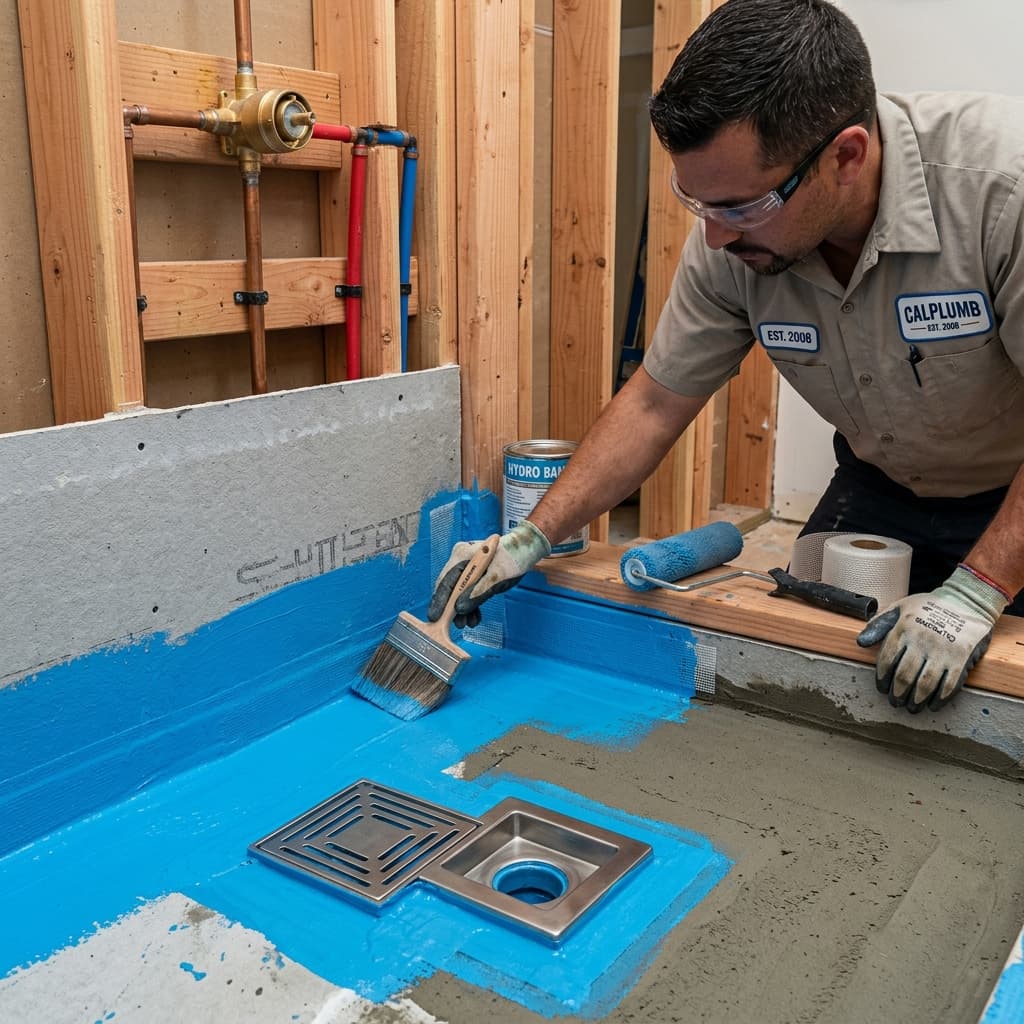

# Shower Pan Installation and Waterproofing Requirements: CPC Section 422 Compliance for C-36 Exam
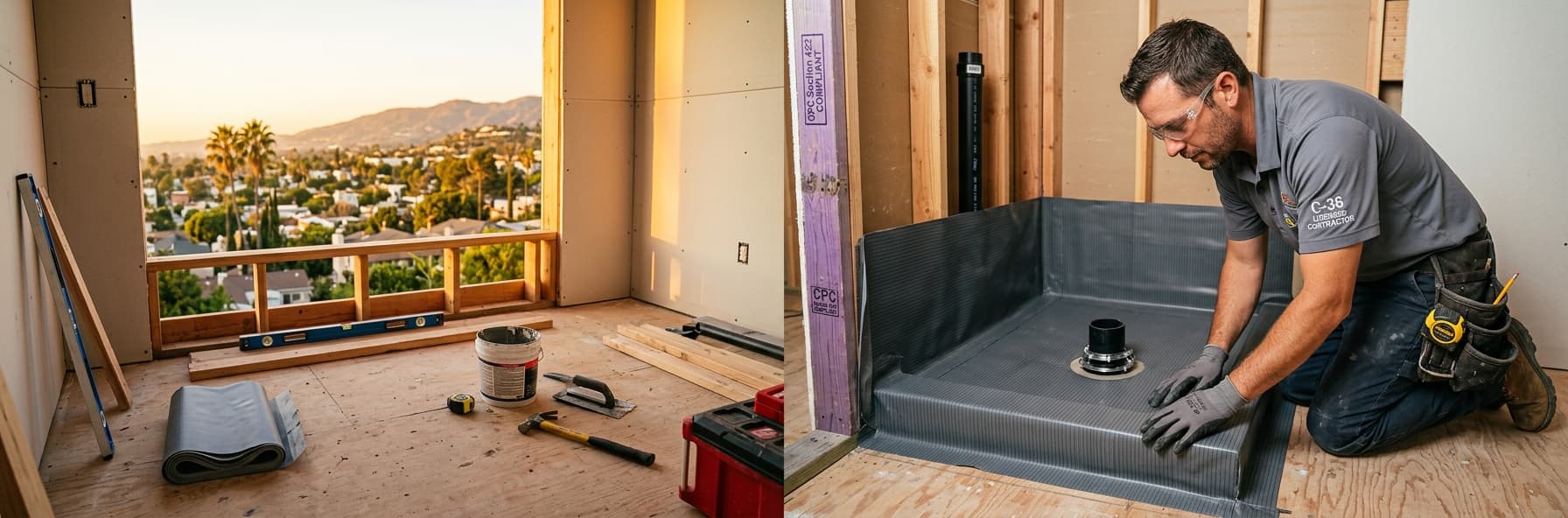
Shower pan installation california plumbing standards require precise attention to detail and strict adherence to the California Plumbing Code (CPC). For C-36 plumbing contractors preparing for their licensing exam, understanding CPC Section 422 is absolutely essential. This section establishes comprehensive requirements for shower pan installation, waterproofing membranes, and drainage systems that protect buildings from costly water damage.
Whether you're installing a standard residential shower or a commercial bathing facility, proper shower pan installation and waterproofing represents one of the most critical aspects of plumbing fixture installation. In this comprehensive guide, we'll explore the regulatory requirements, best practices, and exam-focused strategies you need to master shower pan compliance.
Understanding CPC Section 422: Shower and Bath Enclosures
CPC Section 422 provides the foundational standards for all shower and bath enclosure installations throughout California. This section is part of the broader fixture requirements covered under Part 2 of the C-36 exam: Water Supply and Distribution.
What Does CPC Section 422 Cover?
CPC Section 422 addresses multiple critical aspects of shower installation:
- Shower pan construction and materials
- Waterproofing membrane requirements and thickness
- Proper slope for drainage
- Connection to drainage systems
- Protection of structural elements
- Accessibility and fixture spacing standards
CPC Section 422.1: General Requirements for Shower Pans
Definition and Purpose
A shower pan, also called a shower base or shower receptor, is the watertight base of a shower enclosure. CPC Section 422.1 establishes that every shower compartment must have a watertight pan or receptor that collects water and directs it to the drainage system.
Key Requirement: All shower pans must be constructed to prevent water from seeping into structural elements, insulation, or exterior walls.Materials for Shower Pan Construction
CPC Section 422 permits several materials for shower pan construction:
- Mortar Bed with Waterproofing Membrane
- Fiberglass Reinforced Polyester (FRP)
- Acrylic or Composite Materials
- Tile Over Waterproofed Substrate
The Critical Importance of Waterproofing Membranes
Waterproofing Membrane Requirements
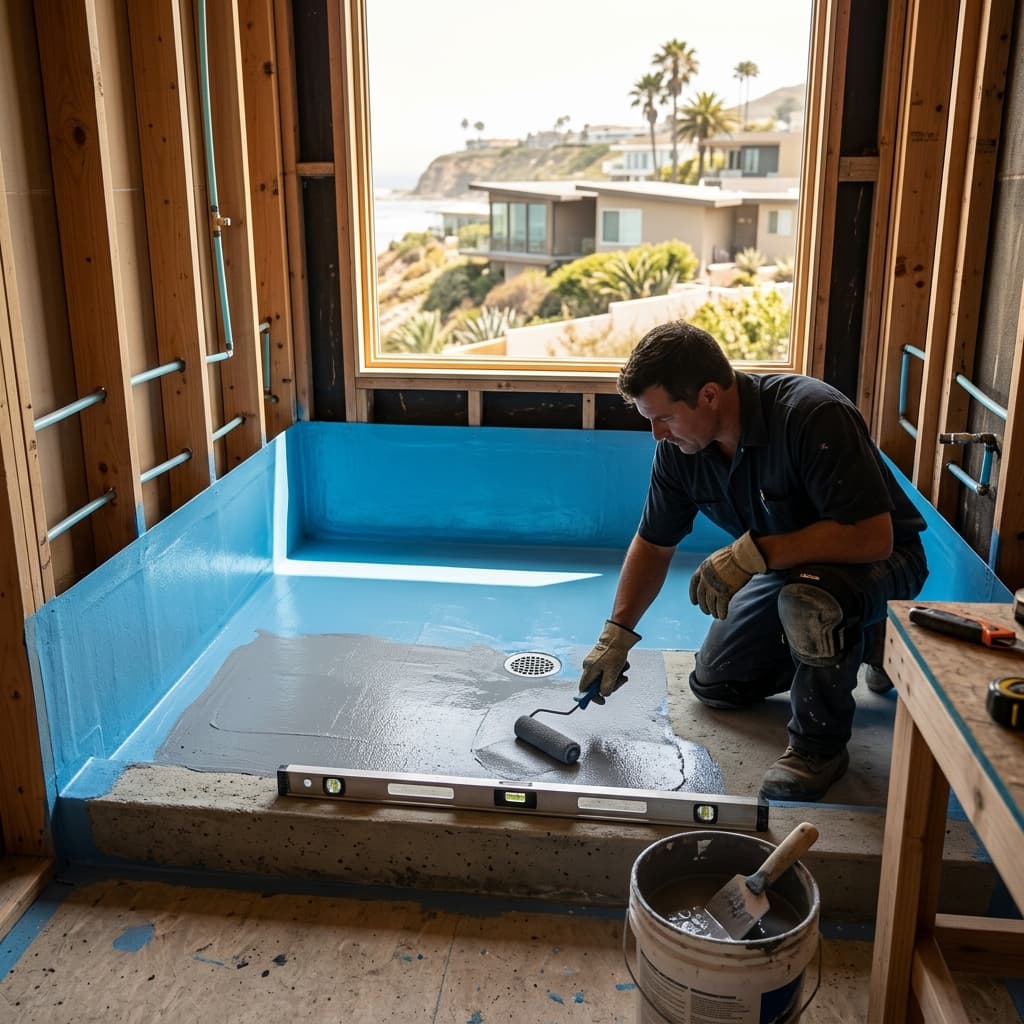
CPC Section 422.3 specifically addresses waterproofing membranes used in shower installations. This is one of the highest-tested areas on the C-36 exam because improper waterproofing causes the majority of water damage claims in residential and commercial buildings.Membrane Thickness Specifications
The California Plumbing Code requires waterproofing membranes to meet minimum thickness standards:
- Minimum thickness: 200 mils (0.2 inches or approximately 5mm)
- Liquid-applied membranes: Must meet ASTM D6904 standards
- Sheet membranes: Must meet ASTM E96 standards
Types of Waterproofing Membranes
#### Sheet Membranes- PVC membranes: Durable, chemical resistant, puncture-resistant
- EPDM membranes: Flexible, good for movement, environmentally friendly
- Chlorinated polyethylene (CPE): Good chemical resistance, moderate cost
- Polyurethane: Excellent adhesion, good flexibility
- Acrylic: Water-based, lower VOC, moderate durability
- Bituminous: Traditional option, good waterproofing
- Flash tapes at transitions and penetrations
- Secondary membranes at high-risk areas
- Multiple layers at corners and seams
Shower Pan Installation: Step-by-Step Compliance Process
Step 1: Subfloor Preparation
Before any waterproofing membrane is installed, the subfloor must be properly prepared according to CPC Section 422:
- Substrate must be solid and stable
- No deflection under foot traffic
- Properly sloped toward drain location
- Free of cracks, gaps, or debris
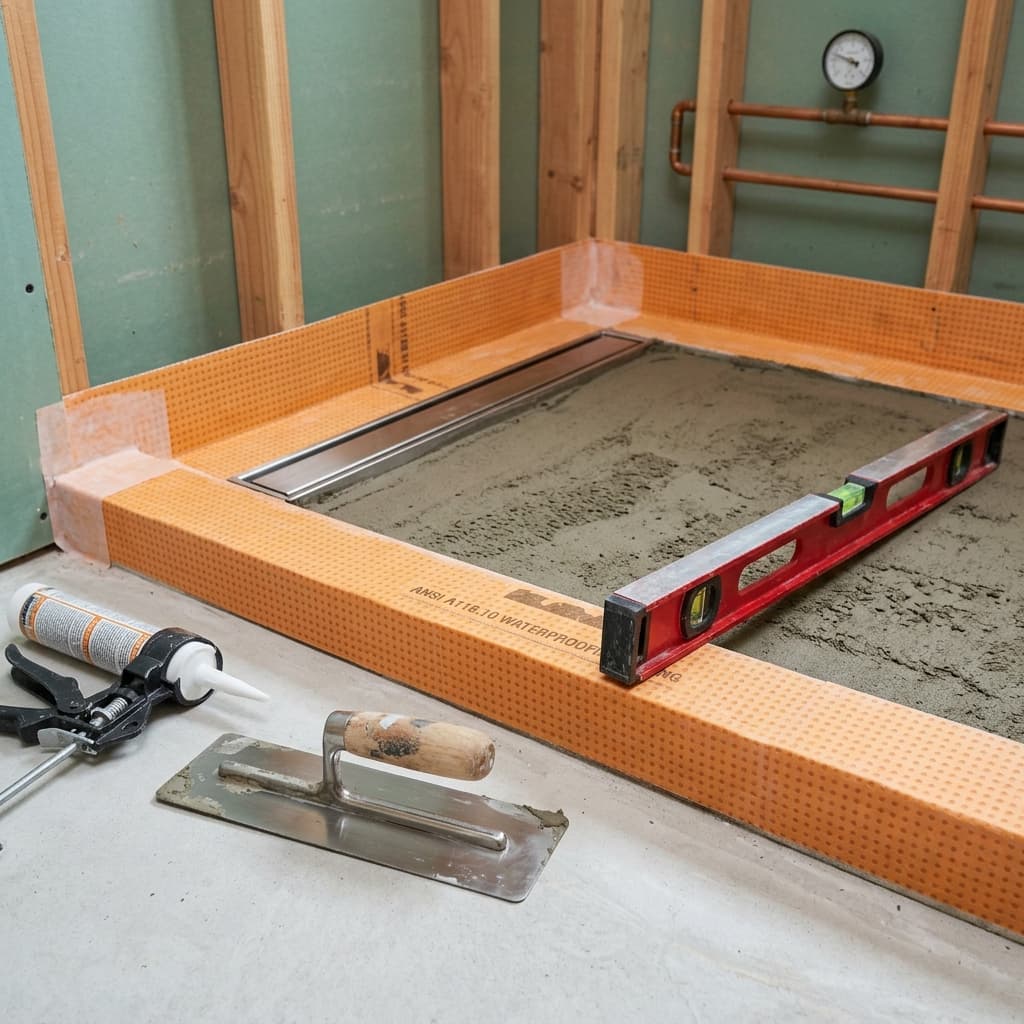
Step 2: Establishing Proper Slope
One of the most frequently tested topics on C-36 exams is shower pan slope requirements.
CPC Section 422.2 Slope Requirements:- Minimum slope: 1/4 inch per horizontal foot
- Slope direction: Toward the drain outlet
- Verification method: Visual inspection or slope gauge
- For a 5-foot width: 5 feet × 12 inches = 60 inches
- Required slope: 60 ÷ 4 = 1.5 inches drop from perimeter to drain
Step 3: Waterproofing Membrane Installation
#### Pre-Membrane Preparation- Install substrate as specified (cement board, mortar bed, etc.)
- Allow mortar to cure (typically 24-48 hours)
- Prime surface if required by membrane manufacturer
- Install corners and edges with proper preparation
- Starting point: Apply membrane at lowest point (drain area)
- Overlap requirements: Minimum 4 inches at seams for sheet membranes
- Penetration coverage: Extend 6 inches up walls from pan perimeter
- Drain flange integration: Membrane must properly seat at drain
- Flash tape application: Cover all seams, transitions, and potential penetration points
- Membrane must turn up and fully seal around drain opening
- Drain flange must seat on top of membrane in proper sequence
- Secondary flash tape at drain perimeter provides redundant protection
- All inside and outside corners must be fully sealed
- Use corner-specific flash tape or membrane products
- Verify no bridging or gaps at corners
- Any pipes, electrical conduits, or vents require individual flashing
- Minimum 6-inch extension from penetration
- Sealed with caulk or tape per manufacturer specifications
Step 4: Substrate Installation Over Membrane
After membrane curing is complete:
- Install waterproof cement board (CPC Section 422.4)
- Minimum thickness: 1/2 inch for floor, 1/4 inch for walls
- Fastener requirements: Corrosion-resistant fasteners at specified spacing
- Joint treatment: Waterproof caulk or tape at all board joints
CPC Section 422.4: Wall and Surround Requirements
Waterproof Covering Requirements
All surfaces within the shower enclosure must be waterproof and durable:
- Walls: Glazed tile, acrylic, or FRP
- Minimum height: 6 feet from floor to ceiling (or full wall per code)
- Sealing: All grout joints and penetrations must be sealed
- Substrate: Waterproof cement board or equivalent
Tile Installation Standards
When using tile as the finished surface:
- Adhesive: Use waterproof thin-set mortar meeting ANSI standards
- Grout: Use urethane, epoxy, or non-sanded grout with water-resistant admixtures
- Grout sealing: Allow proper cure time before water exposure (typically 48-72 hours)
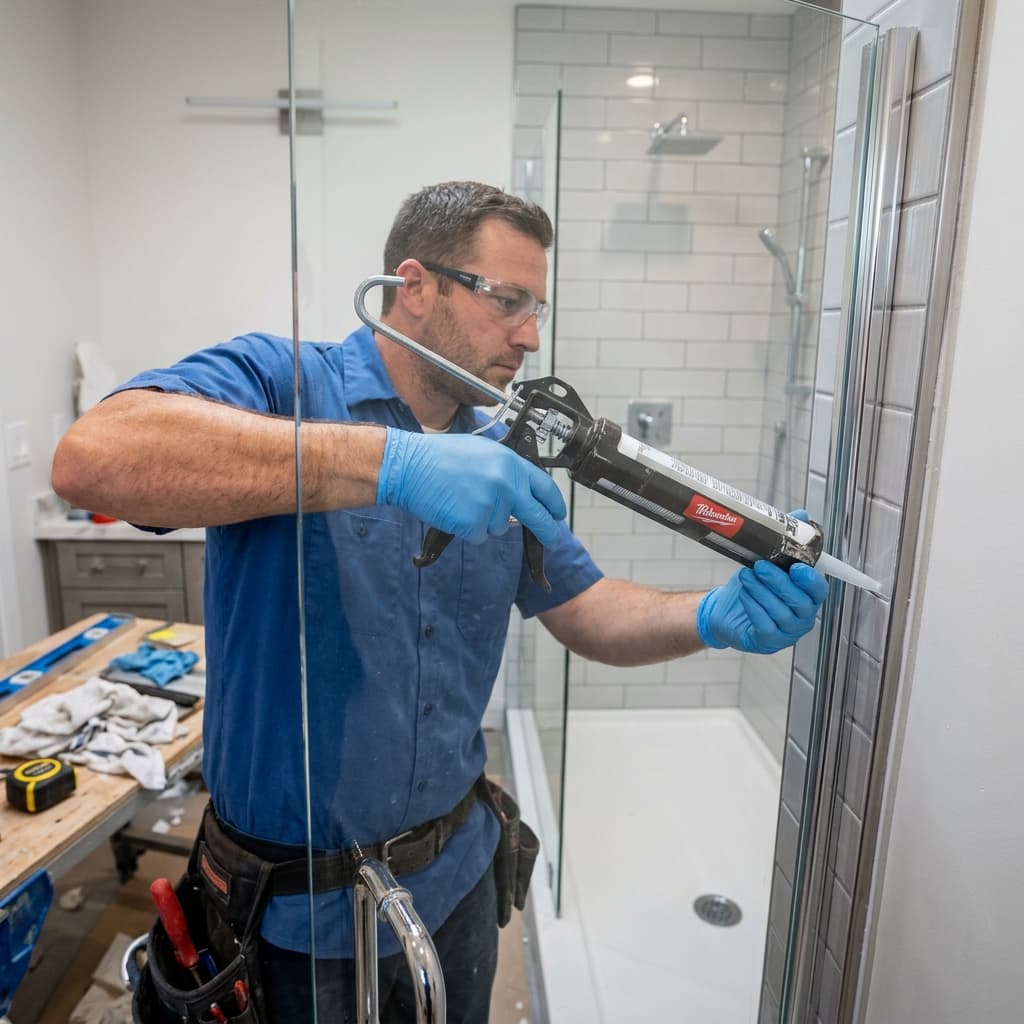
- Caulking: Use waterproof caulk at all internal and external corners (not grout)
Drain Connection and Sizing
Integration with Drainage System
Proper drain connection is critical for shower pan functionality:
CPC Section 422.5 Drainage Requirements:- Shower pan drainage outlet must connect to building drainage system per CPC Section 308 standards
- Trap seal must be maintained at P-trap or integral drain trap
- Drain must be properly sized and vented
Drain Sizing
Shower drainage outlet:- Standard shower: 2-inch diameter minimum
- Multiple head showers: Consider combined drainage capacity
- Sloped drain line: Minimum 1/4-inch slope to main drain
Common Installation Defects and Exam Questions
Top Five Installation Errors
- Insufficient membrane thickness — Falls below 200 mils
- Inadequate slope — Less than 1/4" per foot
- Poor corner sealing — Membranes not fully extended into corners
- Improper wall height — Waterproof covering below required 6-foot minimum
- Drain integration failures — Membrane not properly sealed at drain flange
Typical C-36 Exam Questions on Section 422
Question Type 1: Membrane Thickness "What is the minimum thickness required for waterproofing membranes in shower pans per CPC Section 422?"- Answer: 200 mils
- Answer: 1 inch (4 feet × 12 inches ÷ 4 = 12 inches)
- Answer: 6 feet from floor
- Answer: Waterproof cement board, mortar bed with membrane, or approved equivalent
- Answer: 2 inches
Related Code Sections and Interconnections
Proper shower installation requires understanding how CPC Section 422 relates to other code requirements:
CPC Section 308: Drainage Systems
- Controls proper trap installation
- Establishes vent requirements for drain lines
- Specifies minimum pipe sizes and slopes
CPC Section 401: Water Supply and Distribution
- Governs hot and cold water supply lines to shower
- Requires mixing valve installation for scald prevention
- Controls pressure requirements
CPC Section 406: Water Heaters
- Establishes temperature control for hot water
- Impacts mixing valve selection and installation
- Affects pressure relief requirements
CPC Section 502: Maintenance and Accessibility
- May require grab bars in certain installations
- Controls clearances and reach ranges
- Impacts fixture placement and drainage routing
Best Practices for C-36 Exam Success
Study Strategy for Section 422
- Memorize key numeric requirements:
- Create visual study aids:
- Practice calculation problems:
- Review installation sequences:
Hands-On Learning
- Site visits: Observe actual shower installations in progress
- Material comparison: Examine different membrane types and thicknesses
- Inspector ride-alongs: Learn how inspectors verify compliance
- Failed installation case studies: Analyze water damage from improper installation
Inspection and Compliance Verification
Inspector Inspection Points
Code enforcement inspectors verify Section 422 compliance through:
- Visual inspection of membrane installation before substrate application
- Thickness verification using gauge or destructive testing
- Slope verification using slope meter or level
- Seam inspection for proper overlap and sealing
- Penetration sealing verification
- Wall height and covering confirmation
Documentation Requirements
For new construction and remodels:
- Installation photos showing membrane application
- Material certifications for waterproofing products
- Slope verification documentation
- Inspection sign-off before concealment
- Warranty information for membrane products
Frequently Asked Questions About CPC Section 422
Q: Can I use standard roofing tar instead of an approved waterproofing membrane? A: No. CPC Section 422 requires membranes meeting specific ASTM standards. Roofing tar is not acceptable for shower pan applications. Q: What if the subfloor doesn't have adequate slope? A: Build up a mortar bed with proper slope before applying the waterproofing membrane. This is the standard approach in California installations. Q: How long must membranes cure before wall substrate installation? A: Follow manufacturer specifications, typically 24-48 hours. Allow proper cure time to ensure membrane integrity before substrate application. Q: Is waterproof cement board sufficient as a waterproofing barrier? A: No. Cement board resists water but is not fully waterproof. You must install a waterproofing membrane underneath per CPC Section 422. Q: Can I use standard drywall in a shower enclosure? A: No. Standard drywall fails when exposed to moisture. CPC Section 422 requires waterproof cement board or equivalent.Conclusion
Mastering shower pan installation and waterproofing requirements under CPC Section 422 is essential for C-36 exam success and professional plumbing practice. This section directly impacts building durability, preventing costly water damage that can occur for decades after improper installation.
Remember the critical requirements: 200 mils minimum membrane thickness, 1/4-inch per foot slope, 6-foot wall height, and proper integration with the drainage system. These foundational standards appear repeatedly on the C-36 exam and define proper plumbing practice throughout California.
As you prepare for your licensing exam, dedicate significant study time to Section 422. Create practice questions, work through calculations, and visualize proper installation sequences. Your thorough understanding of shower pan waterproofing will serve you throughout your plumbing career.