


# CPC Section 403: Master Sanitary Drainage System Design for Your C-36 Exam
Introduction to Sanitary Drainage System Design
The sanitary drainage system design represents one of the most critical components of plumbing infrastructure that every C-36 license candidate must understand. California Plumbing Code (CPC) Section 403 establishes the foundational requirements for horizontal and vertical drainage pipe installation, sizing, and slope specifications that ensure proper wastewater removal from buildings.Whether you're installing a simple residential system or designing complex commercial drainage networks, understanding CPC Section 403 requirements is non-negotiable for both exam success and professional competency. This comprehensive guide breaks down the essential concepts you need to master for Part 2 of the C-36 exam.
Overview of CPC Section 403 Requirements
CPC Section 403 governs the design and installation of sanitary drainage piping systems that convey liquid and water-carried wastes from plumbing fixtures to the building sewer. The code section addresses three primary aspects:- Horizontal drainage pipe installation
- Vertical drainage stack sizing and installation
- Pipe material and diameter specifications
Horizontal Drainage Pipe Requirements Under CPC Section 403
Minimum Slope Standards
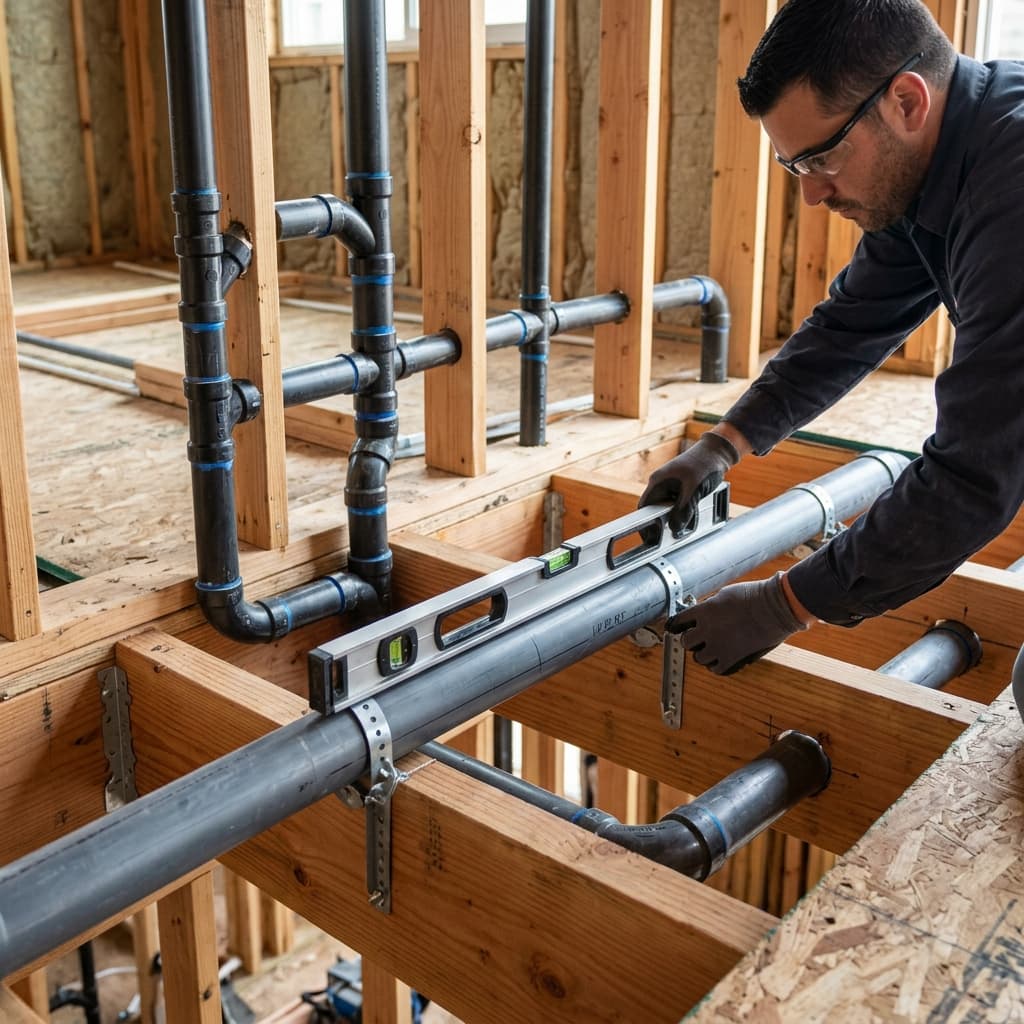
One of the most frequently tested aspects of CPC Section 403 involves horizontal drainage pipe slope requirements. The code establishes that horizontal drainage pipes must be pitched at a minimum slope of 1/4 inch of fall per foot of horizontal run.This translates to a 1:48 ratio or approximately 2.08% grade. Why is this specific slope so important? Several reasons:
- Prevents standing water: Without adequate slope, wastewater accumulates in pipes, creating blockages and bacterial growth
- Maintains adequate velocity: The slope ensures wastewater moves at 2-4 feet per second, the optimal range for self-scouring action
- Reduces odor and corrosion issues: Stagnant wastewater creates hydrogen sulfide gases that corrode pipes and create safety hazards
Common Exam Question Format
"A horizontal drainage line runs 24 feet from the fixture to the main stack. What is the minimum required drop in elevation?" Calculation: 24 feet × 1/4 inch per foot = 6 inches minimum dropThis fundamental calculation appears frequently in different formats on the C-36 exam, so practice until it becomes second nature.
Maximum Slope Considerations
While CPC Section 403 establishes the minimum slope requirement, it also addresses maximum slope scenarios. Pipes sloped steeper than 45 degrees are considered vertical pipes, not horizontal drainage lines. Additionally, excessively steep slopes can cause:
- Liquid waste to separate from solid waste
- Water to run ahead, leaving solids behind
- Increased pipe erosion and noise
Vertical Drainage Stack Sizing and Installation
Understanding Drainage Fixture Units (DFU)
Vertical stacks must be sized based on the total drainage fixture units (DFU) they will serve. CPC Section 422 works in conjunction with Section 403 to establish DFU tables, but Section 403 provides the installation framework.Typical DFU values include:
| Fixture Type | DFU Value | |---|---| | Toilet | 4 | | Lavatory | 1 | | Bathtub | 2 | | Kitchen Sink | 2 | | Shower | 2 | | Floor Drain | 3 | | Washing Machine | 2 |
Vertical Stack Sizing Tables
CPC Section 403 Table 403.2 establishes the maximum number of drainage fixture units that can be connected to a vertical stack based on pipe diameter:
| Stack Size | Maximum DFU | |---|---| | 2" | 24 DFU | | 3" | 72 DFU | | 4" | 384 DFU |
Critical Exam Concept: These tables are not provided on most C-36 exams, meaning you may need to memorize key values or understand how to interpret sizing requirements logically.Stack Offset Requirements
When vertical stacks change direction (offset), CPC Section 403 establishes specific requirements:
- Offsets at 45 degrees or less from vertical are considered part of the vertical stack
- Offsets greater than 45 degrees are treated as horizontal drainage pipes and must maintain 1/4 inch per foot slope
- The connection between the offset and the lower stack must use appropriate fittings (wyes, tees, or combinations)
Relief Venting and Stack Height
An important provision under CPC Section 403 relates to vertical stacks that exceed 10 stories. These stacks must be relieved to prevent excessive pressure differentials and siphonage of trap seals. Relief vents connect the upper portion of the stack to allow air entry, preventing the vacuum conditions that would otherwise develop. This requirement demonstrates why understanding the broader venting system (covered in CPC Section 408 Vent Pipe Sizing) complements your knowledge of Section 403.Material Specifications and Diameter Requirements
Approved Pipe Materials
CPC Section 403 works with CPC Section 422 (Materials) to establish approved materials for sanitary drainage piping:- Cast Iron (hub and spigot, or no-hub with stainless steel bands)
- Plastic (ABS or PVC)
- Copper (Copper DWV with appropriate solder)
- Stainless Steel
Minimum Pipe Diameters
Building drains and stacks have minimum diameter requirements based on their function:
- Building drain: Minimum 3 inches
- Building sewer: Minimum 4 inches
- Stack serving a water closet: Minimum 3 inches
- Stack not serving water closet: Minimum 2 inches
Connection Requirements and Fittings
Horizontal to Vertical Connections
When horizontal drainage pipes connect to vertical stacks, CPC Section 403 specifies that:
- 45-degree wyes or long-sweep quarter bends are preferred for optimal flow
- Sanitary tees are prohibited for drainage flow (except for vent connections)
- Cleanouts must be installed at all changes of direction greater than 45 degrees
Cleanout Placement Requirements
CPC Section 403 mandates cleanouts at specific locations:
- At the base of each stack
- At changes of direction exceeding 45 degrees
- At junction of building drain and building sewer
- Every 50 feet along building drains (for commercial installations)
- Maximum 10 feet from fixtures in residential applications
Common C-36 Exam Scenarios and Solutions
Scenario 1: Slope Calculation Problem
"A drainage line for a kitchen sink extends 16 feet horizontally to the main stack. You must install the line with a 12-inch vertical drop due to ceiling height limitations. Is this compliant?" Solution:- Minimum required drop: 16 feet × 1/4 inch/foot = 4 inches
- Actual drop provided: 12 inches
- 12 inches > 4 inches minimum ✓ Compliant
Scenario 2: Stack Sizing Problem
"A vertical stack serves 6 toilets (24 DFU), 8 lavatories (8 DFU), 4 bathtubs (8 DFU), and 2 kitchen sinks (4 DFU). What minimum stack size is required?" Solution:- Total DFU: 24 + 8 + 8 + 4 = 44 DFU
- Maximum for 3-inch: 72 DFU
- Minimum for 2-inch: 24 DFU
- Answer: 3-inch stack (minimum acceptable size)
Scenario 3: Offset Direction Problem
"A stack offsets 55 degrees from vertical. How must this offset be treated?" Solution: Since 55 degrees exceeds 45 degrees from vertical, it's treated as a horizontal drainage line and must maintain 1/4 inch per foot slope.Key Code References You Must Know
For exam preparation, ensure you're familiar with these related code sections that work with CPC Section 403:
- CPC Section 402: Definitions (DFU, stack, vent stack, etc.)
- CPC Section 405: Material testing and approval standards
- CPC Section 406: Cleanout specifications and placement
- CPC Section 408: Vent pipe sizing and installation
Study Strategies for Section 403 Mastery
Create a Reference Sheet
Develop a study sheet with:- DFU table for common fixtures
- Stack sizing table (2", 3", 4" maximum DFU values)
- Slope calculation formula (1/4 inch per foot)
- Fitting requirements and prohibitions
Practice Calculation Problems
The C-36 exam includes multiple calculation-based questions. Practice:- Slope calculations for various horizontal distances
- Stack sizing scenarios with mixed fixture types
- Offset direction determinations
- Cleanout location identification
Use Real-World Installations
Visit active job sites and observe:- How slope is achieved in actual installations
- Stack placement and sizing decisions
- Offset configurations and how they're installed
- Material choices and their implications
Common Mistakes to Avoid
Mistake 1: Confusing Slope Direction
Students sometimes calculate slope as height rise rather than fall. Remember: slope is the DROP (fall) of the line, not the rise.Mistake 2: Misapplying the 45-Degree Rule
The 45-degree rule applies to determining whether a connection is "horizontal" or "vertical." Anything less than or equal to 45 degrees from vertical is treated as vertical. Anything greater than 45 degrees is treated as horizontal and requires 1/4 inch per foot slope.Mistake 3: Forgetting Material-Specific Requirements
Different materials have different support spacing, expansion requirements, and installation procedures. Don't assume all materials work identically.Mistake 4: Overlooking Cleanout Requirements
Cleanout placement is heavily tested. Remember the key triggers: direction changes greater than 45 degrees, base of stacks, and junctions of major components.Conclusion: Your Path to C-36 Success
Mastering CPC Section 403 drainage pipe requirements provides the technical foundation for passing Part 2 of the C-36 exam. By understanding the "why" behind the 1/4 inch per foot slope requirement, the logic of stack sizing based on DFU values, and the distinction between horizontal and vertical pipe treatment, you'll develop the deeper comprehension that separates successful candidates from those who merely memorize rules.The California Plumbing Code drainage regulations exist to ensure safe, functional plumbing systems that protect public health. When you truly understand Section 403, you're not just preparing for an exam—you're building the professional knowledge that will serve you throughout your plumbing career.
Next Steps for Your Exam Preparation:- Review and memorize the DFU table for 12 common fixtures
- Practice 20 slope calculation problems until you can solve them in seconds
- Study actual code language in CPC Section 403 (Tables 403.1 and 403.2)
- Take practice exams focusing specifically on drainage section questions
- Review the related sections (406 for cleanouts, 408 for venting) to understand the complete system