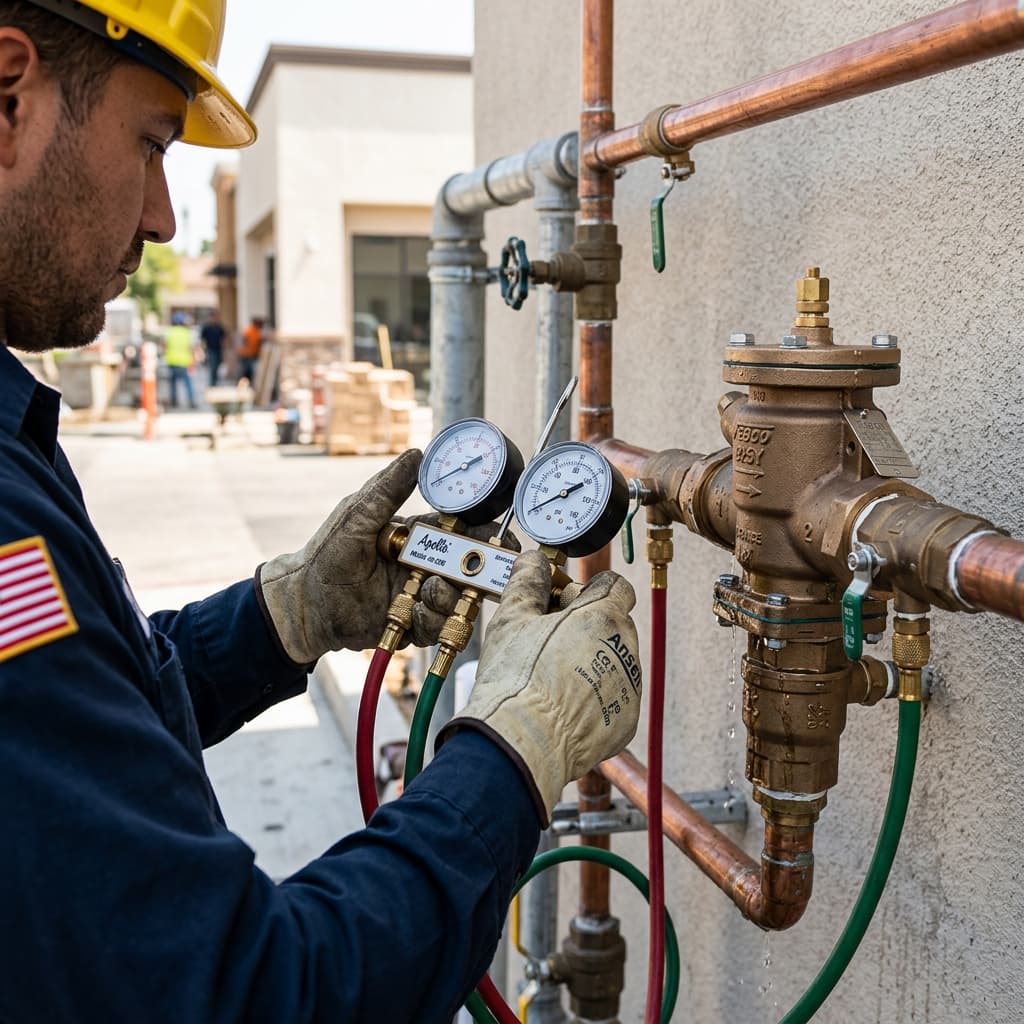

# Potable Water System Pressure Regulation and Backflow Prevention Device Testing Requirements
Water pressure regulation california plumbing professionals is a foundational safety requirement that protects both the public water system and individual building plumbing installations. The California Plumbing Code (CPC) establishes comprehensive guidelines for managing water pressure and preventing contamination through backflow. This comprehensive guide covers the critical intersection of pressure regulation and backflow prevention—two essential components of Part 4: Water Supply and Distribution on your C-36 exam.
Understanding Potable Water System Pressure Requirements
Minimum and Maximum Pressure Standards
The potable water system in California must maintain specific pressure parameters to ensure adequate service while preventing damage to fixtures and the distribution network.
Minimum Pressure Requirements:- CPC Section 304.1 establishes that water pressure must be at least 20 pounds per square inch (psi) at the point of delivery under normal conditions
- Residual pressure during peak demand periods should not fall below 20 psi
- Service lines must deliver adequate pressure to reach the highest fixture in the building
- CPC Section 303.1 limits water pressure to a maximum of 80 psi at the water meter or point of service
- Pressure exceeding 80 psi requires installation of a pressure reducing valve (PRV)
- This protection prevents damage to fixtures, pipes, and appliances
Why Pressure Regulation Matters
Excessive water pressure causes multiple problems:
- Fixture damage: High-pressure water stresses faucet washers, cartridges, and valve seals
- Pipe deterioration: Pressure spikes accelerate corrosion and pinhole leaks in copper piping
- Noise and vibration: Water hammer and system noise result from uncontrolled pressure
- Appliance failures: Water heaters, washing machines, and dishwashers have pressure ratings typically between 60-80 psi
- Increased water consumption: Excessive pressure creates leaks that waste significant water volumes
Pressure Reducing Valve Installation Requirements
When PRVs Are Required
CPC Section 303.2 mandates pressure reducing valve installation when:- Public water supply pressure exceeds 80 psi under normal conditions
- Water pressure testing shows maximum pressures above 80 psi
- Private well or booster pump systems deliver pressure exceeding 80 psi
- High-rise buildings require pressure regulation to protect lower-level fixtures
PRV Installation Location and Design
Required Installation Point:- PRVs must be installed on the main water supply line immediately after the water meter
- CPC Section 303.3 specifies the PRV must be located on the building side of the meter
- All water entering the building must pass through the PRV when one is required
- Must be accessible for inspection, maintenance, and replacement
- Cannot be located in walls, under stairs, or inaccessible spaces
- Should be installed in a location with adequate clearance for service operations
- Installation in above-ground, climate-controlled spaces is preferred for longevity
PRV Adjustment and Testing
Initial Setup:- PRVs must be adjusted to deliver 50-70 psi for most residential installations
- Adjustment should account for elevation differences and fixture requirements
- CPC Section 303.4 requires that outlet pressure not exceed 60 psi for typical single-family residences
- Verify inlet pressure with a calibrated pressure gauge
- Confirm outlet pressure meets design specifications
- Check for smooth pressure reduction without fluctuation
- Test at various demand conditions (peak and low flow periods)
PRV Types and Selection
Direct-Acting (Pilot-Operated) PRVs:- Operate without external power sources
- Suitable for residential and light commercial applications
- Typical sizes: ½ inch to 2 inches
- Flow capacity ranges from 10-100 gallons per minute
- Replaceable cartridge design for easier maintenance
- Better performance under varying demand conditions
- Common in commercial installations
- Allow simplified field replacement without system shutdown
Backflow Prevention Device Testing Requirements
Understanding Backflow Hazards
Backflow occurs when water flows backward in a plumbing system, potentially contaminating the public water supply. CPC Section 608 addresses comprehensive backflow prevention requirements. Two Types of Backflow:- Backsiphonage: Water is pulled backward due to reduced pressure in the distribution system
- Backpressure: Water is pushed backward due to pressure exceeding supply line pressure
Backflow Prevention Device Categories
Atmospheric Vacuum Breaker (AVB):- Simplest backflow prevention device
- Used only on hose bibs, irrigation systems, and non-health-hazard applications
- CPC Section 608.12 specifies installation requirements
- Not permitted for internal plumbing connections
- Suitable for moderate-hazard applications
- Can handle both backsiphonage and backpressure conditions
- Common on irrigation systems and auxiliary water supplies
- Requires annual testing per CPC Section 608.13
- Contains two independent check valves
- Approved for low-hazard backflow prevention
- Permitted on landscape irrigation and auxiliary supplies
- Must meet CPC Section 608.14 specifications
- Gold standard for high-hazard backflow prevention
- Contains check valves and relief mechanism
- Required when cross-connections involve toxic chemicals or contaminated water
- Mandated for fire suppression systems with chemical additives
- CPC Section 608.15 details installation and testing requirements
Annual Backflow Prevention Device Testing
Testing Requirements Overview
CPC Section 608.2 requires that backflow prevention devices be tested:- Upon initial installation
- Annually thereafter
- Whenever relocated or modified
- After any system repairs affecting device operation
Certified Tester Requirements
- Testing must be performed by a California-certified backflow prevention device tester
- Certification requires completion of approved training courses
- Testers must use calibrated equipment and follow standardized procedures
- Documentation of all testing must be provided to water suppliers
Test Procedures and Documentation
Required Testing Equipment:- Calibrated differential pressure gauges
- Test kit appropriate to device type
- Flow measurement devices
- Documentation forms per water supplier specifications
- First check valve closure and sealing under backpressure
- Second check valve operation and performance
- Relief valve function and proper discharge
- Proper closure under backsiphonage conditions
- Device location and identification
- Test date and time
- Inspector name and certification number
- Inlet and outlet pressure readings
- Device condition and any repairs needed
- Pass/fail determination
- Corrective action recommendations
Frequency and Record Retention
- CPC Section 608.16 requires testing at least annually
- Water suppliers must maintain records of all device testing
- Records must be available for inspection by regulatory agencies
- Failed devices must be repaired or replaced immediately
- Some high-hazard applications require quarterly or bi-annual testing
Integration of Pressure Regulation and Backflow Prevention
System Design Considerations
Effective potable water system protection requires coordinating pressure regulation with backflow prevention:
Proper Sequence:- Water enters meter
- Backflow prevention device installed (if high-hazard cross-connection exists)
- Pressure reducing valve installed (if inlet pressure exceeds 80 psi)
- Proper distance maintained between PRV and backflow device
- Minimum 12 inches of straight pipe between devices
- Prevents interaction between pressure reduction and backflow functions
- Allows independent operation and testing of each component
Building-Level Pressure Zones
Modern commercial buildings often implement multiple pressure zones:
- Main PRV at building entry reduces pressure from supply line
- Zone PRVs regulate pressure for specific building sections
- Backflow devices protect individual high-hazard areas (laboratories, medical facilities)
- Each zone can be independently maintained and tested
Common Exam Questions and Answers
Q: What is the maximum water pressure permitted in California? A: 80 psi under normal conditions per CPC Section 303.1. Pressures exceeding this require a pressure reducing valve. Q: Where must a pressure reducing valve be installed? A: Immediately after the water meter on the building side, per CPC Section 303.2. Q: How often must backflow prevention devices be tested? A: Annually per CPC Section 608.2, with documentation provided to the water supplier. Q: What device is required for high-hazard backflow prevention? A: A Reduced Pressure Zone (RPZ) device per CPC Section 608.15 is the only approved device for high-hazard applications. Q: Can an atmospheric vacuum breaker protect internal plumbing? A: No. AVBs are limited to non-health-hazard applications like hose bibs and irrigation per CPC Section 608.12.Key Code Sections for C-36 Exam Preparation
- CPC Section 303.1: Maximum water pressure (80 psi)
- CPC Section 304.1: Minimum water pressure (20 psi)
- CPC Section 303.2: Pressure reducing valve requirement
- CPC Section 608: Backflow prevention requirements
- CPC Section 608.12-608.15: Specific device type requirements
- CPC Section 608.16: Testing and documentation requirements
Practical Field Application Tips
- Always verify inlet pressure before specifying a PRV—assume high pressure if not tested
- Use certified testers for backflow device certification—never sign off on untested devices
- Maintain accessibility of all pressure and backflow devices for future maintenance
- Document everything including test results, pressure readings, and any modifications
- Understand your water district's requirements—some require specific device brands or testing protocols
Conclusion
Water pressure regulation california and backflow prevention device testing represent critical safety requirements in modern plumbing practice. The California Plumbing Code establishes clear standards for pressure limiting (maximum 80 psi), pressure reducing valve installation, and mandatory annual backflow device testing. As you prepare for your C-36 exam, focus on understanding the specific installation requirements for pressure reducing valves, the distinction between backflow prevention device types, and the annual testing and certification protocols mandated by CPC Section 608.
Mastering these requirements protects both your clients' plumbing systems and the public water supply from contamination. The intersection of pressure regulation and backflow prevention demonstrates how modern plumbing codes balance system efficiency with public health protection.