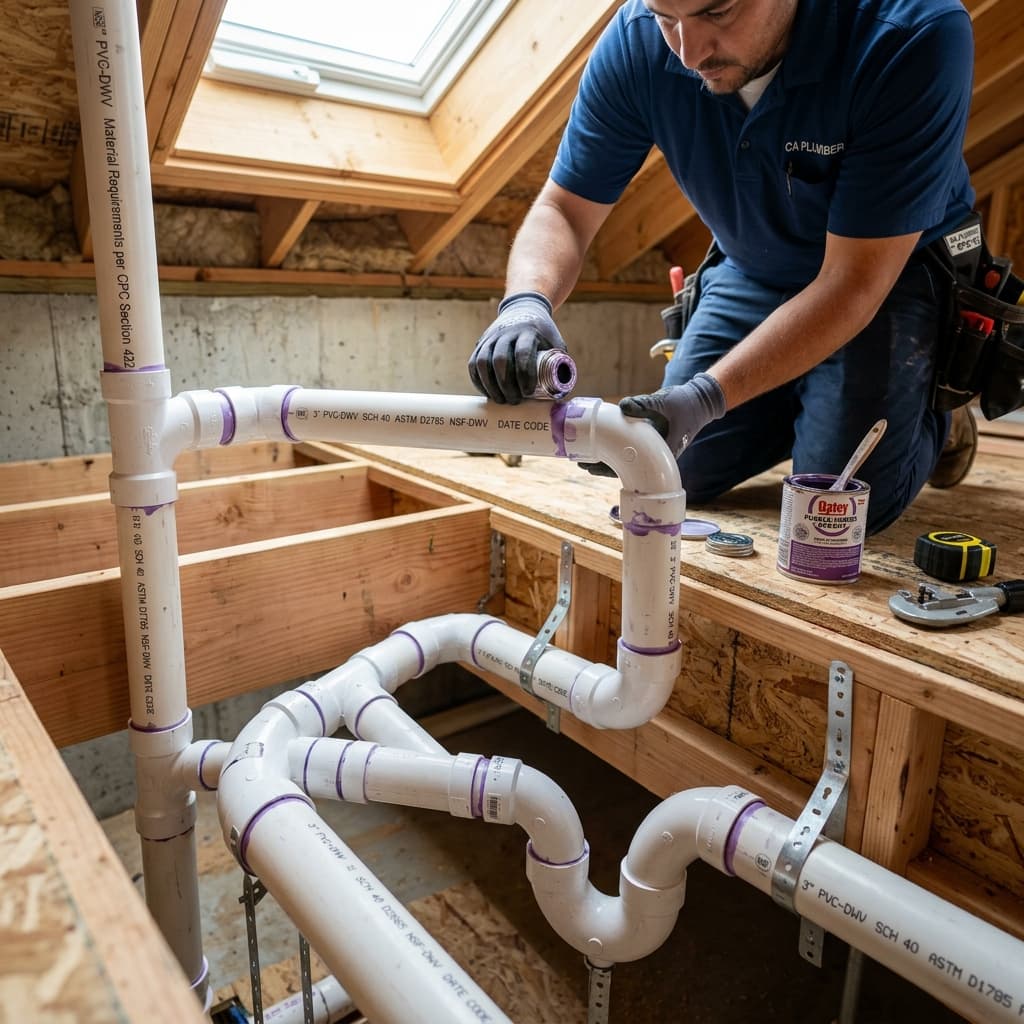

# Medical Gas and Specialty Piping Systems: CPC Section 422 Installation Standards for C-36 Exam
Introduction
Medical gas piping california installations are critical components of modern healthcare facility infrastructure, and understanding CPC Section 422 is essential for anyone pursuing their C-36 plumbing certification. The California Plumbing Code dedicates comprehensive requirements to specialty piping systems that transport oxygen, nitrogen, vacuum, and other medical gases throughout hospitals, clinics, and surgical centers.
For C-36 exam candidates, mastering medical gas piping requirements isn't optional—it's a fundamental aspect of Part 4: Water Supply and Distribution that tests your knowledge of specialized systems beyond traditional water distribution. This guide provides the detailed technical knowledge you need to confidently answer exam questions about CPC Section 422 medical gas installations.
Understanding CPC Section 422 Overview
What is CPC Section 422?
CPC Section 422 establishes the minimum standards for the design, installation, testing, and maintenance of medical gas piping systems in California. This section applies to all healthcare facilities, including hospitals, ambulatory surgical centers, clinics, dental offices, and any facility where medical gases are piped to patient care areas.
The section covers four primary medical gas systems:- Medical oxygen piping systems
- Vacuum (suction) piping systems
- Nitrogen piping systems
- Nitrous oxide piping systems
Exam Relevance for C-36 Candidates
While medical gas systems differ from water supply and distribution, California includes them in Part 4 because both require sophisticated piping infrastructure, pressure management, and regulatory compliance. Expect 3-4 questions on the C-36 exam specifically addressing medical gas standards, often presented as scenario-based problems testing your application of CPC Section 422 requirements.
Material Requirements per CPC Section 422
Acceptable Piping Materials
CPC Section 422.1 specifies strict material requirements for medical gas piping. The code recognizes these materials as acceptable: Copper tubing remains the most common choice for medical gas systems. CPC Section 422.1 requires:- Type K, L, or M copper tubing per ASTM B88
- Hard-drawn or annealed copper acceptable
- Minimum wall thickness standards applicable to pressure classifications
- All copper tubing must be oxygen-cleaned for oxygen systems
- Seamless steel tubing per ASTM A269
- Stainless steel Type 304 or 316 preferred for corrosion resistance
- Carbon steel acceptable with proper protective measures
- Requires special cleaning procedures for oxygen service
- Superior corrosion resistance in moisture-prone environments
- Better compatibility with all medical gases
- Longer service life with minimal maintenance
- Higher initial cost offset by durability
Material Prohibitions
CPC Section 422.1 explicitly prohibits certain materials:- Plastic piping of any type (PVC, PEX, etc.)
- Galvanized steel (zinc coating incompatible with oxygen)
- Aluminum and aluminum alloys
- Brass fittings in oxygen systems (fire hazard risk)
- Cast iron in any medical gas application
Oxygen-Cleaning Requirements
For oxygen piping systems, CPC Section 422.2 mandates complete oxygen cleaning:- All tubing, fittings, and components must be oxygen-cleaned
- Oil and moisture residue must be removed per NFPA 99
- Certified cleaning procedures required with documentation
- Cleaning certificates must accompany materials to the job site
Pressure and Size Requirements
Design Pressure Classifications
CPC Section 422.3 establishes four pressure classifications for medical gas systems:
Low-pressure systems (0-20 PSI):- Primarily vacuum systems
- Require standard copper or steel tubing
- Sized based on flow requirements, not pressure
- Oxygen delivery systems
- Require larger diameter tubing
- Pressure drops limited to 10% per code
- Nitrogen and bulk gas delivery
- Specialized fittings and regulators required
- Pressure testing at 1.5 times design pressure mandatory
Sizing Calculations
Proper sizing prevents excessive pressure drop and ensures adequate gas delivery. CPC Section 422.3 references pressure drop calculations that consider:
- Flow rate requirements (measured in cubic feet per minute)
- Tubing diameter and length
- Number of outlets and connection points
- Altitude adjustments for California high-elevation facilities
- Central supply to zone: 10 PSI maximum
- Zone distribution: 5 PSI maximum
- Individual outlet: not to exceed 15 PSI total
Color-Coding Standards and Identification
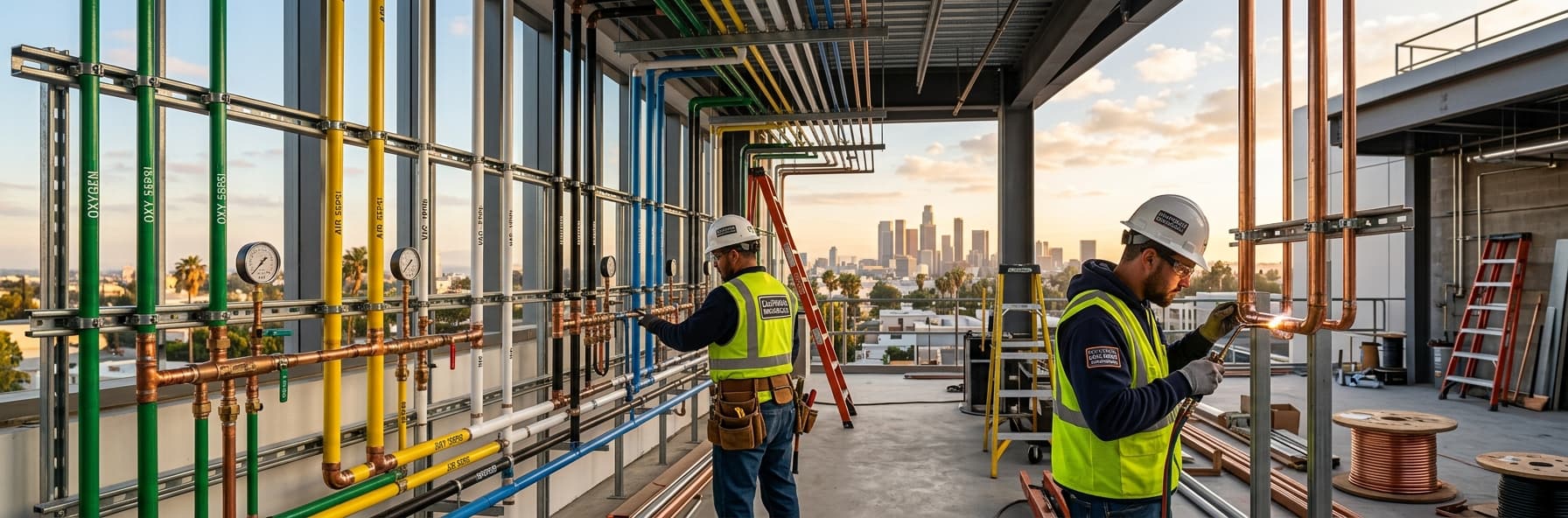
Required Color Codes
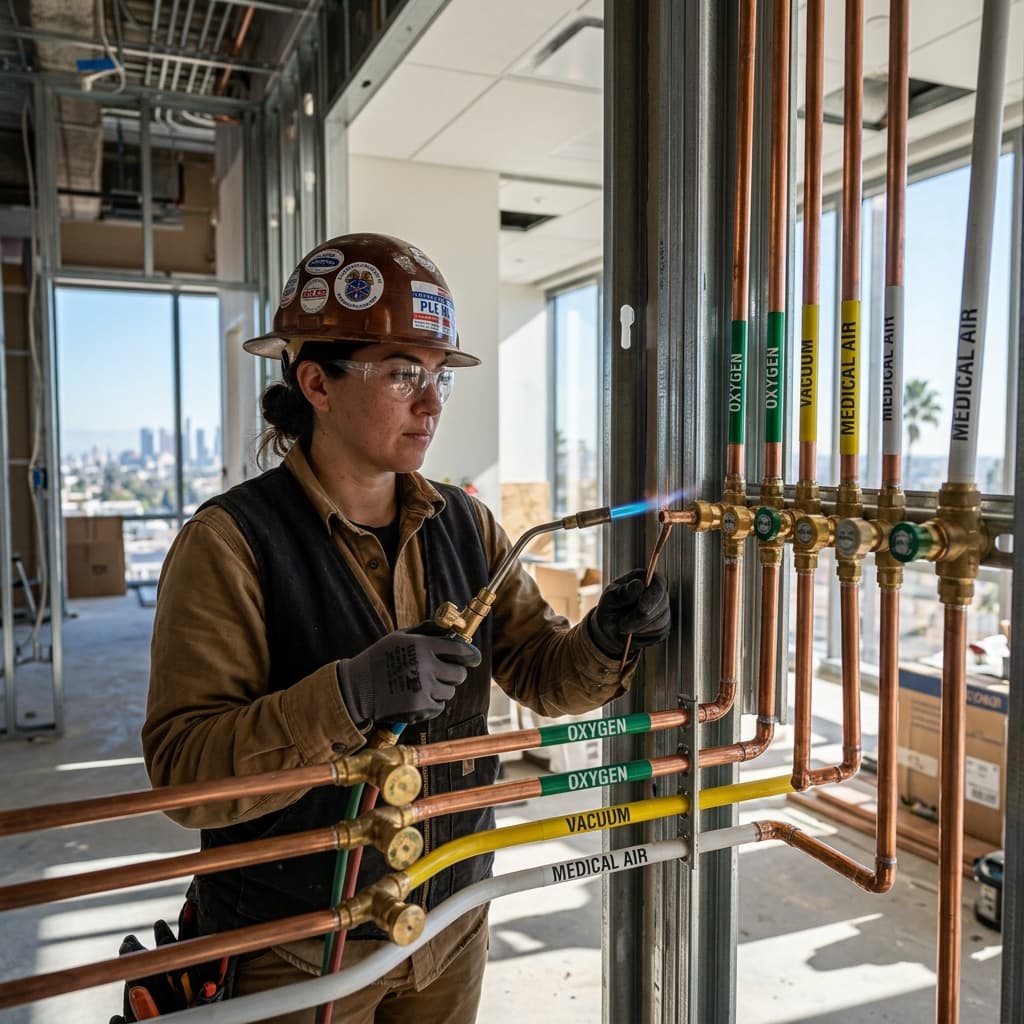
CPC Section 422.4 mandates specific color identification for all medical gas piping. While not strictly a plumbing function, understanding color codes is critical for exam questions:
| Gas Type | Color | Stripe | |----------|-------|--------| | Oxygen | Green | None | | Vacuum | Yellow | None | | Nitrogen | Black | None | | Nitrous Oxide | Blue | None | | Air (Medical) | Yellow | Blue |
Labeling Requirements
Beyond color, CPC Section 422.4 requires:- Permanent labels every 10 feet of piping
- Labels at all connection points and outlets
- Pressure ratings clearly marked
- Gas type and pressure specifications legible
Outlet and Station Identification
Each terminal outlet unit must display:- Gas type name
- Pressure classification
- Flow rate capacity
- Unique location identifier
Testing and Inspection Procedures
Initial Pressure Testing
Before any gas is introduced, CPC Section 422.5 requires pressure testing:
Nitrogen testing required (never use oxygen for pressure testing):- Test pressure of 1.5 times design pressure minimum
- Hold for 15 minutes with no pressure drop
- Documentation of test results mandatory
- Licensed plumber or certified technician must perform
- Isolate system section from main supply
- Connect pressure gauge and nitrogen supply
- Pressurize to test pressure gradually
- Monitor for 15-minute minimum period
- Record initial and final pressures
- Document all test results with date and signature
Leak Detection
CPC Section 422.5 specifies leak detection methods:- Soap bubble solution applied to all joints and connections
- Halide leak detector for more sensitive detection
- Helium detector for systems requiring ultra-high sensitivity
- Never use flame-based leak detectors (fire hazard)
Flow Rate Verification
After system pressurization:- Verify flow rates at each outlet
- Compare to design specifications
- Document variance from design
- Adjust regulators as needed
Purging and Charging
CPC Section 422.5 requires system purging before operation:- Nitrogen purging mandatory to remove air and moisture
- Multiple purge cycles recommended
- Final flush with destination gas before operation
- All procedures documented in system record
Installation Best Practices for CPC Section 422
Support and Securing Requirements
CPC Section 422.6 addresses physical support:- Secure all piping with approved clamps and supports
- Maximum spacing: 6 feet for horizontal runs, 8 feet for vertical
- Support points required at all direction changes
- Vibration isolation required near mechanical equipment
Valve and Regulator Placement
Pressure-reducing regulators must be installed at:- Main supply entry point to facility
- Zone distribution points
- Individual outlet stations when required
- Main supply entrance
- Each zone or department
- Before each pressure-reducing regulator
- Individual outlet connections for emergency isolation
Connection Point Standards
Terminal units connecting to bedside equipment:- NFPA-compliant quick-connect couplings required
- Oxygen and air connectors must differ
- Incompatible connections prevent gas mix-ups
- Non-interchangeable designs mandated
Separation from Other Utilities
CPC Section 422.6 requires separation from:- Electrical conduit (minimum 6 inches clearance)
- Water supply piping (separate routing)
- Vacuum lines (oxygen systems segregated)
- Combustible materials (minimum clearances per NFPA 99)
Documentation and Compliance Records
Required System Documentation
CPC Section 422.7 mandates comprehensive documentation:
As-built drawings including:- Complete piping layout with dimensions
- All valve and regulator locations
- Outlet locations with identification numbers
- Pressure classifications for each section
- Materiel specifications and sizes
- Pressure test results with dates and signatures
- Leak detection reports
- Flow rate verification documents
- Oxygen-cleaning certificates for materials
- Inspection reports from licensed professionals
- Service call records
- Repairs and modifications
- Annual inspection results
- Pressure regulator calibration dates
Certification Requirements
Medical gas systems require certification:- Licensed plumber must supervise installation
- Certification specialist must verify oxygen cleaning
- Pressure test documentation by qualified technician
- Final approval from building inspector or medical gas specialist
Common C-36 Exam Questions on Medical Gas Systems
Question Type 1: Material Selection
Example Question: "You're installing a new oxygen piping system in a surgical suite. Which material would be acceptable for this application?"- A) Schedule 40 PVC piping
- B) Galvanized steel tubing
- C) Type L copper tubing ✓
- D) PEX oxygen-barrier tubing
Question Type 2: Pressure and Sizing
Example Question: "A medical oxygen system shows a 12 PSI pressure drop from the central supply to a patient room outlet 150 feet away. What action is required?"- A) System is acceptable; pressure drop is within limits
- B) Increase tubing diameter to reduce pressure drop ✓
- C) Increase the regulator pressure setting
- D) Replace copper tubing with steel
Question Type 3: Testing Procedures
Example Question: "When performing a pressure test on a newly installed medical gas piping system, what gas must be used?"- A) Oxygen from the supply tank
- B) Nitrogen only ✓
- C) Compressed air
- D) Any inert gas available
Question Type 4: Identification and Labeling
Example Question: "According to CPC Section 422.4, what color identification is required for medical vacuum piping?"- A) Green
- B) Yellow ✓
- C) Blue
- D) Black
Key Differences Between Medical Gas and Water Piping
Understanding distinctions between systems helps prevent exam mistakes:
| Aspect | Water Piping | Medical Gas Piping | |--------|--------------|-------------------| | Materials | Copper, PEX, PVC allowed | Copper/steel only, no plastics | | Pressure | Typically 40-80 PSI | Variable by gas type | | Testing | Water pressure test | Nitrogen pressure test | | Codes | CPC Chapters 6-9 | CPC Section 422 primarily | | Color-Coding | Not required | Mandatory per 422.4 | | Cleaning | Standard flushing | Oxygen cleaning for O₂ systems |Practical Installation Scenarios for Study
Scenario 1: Surgical Suite Oxygen Installation
You're called to install a new oxygen delivery system for an operating room. The facility requires:- Central supply 200 feet away
- Six ceiling-mounted patient connections
- Maximum pressure drop of 10 PSI acceptable
- System must be operational within 2 days
- Calculate tubing diameter needed for 200-foot run with acceptable pressure drop
- Specify copper tubing type and size (likely 1/2" or 3/4")
- Plan regulator placement at main supply and ceiling station
- Schedule nitrogen pressure test before operation
- Verify oxygen cleaning certification on all materials
- Create as-built drawing showing all components and identifications
Scenario 2: Existing System Pressure Drop Problem
An existing medical oxygen system shows excessive pressure drop at distant outlets. Central supply reads 50 PSI, but patient rooms 300 feet away show only 35 PSI—exceeding the 10 PSI zone maximum.
Diagnostic steps:- Measure actual pressure at intermediate points
- Calculate pressure drop per 100 feet of piping
- Determine if undersized piping is the cause
- Check regulator settings and operation
- Verify no obstructions or leaks in the line
- Install booster regulator at midpoint (increases pressure)
- Replace existing piping with larger diameter
- Relocate central supply closer to distant outlets
- Install zone-based regulators at multiple points
Summary and Exam Preparation Tips
Medical gas piping systems under CPC Section 422 represent specialized knowledge that distinguishes competent C-36 plumbers. Key takeaways for exam success:
Material Standards: Only copper and steel are acceptable; plastic and galvanized materials are prohibited. Oxygen systems require special cleaning. Pressure Management: Know the pressure drop limits (10 PSI central to zone, 5 PSI within zone) and understand pressure classifications. Testing Requirements: Nitrogen pressure testing is mandatory; no exceptions. Pressure test for 15 minutes at 1.5 times design pressure. Color-Coding: Memorize the four colors: green (oxygen), yellow (vacuum), blue (nitrous oxide), black (nitrogen). Documentation: As-built drawings, testing records, and certification documents are legally required and exam-tested. Practice scenarios: Work through sizing calculations and pressure drop problems. The exam includes calculation-based questions that test your ability to apply formulas to real-world situations.Dedicate study time to CPC Section 422 even though it represents a smaller portion of the overall exam. The specialized nature of medical gas systems means questions test your precise knowledge—partial credit isn't available for "close enough" answers.