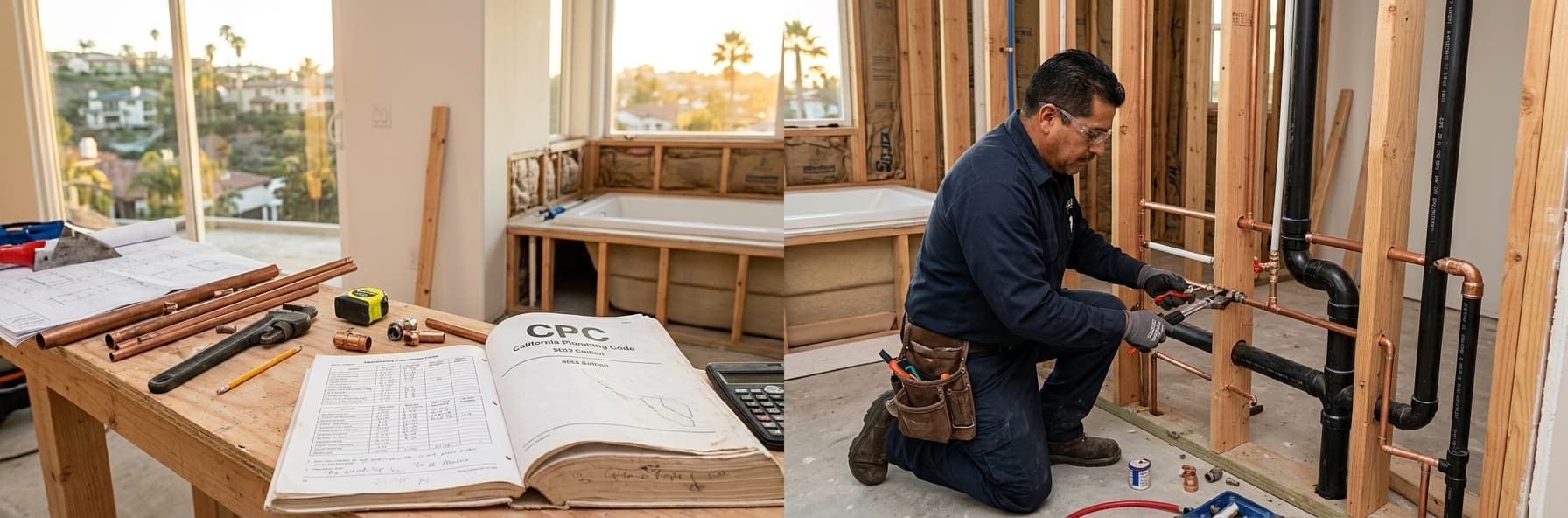



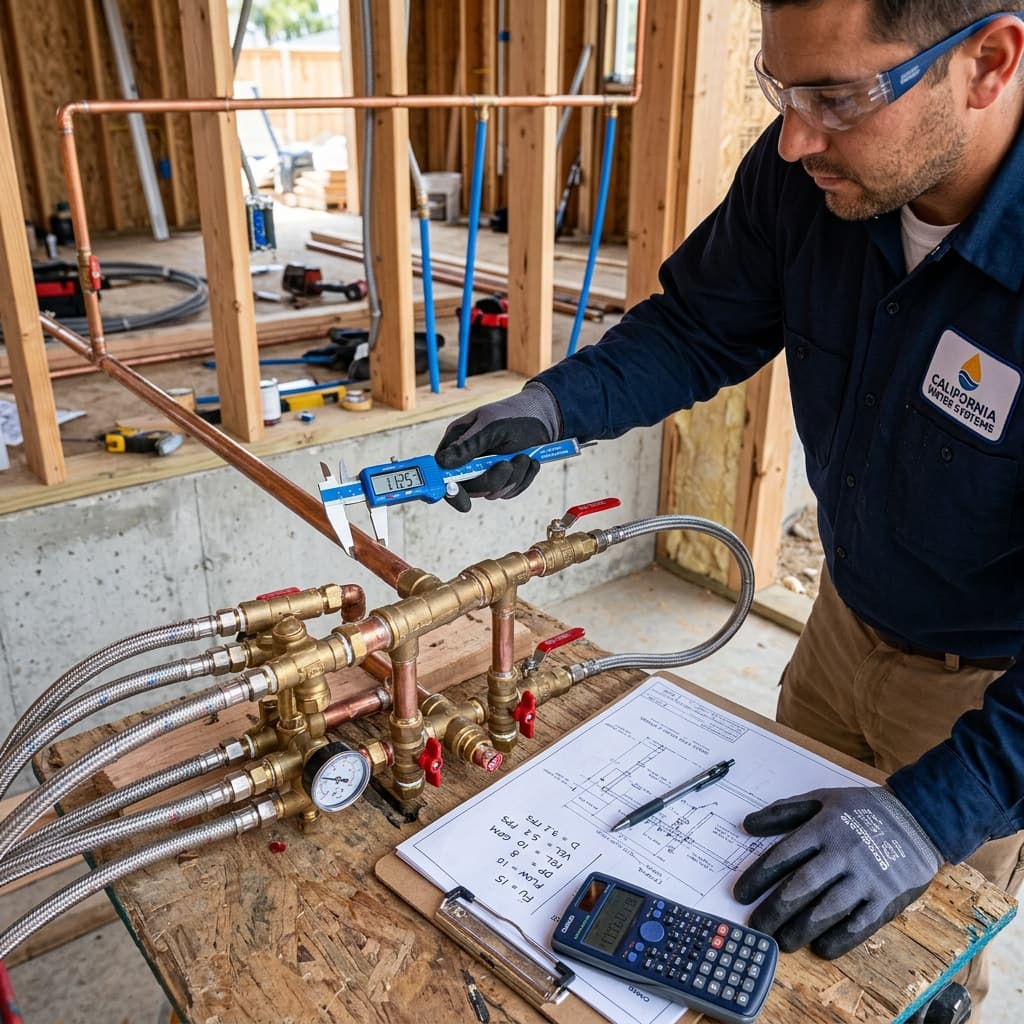

# Mastering Plumbing Fixture Unit Calculations for the C-36 Exam: CPC Tables and Real-World Applications
Successfully passing the California C-36 plumbing license exam requires mastering plumbing fixture unit calculations, one of the most critical skills tested on Part 1: Trade Knowledge. Understanding fixture unit values, pipe sizing, and CPC table applications directly impacts your ability to design compliant plumbing systems and demonstrate competency to the CSLB.
Fixture unit calculations form the foundation of proper plumbing system design, determining everything from pipe sizes to water supply requirements. This comprehensive guide will walk you through the essential concepts, CPC code references, and calculation methods you'll encounter on your C-36 exam.
Understanding Plumbing Fixture Units and Their Purpose
Plumbing fixture units (FUs) represent the relative discharge load of different plumbing fixtures, providing a standardized method for sizing drainage and water supply systems. The California Plumbing Code establishes these values to ensure adequate system capacity while preventing oversizing.
What Are Fixture Units?
A fixture unit equals approximately 1 cubic foot of water discharged per minute, serving as the baseline for all calculations. CPC Section 202 defines fixture units as "a measure of the probable discharge into the drainage system by various types of plumbing fixtures."
The fixture unit system accounts for:- Peak demand periods
- Simultaneous fixture use probability
- Proper drainage flow rates
- Water supply adequacy
Exam Tip: Memorize common fixture unit values before test day. The exam frequently tests basic FU values for toilets (4 FU), lavatories (1 FU), and bathtubs (2 FU) without providing reference tables.
CPC Table References for Fixture Units
The California Plumbing Code contains several critical tables for fixture unit calculations:
CPC Table 7-3: Drainage Fixture Unit Values- Lists FU values for all common fixtures
- Separates values by fixture type and connection method
- Essential reference for drainage system sizing
- Provides supply-side fixture unit values
- Often differs from drainage values for same fixtures
- Critical for water supply pipe sizing
- Converts total fixture units to minimum pipe diameters
- Includes slope considerations
- Most frequently referenced table on C-36 exams
Drainage System Calculations
Drainage fixture unit calculations determine proper pipe sizes for waste removal, following specific CPC requirements and sizing methods.
Basic Drainage Calculation Process
- Identify all fixtures connecting to the drainage system
- Assign fixture unit values using CPC Table 7-3
- Total the fixture units for each pipe segment
- Apply CPC Table 7-5 to determine minimum pipe diameter
- Verify slope requirements per CPC Section 701.2
Step-by-Step Drainage Example
Consider a residential bathroom with:- Water closet: 4 FU (CPC Table 7-3)
- Lavatory: 1 FU
- Bathtub: 2 FU
- Total: 7 FU
- 3-inch pipe: Maximum 20 FU at 1% slope
- 4-inch pipe: Maximum 180 FU at 1% slope
Exam Tip: Always check both fixture unit capacity AND minimum pipe size requirements. Some fixtures require specific minimum pipe diameters regardless of FU calculations (CPC Section 701.1).
Special Drainage Considerations
Commercial Applications: CPC Section 701.3 requires special consideration for commercial fixtures with continuous or semi-continuous discharge. These fixtures may require individual calculations beyond standard FU methods. Grease Interceptors: When grease interceptors are present, apply CPC Section 1003 requirements in addition to standard FU calculations. Multiple Building Connections: Projects connecting multiple buildings require careful FU accumulation and may trigger CPC Section 701.4 provisions for public sewer connections.Water Supply System Calculations
Water supply fixture unit calculations ensure adequate pressure and flow throughout the plumbing system, using different values and methods than drainage calculations.
Water Supply Calculation Methodology
- Use CPC Table 6-2 for supply fixture unit values
- Calculate total demand for each pipe segment
- Apply demand factors per CPC Section 608.2
- Size pipes using CPC Table 6-4 (Water Supply Pipe Sizing)
- Verify pressure requirements meet CPC Section 608.1 minimums
Understanding Demand Factors
Unlike drainage systems, water supply calculations incorporate demand factors recognizing that not all fixtures operate simultaneously. CPC Section 608.2 establishes these factors:
- Residential: Demand factor varies by total fixture count
- Commercial: Different factors apply based on building type
- Mixed-use: Separate calculations required for each occupancy
- Water closet: 2.5 FU
- Lavatory: 1 FU
- Bathtub: 2 FU
- Total: 5.5 FU
Exam Tip: Water supply and drainage fixture unit values differ for the same fixtures. Always verify you're using the correct table - supply calculations use CPC Table 6-2, not Table 7-3.
Pressure and Flow Considerations
CPC Section 608.1 establishes minimum pressure requirements:- Residential fixtures: Minimum 15 psi dynamic pressure
- Flush valves: Minimum 25 psi dynamic pressure
- Special fixtures: May require higher pressures per manufacturer specifications
- Static pressure availability
- Pressure losses through piping and fittings
- Elevation changes (0.433 psi per foot of elevation)
- Peak demand scenarios
Real-World Application Scenarios
The C-36 exam tests practical application of fixture unit calculations through realistic scenarios contractors encounter daily.
Commercial Kitchen Scenario
Restaurant kitchens present complex FU calculation challenges:- Grease-producing fixtures require special consideration (CPC Section 1003)
- Commercial dishwashers have unique FU values and connection requirements
- Floor drains add to total fixture unit count
- Backflow prevention may affect pressure calculations
- Three-compartment sink: 6 FU
- Commercial dishwasher: 8 FU
- Floor drains (4 @ 2 FU each): 8 FU
- Prep sinks (2 @ 2 FU each): 4 FU
- Total: 26 FU
Multi-Story Building Applications
Multi-story buildings require careful FU accumulation as pipes serve additional floors:
Floor 1: 15 total FU Floor 2: 12 total FU Floor 3: 18 total FU Stack calculations:- Serving Floor 3 only: 18 FU → 3" minimum
- Serving Floors 2-3: 30 FU → 4" minimum
- Serving Floors 1-3: 45 FU → 4" minimum
Exam Tip: Multi-story problems often test cumulative FU calculations. Always add fixture units from all floors served by each pipe segment, starting from the top floor down.
Residential Addition Projects
Home additions require integrating new fixture units with existing systems:
- Calculate existing system capacity using original fixture counts
- Add new fixture units from proposed addition
- Verify existing pipes can handle increased load
- Upgrade systems if capacity exceeded
Common Exam Mistakes and How to Avoid Them
Understanding frequent calculation errors helps improve exam performance and real-world application accuracy.
Mistake #1: Using Wrong FU Tables
Error: Using drainage FU values for water supply calculations Solution: Always verify table reference - CPC Table 7-3 for drainage, Table 6-2 for supplyMistake #2: Ignoring Minimum Pipe Size Requirements
Error: Selecting undersized pipes based solely on FU calculations Solution: Check CPC Section 701.1 for minimum pipe sizes regardless of fixture unit totalsMistake #3: Incorrect FU Accumulation
Error: Failing to properly add fixture units from multiple sources Solution: Systematically track all fixtures contributing to each pipe segmentMistake #4: Overlooking Special Fixture Requirements
Error: Applying standard FU values to special fixtures Solution: Review manufacturer requirements and CPC provisions for unique fixturesExam Tip: Double-check your FU totals before referencing sizing tables. Simple addition errors cause more missed questions than complex code interpretation issues.
Advanced Calculation Concepts
Advanced fixture unit applications demonstrate mastery-level understanding essential for challenging C-36 exam questions.
Reduced-Size Venting Calculations
CPC Section 906.2 allows reduced vent sizing based on fixture unit loads. Understanding this relationship helps optimize system design while maintaining code compliance.
Special Waste Systems
Laboratory and medical facilities require special waste system calculations per CPC Chapter 8. These systems may use different FU values or calculation methods.
Water Reuse Systems
Greywater and rainwater systems involve modified fixture unit calculations per CPC Chapter 15, reflecting different flow patterns and usage factors.
Mastering plumbing fixture unit calculations requires consistent practice with CPC tables and real-world application scenarios. Focus your C-36 exam preparation on understanding the underlying principles while memorizing key values and calculation methods. For additional study resources, explore our guides on pipe sizing fundamentals and commercial plumbing calculations.Success on fixture unit calculation questions demonstrates your competency in fundamental plumbing design principles, directly supporting your qualification for the C-36 plumbing license. Regular practice with various scenarios and thorough familiarity with CPC tables will build the confidence needed for exam success.