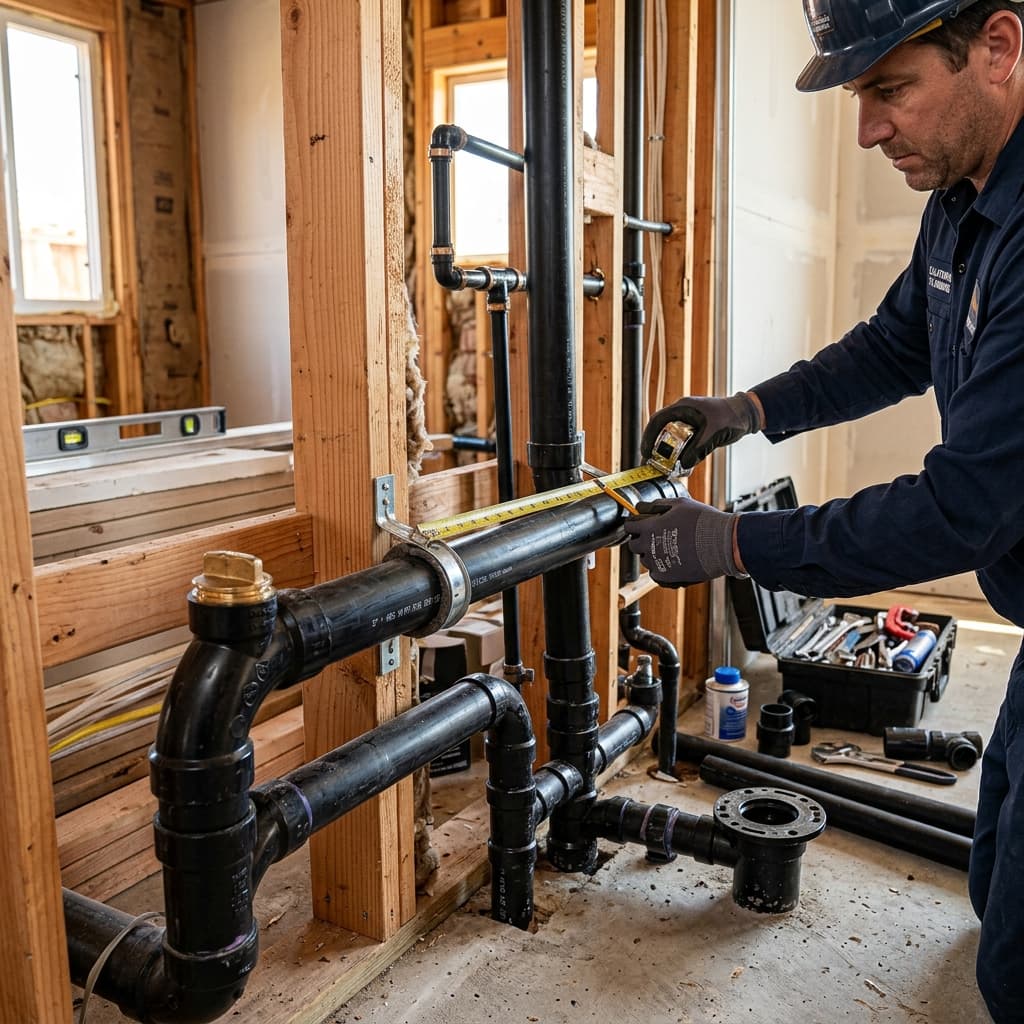

# CPC Section 422: Indirect Waste and Special Drainage Fixture Connection Requirements
Introduction
The indirect waste pipe installation system represents one of the most critical safeguards in modern plumbing, protecting potable water supplies from contamination. Under the California Plumbing Code (CPC) Section 422, specific drainage fixtures require indirect connections rather than direct connection to the sanitary drainage system. Understanding these requirements is essential for anyone preparing for the C-36 plumbing exam, as drainage and venting systems comprise a substantial portion of Part 4 examination content.Indirect waste systems create a physical separation—an air gap—between the outlet of a fixture and the drainage system entrance. This air gap prevents back-siphonage and backflow of contaminated water into the fixture, a critical public health consideration. Let's explore the comprehensive requirements, applications, and installation standards that define CPC Section 422 compliance.
What is an Indirect Waste Pipe?
Definition and Purpose
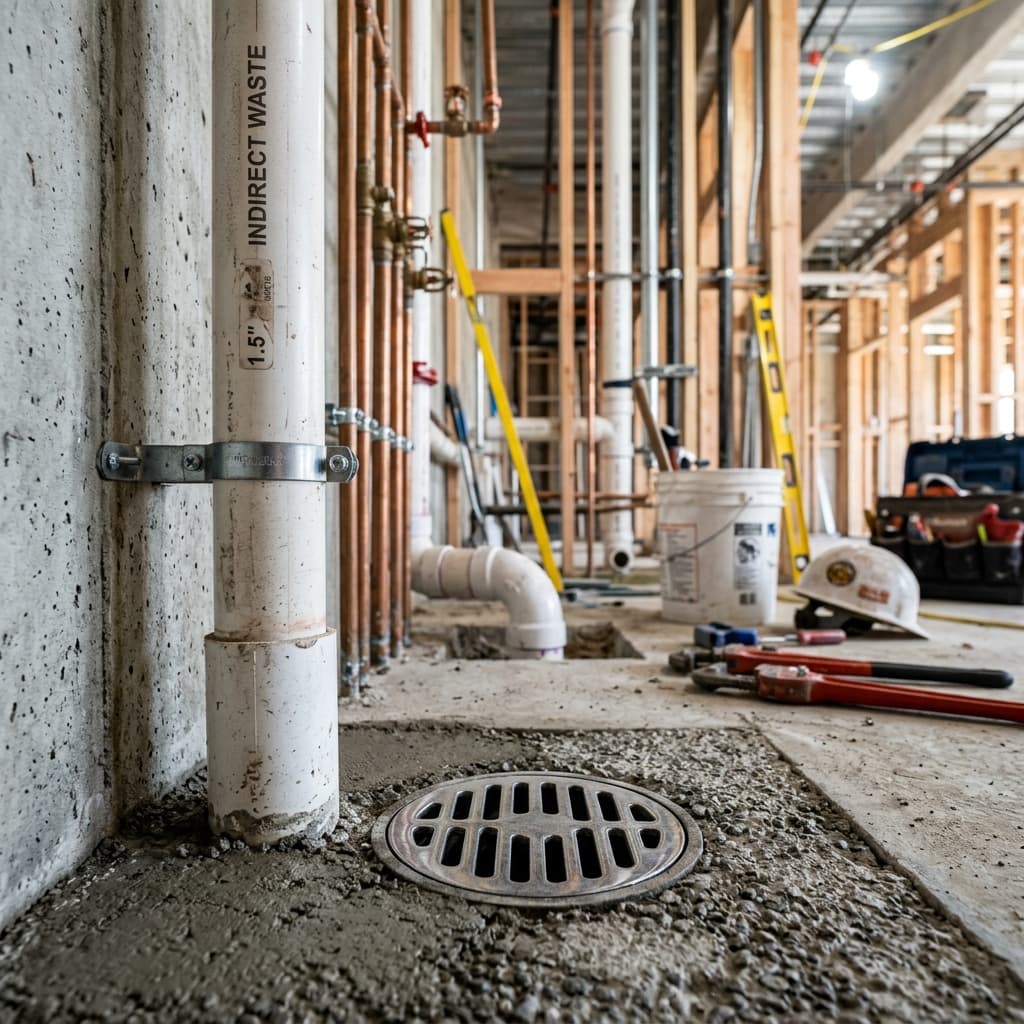
An indirect waste pipe is a drainage pipe that conveys the discharge from a fixture or appliance without connecting directly to the sanitary drainage system. Instead, it terminates above a trapped fixture or receptor with a clearly visible air gap between the indirect waste outlet and the drain inlet.
The primary purposes of indirect waste systems include:
- Backflow prevention: Eliminates siphonage that could draw contaminated water back into fixtures
- Contamination control: Prevents hazardous or undesirable waste from entering the main drainage system
- System protection: Shields the sanitary sewer from corrosive or damaging materials
- Public health safeguarding: Maintains separation between potentially contaminated sources and potable water systems
How Indirect Waste Differs from Direct Connection
Direct connections attach fixture outlets directly to the sanitary drainage system without air separation. While appropriate for standard plumbing fixtures like water closets and lavatories, direct connections pose contamination risks for specialized fixtures that discharge potentially hazardous materials.
Indirect waste connections introduce a break in the drainage line—a clearly visible air gap—that breaks the siphon and prevents backflow. This simple but essential design feature has been protecting public health for over a century.
CPC Section 422 Requirements and Scope
Fixtures Requiring Indirect Waste Connection
CPC Section 422 specifically identifies fixtures and appliances that must discharge through indirect waste systems. These special drainage fixtures include:
Commercial Food Service Equipment:- Pot sinks and pre-rinse spray stations
- Grease traps and interceptors
- Ice-making machines
- Dishwashing machines (in certain conditions)
- Sterilizing equipment
- Laboratory sinks and wash stations
- Autoclave condensate lines
- Blood pressure equipment drains
- Sterilizers and medical instruments
- Floor drains in certain locations
- Air conditioning condensate drains
- Pump discharge lines
- Indirect heating/cooling equipment
- Dehumidifier discharge
- Refrigerator ice maker lines
- Swimming pool backwash systems
- Fountain and water feature drains
Installation Standards for Indirect Waste Pipes
Air Gap Requirements
The air gap—the vertical distance between the outlet of the indirect waste pipe and the flood rim of the receptor—is fundamental to indirect waste system design.
CPC Section 422.2 establishes the following air gap minimums:- Minimum air gap: Two times the diameter of the drain opening of the receptor, with a minimum of 1 inch
- Maximum air gap: Not to exceed 2.5 inches (this prevents splashing and material accumulation)
- Measurement: Distance from the lowest point of the discharge outlet to the highest point of the receptor rim
Pipe Sizing and Slope
Proper sizing ensures adequate drainage while preventing standing water that could create sanitary hazards.
Sizing Requirements (CPC Section 422.4):- Indirect waste pipes must be sized according to discharge volume and frequency
- Minimum pipe diameter is typically 1.5 inches for most applications
- Pipes must be graded uniformly with minimum slope of 1/4 inch per linear foot
- Maximum slope is 3 inches per linear foot to prevent separation of solids
- Fixture drainage rate (gallons per minute)
- Intermittent versus continuous discharge
- Multiple fixtures discharging simultaneously
- Total developed length of the system
Material Specifications
CPC Section 422.5 permits specific materials for indirect waste pipe installation:- Copper tubing: Type K, L, or M with appropriate soldered or brazed joints
- PVC (Polyvinyl Chloride): Schedule 40 with solvent-cemented joints
- ABS (Acrylonitrile Butadiene Styrene): Schedule 40 with solvent-cemented joints
- Galvanized steel: Only in specific non-corrosive applications
- Cast iron: No-hub or hub connections for larger diameter applications
Receptor Requirements and Selection
Types of Approved Receptors
The indirect waste pipe must terminate in an appropriate receptor—typically a trapped fixture that serves as the receiving vessel for the indirect waste discharge.
Common Receptors:- Sink or floor sink: Most common receptor, providing visible drainage and clean-out access
- Standpipe: Vertical drainage pipe with trap
- Catch basin: Detention basin with trap for debris collection
- Sumps: For indirect heating/cooling discharge (with pump discharge capability)
- Receptor must be trapped (contain a P-trap or similar fixture trap)
- Receptor must have adequate capacity to receive anticipated discharge volume
- Receptor must provide visible evidence of discharge (verifying system functionality)
- Receptor must have appropriate drainage provisions to sanitary sewer
Sizing the Receptor
Receptor capacity calculation prevents overflow and ensures system reliability:
- Minimum capacity: Equal to the maximum discharge from the indirect waste pipe within a 2-minute period
- Example: If a pre-rinse spray station discharges at 5 gallons per minute, the receptor must accommodate at least 10 gallons (5 GPM × 2 minutes)
- Overflow consideration: Receptor must never overflow during normal operation
Special Drainage Fixture Connection Standards
Kitchen Equipment Connections
Commercial kitchens present complex indirect waste requirements due to grease and food waste discharge.
Pre-Rinse Spray Stations (CPC 422.2):- Must discharge to a trapped floor sink through indirect waste pipe
- Minimum 1.5-inch pipe with visible air gap
- Floor sink should contain removable strainer basket
- Grease interceptor connection from floor sink serves as secondary protection
- Standard machines typically connect directly to sanitary drain through trap
- Commercial high-temperature machines producing condensate require indirect connection for hot discharge lines
- Condensate lines must terminate above receptor with minimum air gap
- Discharge line from purge cycle must be indirect
- Minimum 3/4-inch pipe (though 1-inch recommended for reliability)
- Drain pan beneath machine acts as primary receptor
- Secondary drainage from pan must reach sanitary sewer
Laboratory and Medical Equipment
These applications often involve hazardous or sterile discharge requiring protective measures.
Sterilizer and Autoclave Discharge:- Hot condensate discharge must be indirect
- Requires 1.5-inch minimum pipe with extended air gap (typically 2 inches)
- Receptor must handle high-temperature drainage (PVC piping may require thermal protection)
- Steam traps frequently used in larger installations
- Chemical waste discharge may require indirect connection depending on waste type
- Acid-resistant piping required for corrosive waste
- Larger drain trap in sink provides primary filtration
- Secondary trap in floor may be required for compliance
Compliance with Related Code Sections
Understanding how CPC Section 422 interfaces with other code requirements is essential for comprehensive exam preparation.
Connection to Trap Requirements (CPC Section 307)
/blog/cpc-section-307-trap-requirements The indirect waste receptor must contain a functioning trap. This trap requirement overlaps with CPC Section 307 provisions:- Trap must be of approved type and material
- Trap seal must be maintained continuously
- Trap must be accessible for cleaning and maintenance
Relationship with Vent Piping (CPC Section 308)
/blog/cpc-section-308-vent-piping-requirements The receptor's trap must be properly vented according to CPC Section 308. This means:- Vent piping must connect to approved vent stack
- Vent must be sized per Section 308.4
- Vent must be pitched uniformly per Section 308.5
Sanitary Drainage Connection (CPC Section 305)
The receptor drainage outlet connects to the sanitary drainage system per CPC Section 305 standards:- Appropriate pipe sizing for combined drainage
- Proper slope and grade (1/4 to 3 inches per foot)
- Clean-out access at appropriate intervals
Common Exam Questions and Answers
Question 1: Fixture Identification
Q: Which of the following fixtures typically requires an indirect waste connection?- A) Water closet
- B) Lavatory
- C) Pre-rinse spray station
- D) Bathtub
Question 2: Air Gap Calculation
Q: What is the minimum required air gap for an indirect waste pipe discharging into a 2-inch receptor opening?- A) 1 inch
- B) 2 inches
- C) 4 inches
- D) 2.5 inches
Question 3: Pipe Sizing
Q: What is the minimum pipe diameter for most indirect waste connections?- A) 3/4 inch
- B) 1 inch
- C) 1.5 inches
- D) 2 inches
Best Practices for Installation and Maintenance
Installation Best Practices
- Verify fixture classification: Confirm the fixture requires indirect waste before designing system
- Size receptor appropriately: Calculate discharge volume to ensure adequate capacity
- Maintain uniform slope: Use level and measure slope during installation to verify 1/4" per foot minimum
- Protect air gap: Ensure no restrictions or obstructions exist between discharge outlet and receptor
- Secure piping: Support indirect waste pipes at appropriate intervals to prevent sag or misalignment
- Label clearly: Identify indirect waste systems and receptors for building operations staff
Maintenance Considerations
- Regular inspection: Verify air gap remains visible and unobstructed monthly
- Trap seal maintenance: Ensure receptor trap seal doesn't evaporate (add water if needed)
- Drain cleaning: Access and clean strainer baskets and trap arms regularly
- Documentation: Maintain records of inspections and maintenance performed
Summary and Key Takeaways
CPC Section 422 establishes comprehensive requirements for indirect waste pipe installation and special drainage fixture connections. Understanding these requirements is critical for Part 4: Drainage Systems exam success.
Critical Points to Remember:- Air gaps (typically 2-2.5 inches) are mandatory between discharge outlet and receptor to prevent backflow
- Specific fixtures requiring indirect waste include pre-rinse spray stations, ice machines, sterilizers, and laboratory equipment
- Receptor requirements mandate adequate capacity, trap installation, and sanitary drainage connection
- Pipe sizing follows CPC Section 422.4 standards with minimum 1.5-inch diameter and 1/4-inch slope
- Material selection must account for waste characteristics and temperature