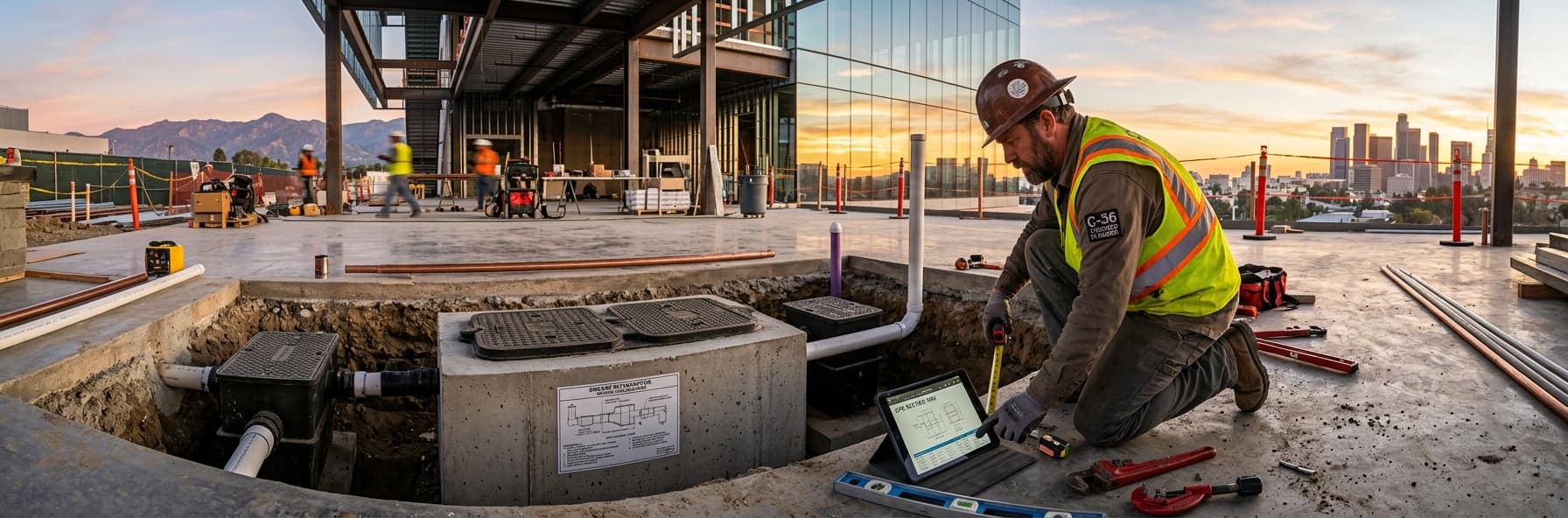
# Grease Trap Sizing and Interceptor Installation: Master CPC Section 1003 for Your C-36 Exam
Understanding grease trap sizing requirements under California Plumbing Code Section 1003 is essential for any plumber pursuing C-36 certification. This comprehensive guide breaks down the complex requirements for interceptor installation california standards, commercial kitchen drainage systems, and the critical calculations that determine proper sizing. Whether you're preparing for your exam or managing real commercial kitchen projects, mastering these requirements ensures code compliance and safety.Why CPC Section 1003 Matters for C-36 Exam Success
CPC Section 1003 directly addresses grease traps and interceptors—critical components in any commercial food service establishment. The California Building Standards Commission recognizes that improper sizing and installation of these systems leads to:
- Blockages in municipal sewer systems
- Environmental contamination
- Costly repairs and fines
- Public health hazards
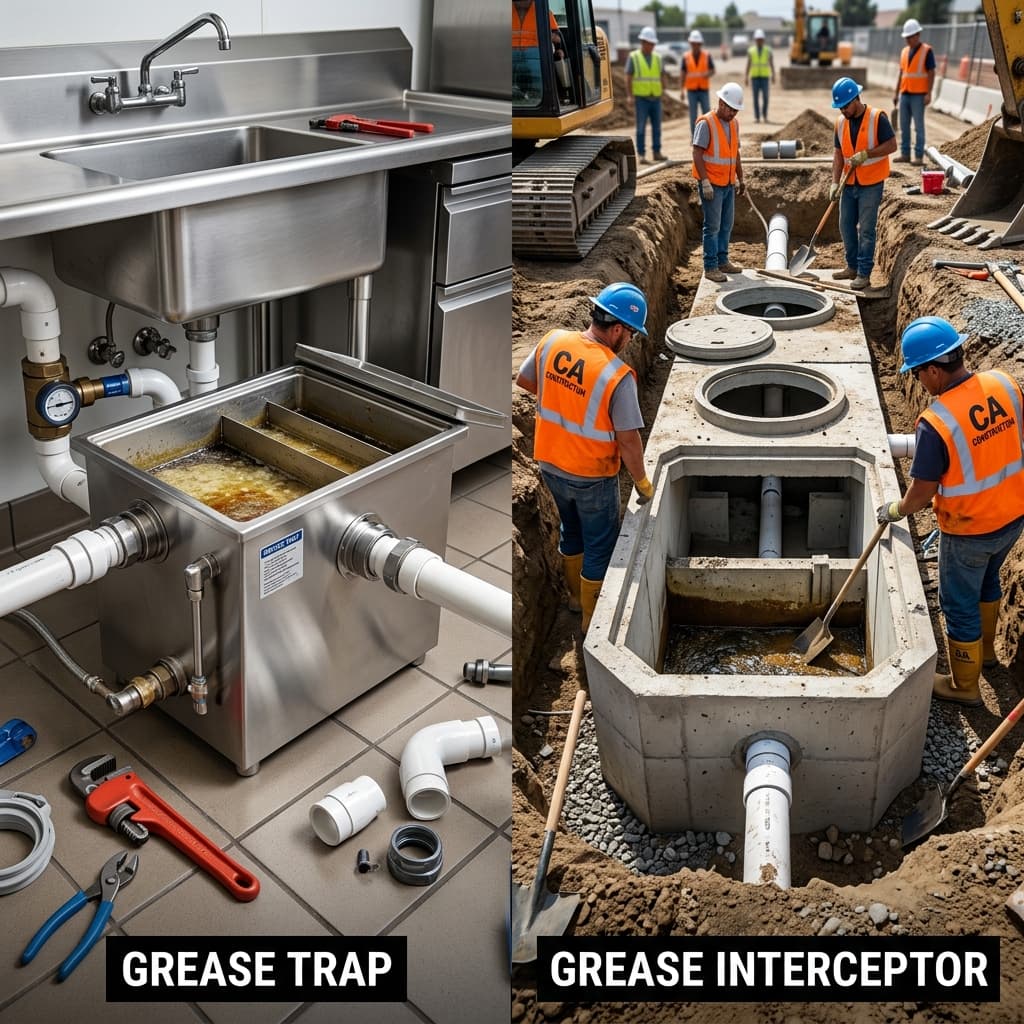
Understanding Grease Traps vs. Grease Interceptors
Key Distinctions
Grease Trap (Gravity Grease Interceptor)- Smaller capacity units (typically 7-20 gallons)
- Installed directly under or near fixtures
- Used for small food prep areas
- Requires frequent pumping (weekly to bi-weekly)
- Larger capacity units (50+ gallons)
- Centralized installation in drainage system
- Required for full commercial kitchens
- Less frequent maintenance (monthly to quarterly)
CPC Section 1003 Sizing Requirements: The Calculation Method
The Fixture Unit and Flow Rate Basis
CPC Section 1003 requires interceptor sizing based on two primary factors:
1. Fixture Unit Calculations Refer to CPC Table 422.1 for drainage fixture units. Each food service fixture is assigned specific units:- Commercial sink (3-compartment): 3 fixture units
- Pot washing sink: 4 fixture units
- Pre-rinse spray valve: 2 fixture units
- Dishwashing machine: 4 fixture units
- Number of fixtures
- Fixture units per fixture
- Peak hour multiplier (typically 0.6 to 1.0 depending on meal periods)
The Sizing Formula
The basic calculation follows this structure:
Interceptor Capacity = Total Fixture Units × Peak Hour Factor × Time Retention Factor Example Calculation:- 3-compartment sink: 3 FU
- 2 pre-rinse spray valves: 2 FU × 2 = 4 FU
- 1 dishwashing machine: 4 FU
- Total: 11 FU
This translates to approximately a 60-gallon grease interceptor for a small food service operation.
CPC Section 1003.2: Specific Sizing Requirements
Commercial Kitchen Requirements
CPC Section 1003.2 specifies that the following operations require grease interceptors:
Mandatory Interceptor Applications:- Restaurants, cafeterias, hospitals with food service
- Commercial kitchens in schools and institutions
- Butcher shops and meat processing facilities
- Food manufacturing operations
- Number of meal periods per day (affects peak hour demand)
- Type and quantity of food waste (grease generation percentage)
- Operational hours (24-hour vs. limited hours)
Detention Time Standards
CPC Section 1003.2.1 establishes detention time as a critical factor:
- Minimum 2 minutes detention time for gravity interceptors
- Minimum 2-3 minutes for hydromechanical units
- Larger facilities (3+ meal periods): minimum 3 minutes
Installation Requirements Under CPC Section 1003.3
Accessibility and Maintenance
The code mandates specific installation practices:
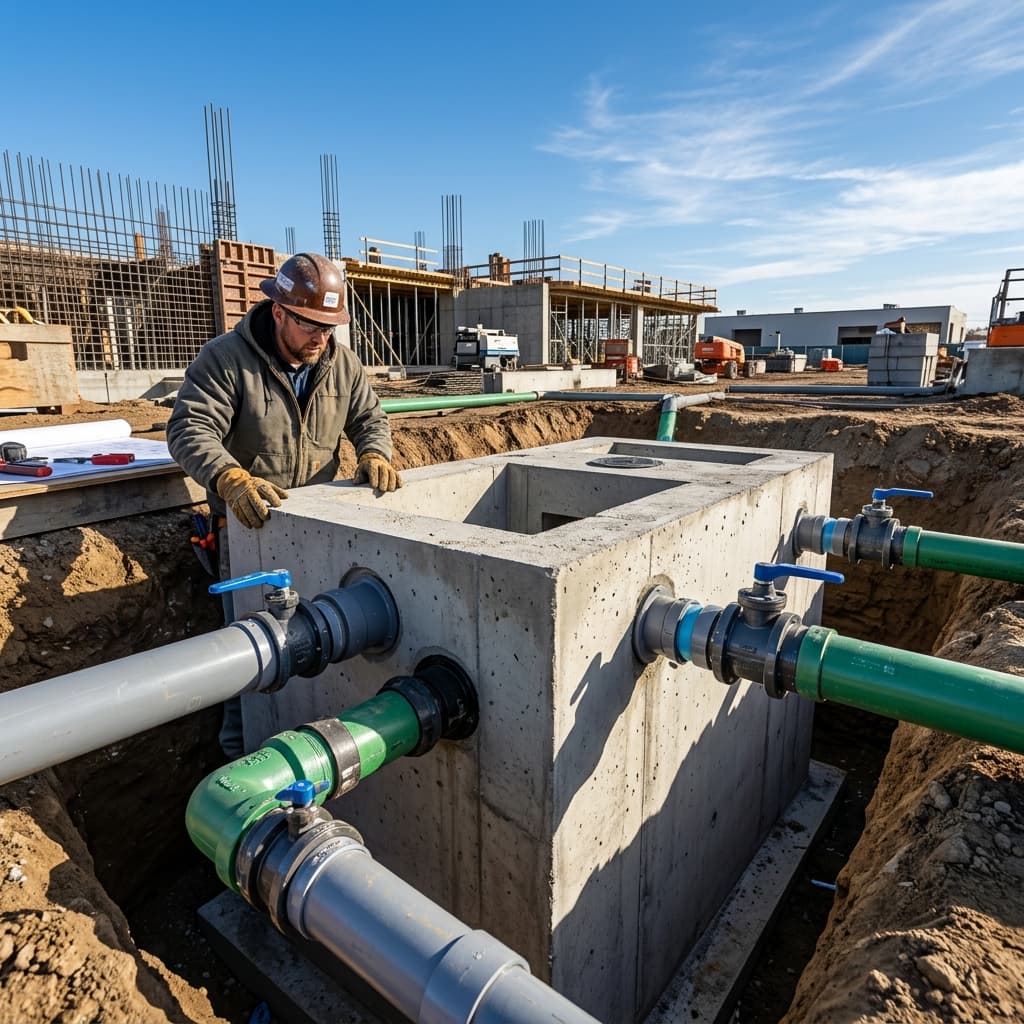
Access Requirements:- Interceptors must be accessible for cleaning and pumping
- Manhole cover must be above grade or in accessible location
- Minimum 12-inch clearance around unit for equipment access
- Covers must be at least 24 inches diameter for grease removal
- Separate drainage line from kitchen fixtures to interceptor
- Cannot share drainage line with non-kitchen fixtures
- Outlet must be separate from inlet by minimum distance specified in design
Connection Standards
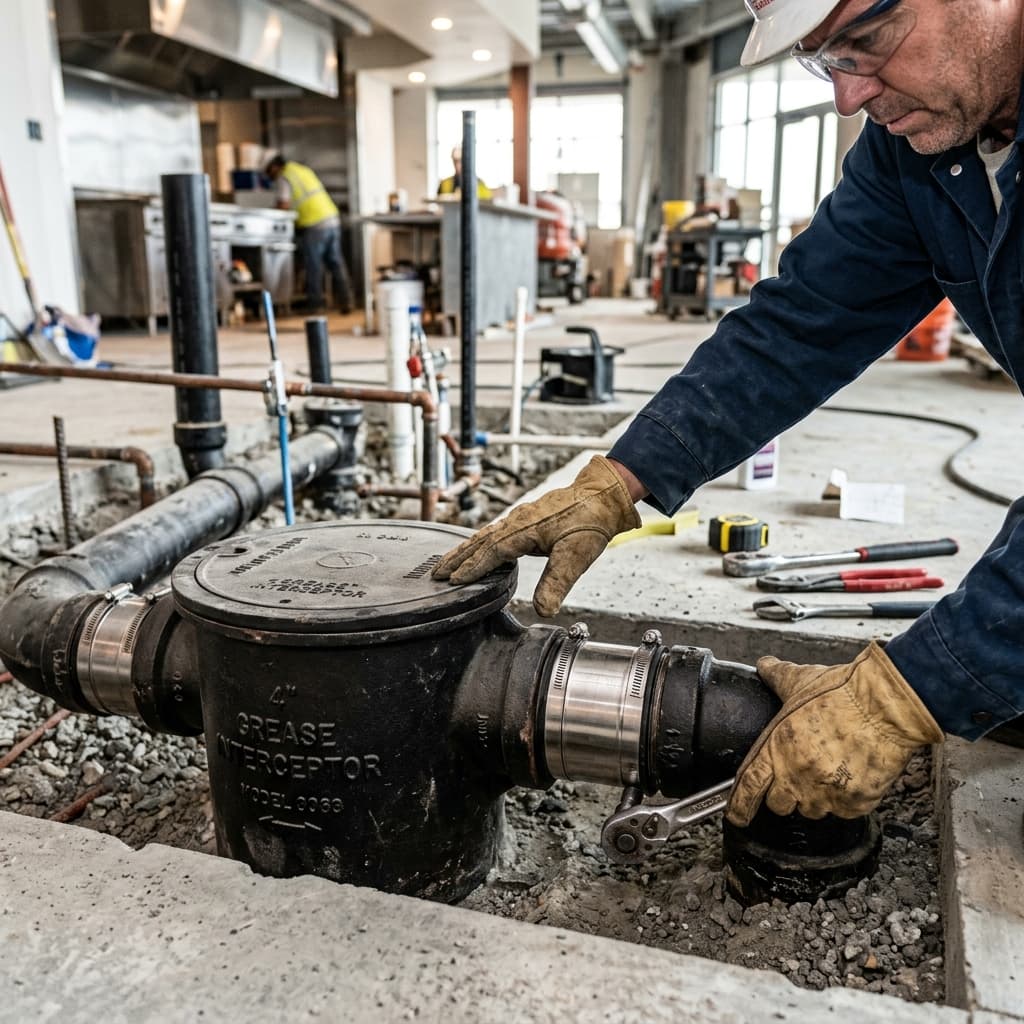
Per CPC Section 308.1, grease trap discharge connections require:- Solvent-welded or threaded connections (no compression fittings)
- Trap arm pitch minimum 1/4 inch per foot
- Maximum 25-foot run from fixture to interceptor (verify local amendments)
- Cleanout required at interceptor inlet and outlet
Exam Tip: Common CPC Section 1003 Questions
Question Type 1: Sizing Scenarios "A restaurant with three meal periods operates a commercial kitchen with the following: two 3-compartment sinks, three pre-rinse spray valves, and one high-temp dishwashing machine. What is the minimum interceptor capacity?" Your approach:- Identify all fixtures and their FU values
- Calculate total FU
- Apply peak hour multiplier (0.75-1.0 for multiple meal periods)
- Apply detention time (2-3 minutes)
- Select appropriately-sized unit from manufacturer charts
- ✓ Accessibility for pumping (required)
- ✓ Separate drainage line (required)
- ✓ Cleanouts at inlet/outlet (required)
- ✗ Installation in climate-controlled space (not required)
Correct answer: Only if the operation serves a single meal period with limited food waste and meets the minimum detention time requirements for that capacity.
Key Code References for Your Study
Bookmark these sections in your CPC:
| Section | Topic | Key Points | |---------|-------|-----------| | CPC 1003.1 | General Requirements | Grease trap/interceptor mandatory applications | | CPC 1003.2 | Sizing | Fixture unit method and detention time | | CPC 1003.2.1 | Detention Time | Minimum time standards by unit type | | CPC 1003.3 | Installation | Access, connections, and cleanout requirements | | CPC 422.1 | Fixture Units | Table for calculating drainage units |
Maintenance Obligations: What the Exam Tests
CPC Section 1003 doesn't just cover installation—it establishes maintenance requirements that affect sizing decisions:
Grease Trap Maintenance:- Pumping frequency: weekly to bi-weekly
- Maximum 25% grease content before pumping
- Disposal through licensed waste haulers
- Monthly inspection for larger units
- Quarterly pumping for typical operations
- 6-month service for 24-hour operations
- Complete cleaning annually minimum
Common Exam Mistakes to Avoid
Mistake 1: Confusing Fixture Units
Students often misread fixture unit values. A pre-rinse spray valve is 2 FU, not 1 FU. A commercial sink is 3 FU, not 2 FU. Review CPC Table 422.1 multiple times.Mistake 2: Ignoring Peak Hour Multipliers
The default is NOT 1.0. Most commercial kitchens use 0.6-0.8 multipliers. Single meal period operations may use lower multipliers; three-meal operations approach 1.0.Mistake 3: Overlooking Detention Time
Detention time is NOT just a formula element—it's a critical safety requirement. A 60-gallon unit might not meet detention time requirements if peak hour demand is 40 GPM (only 1.5 minutes detention).Mistake 4: Missing Local Amendments
California cities have local amendments to CPC Section 1003. Your exam questions will reference the base CPC code, but real-world application requires checking local jurisdiction amendments.Practice Exam Questions
Question 1: A full-service restaurant operates three meal periods with five 3-compartment sinks, two pre-rinse spray valves, one pot washing sink, and one high-temp dishwashing machine. Using a peak hour multiplier of 0.8 and detention time of 2.5 minutes, calculate minimum interceptor capacity in gallons. Answer calculation:- 5 × 3 = 15 FU (sinks)
- 2 × 2 = 4 FU (spray valves)
- 1 × 4 = 4 FU (pot sink)
- 1 × 4 = 4 FU (dishwasher)
- Total: 27 FU × 0.8 × 2.5 = 54 GPM capacity
Key Takeaways for Exam Success
- Master the fixture unit method - This is the foundation of all sizing calculations in CPC Section 1003
- Understand peak hour multipliers - These vary based on meal periods and operating hours
- Know installation requirements - Access, maintenance, and drainage configuration are heavily tested
- Recognize distinction between grease traps and interceptors - Size and application requirements differ significantly
- Apply detention time correctly - This ensures the interceptor actually removes grease effectively
Moving Forward with Your C-36 Preparation
CPC Section 1003 represents one of the more calculation-intensive topics on your C-36 exam. The good news: with consistent practice and understanding the logic behind the requirements, these calculations become second nature. Focus on understanding why California requires these standards, and you'll answer application-based questions confidently. For additional drainage system topics, review our guides on trap and vent installation and drainage material specifications.Start with practice problems today, and you'll enter your exam room prepared to handle any grease trap or interceptor question the examiners throw your way.