# CPC Section 422: Drainage Pipe Material Selection and Installation for C-36 Success
Understanding drainage pipe materials CPC 422 requirements is fundamental to passing the California C-36 plumbing exam. This comprehensive guide breaks down the California Plumbing Code Section 422 requirements for drainage system materials, their applications, and proper installation standards that you must master for Part 2 of your examination.Overview of CPC Section 422: Drainage Pipe Materials
CPC Section 422 establishes the standards for materials used in drainage systems throughout California. This section is critical because it determines which materials are acceptable for different drainage applications, installation environments, and building conditions.
Key Point for Exam Success: CPC Section 422 is divided into specific subsections covering each approved material type. You must understand not just what materials are allowed, but WHY they're appropriate for specific applications.Section 422.1: General Requirements
CPC Section 422.1 establishes that all drainage materials must:- Be durable and corrosion-resistant
- Withstand anticipated soil and water conditions
- Support the drainage system without deterioration
- Comply with referenced standards and specifications
Approved Drainage Pipe Materials Under CPC 422
Cast Iron Drainage Pipe (CPC Section 422.2)
Cast iron represents the traditional drainage material and remains widely used in California plumbing installations.
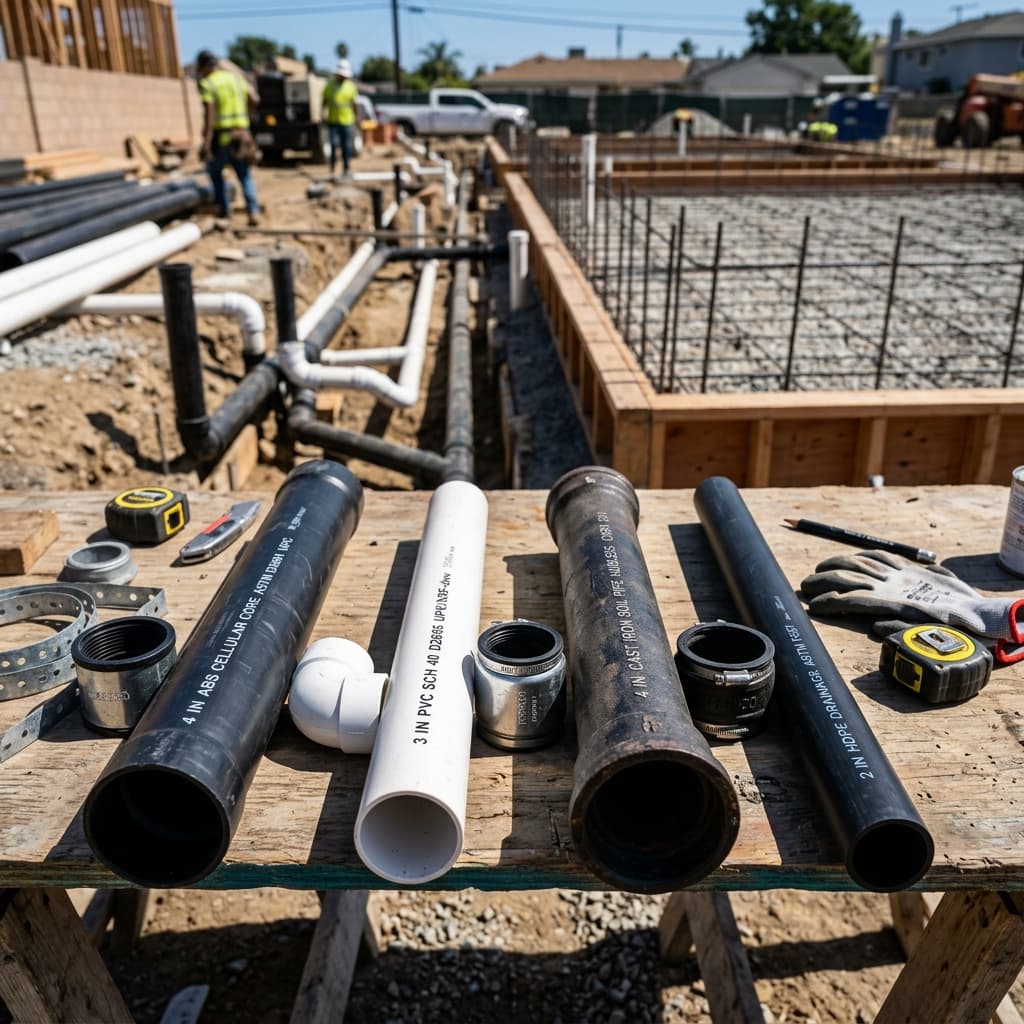
Material Specifications:- Must comply with ASTM A74 (hub and spigot) or ASTM A888 (no-hub)
- Minimum thickness standards apply based on pipe diameter
- Hub and spigot joints use oakum and lead or approved sealants
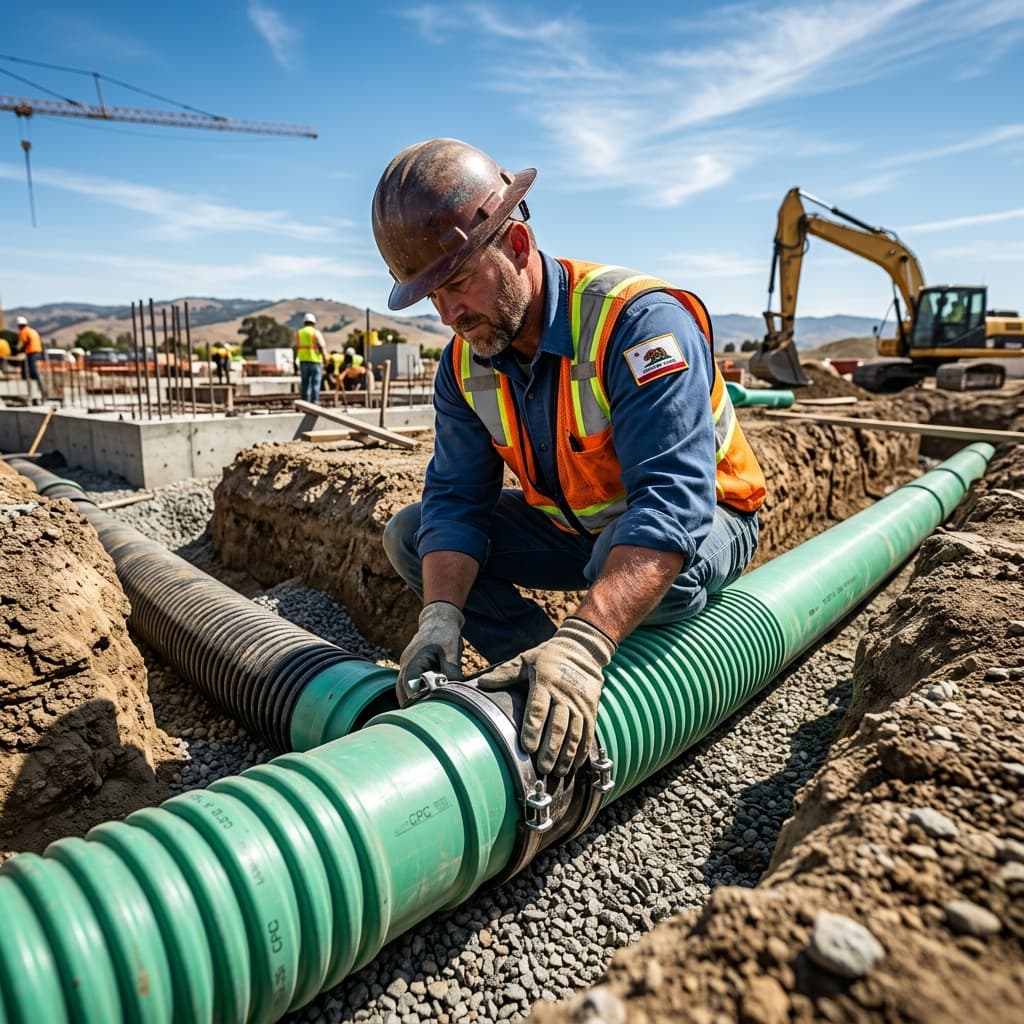
- No-hub couplings use stainless steel bands with neoprene gaskets
- Superior durability in high-temperature applications
- Excellent for commercial installations
- Fire-rated properties (important for multifamily buildings)
- Proven 100+ year lifespan in field conditions
- Must be properly supported with hangers every 4 feet for horizontal runs
- Vertical stacks require support at each floor
- Cast iron can be used indoors and underground
- Requires cleanouts at specific intervals per CPC Section 408
PVC Drainage Pipe (CPC Section 422.3)
PVC (polyvinyl chloride) has become increasingly popular and represents a modern alternative to traditional materials.
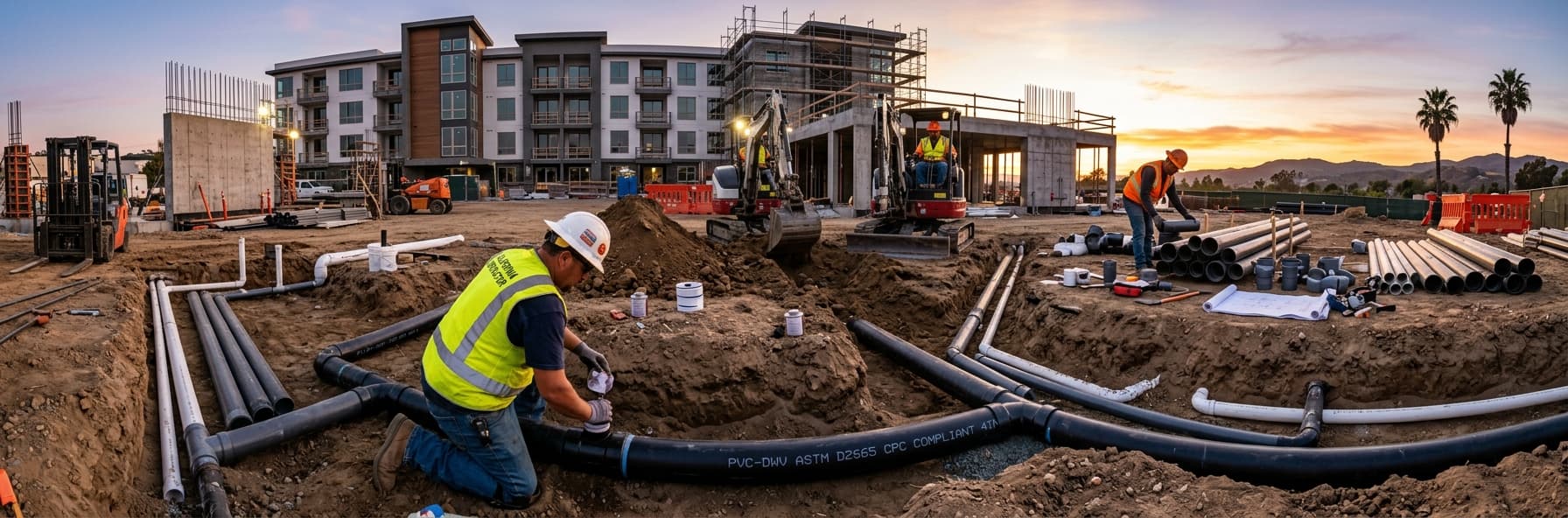
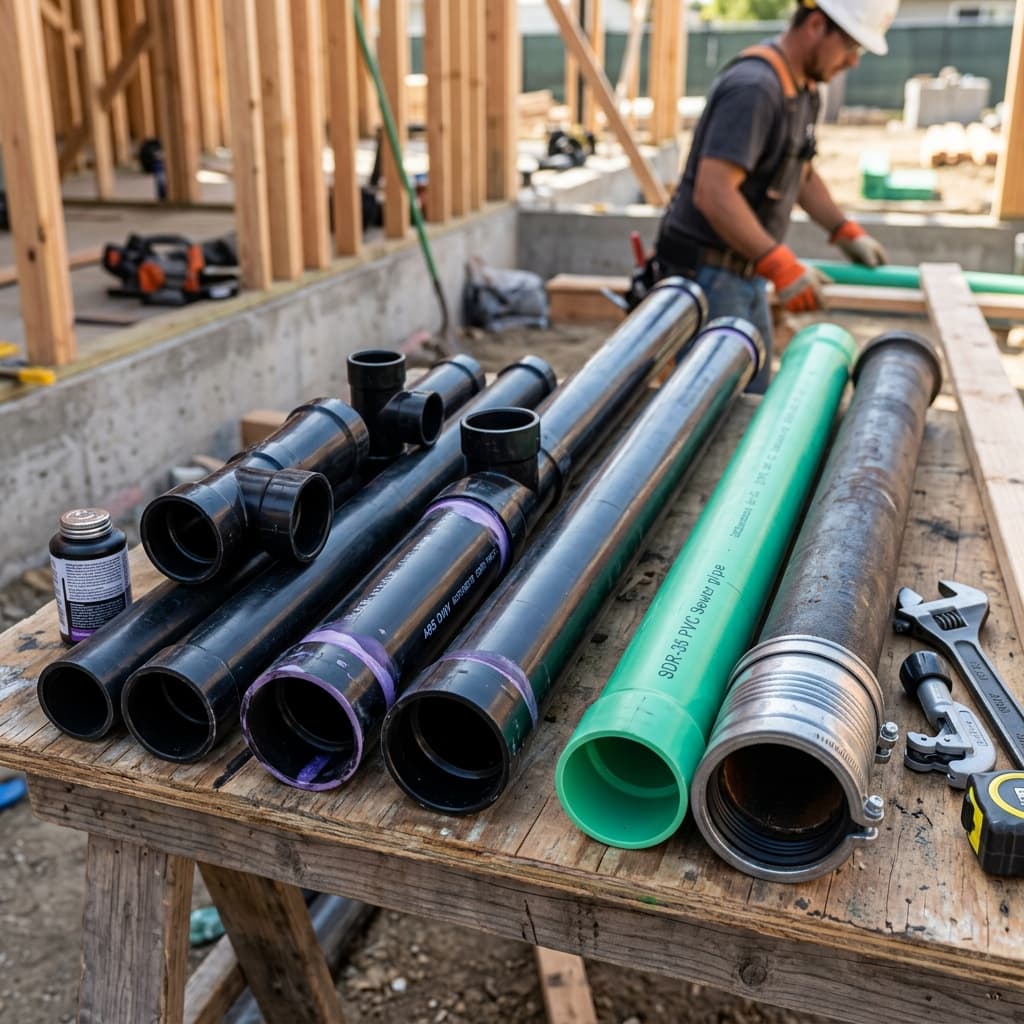
Material Specifications:- Must comply with ASTM D2665 or D3034 standards
- Solvent-cement joints require primer and cement per manufacturer specifications
- Schedule 40 for most applications; Schedule 80 for higher-pressure situations (though less common in gravity drainage)
- Color-coded standards (white or clear for DWV applications)
- Support requirements: every 4 feet horizontally, at each floor for vertical runs
- Cannot be used within 6 inches of heat sources without protection
- Requires proper ventilation to prevent condensation
- Cannot support other pipes or equipment loads
| Application | Cast Iron | PVC | Primary Reason | |---|---|---|---| | Residential (interior) | Yes | Yes | Both acceptable; cost drives selection | | Commercial kitchens | Preferred | Acceptable with precautions | Heat resistance | | Underground (below grade) | Yes | Yes | Both suitable | | Above-ground commercial | Preferred | Yes | Fire rating and durability | | High-temperature waste | Preferred | No (without protection) | Thermal resistance | | Existing systems | Often cast iron | N/A | Renovation considerations |
C-36 Exam Strategy: Expect questions requiring you to select PVC for cost-effective residential installations and cast iron for commercial applications with temperature or fire-rating concerns.Copper Drainage Pipe (CPC Section 422.4)
Though less common than cast iron or PVC, copper remains an approved material with specific applications.
Specifications:- Type DWV (drainage, waste, vent) copper only
- Soldered joints using lead-free solder
- Requires proper support and pitch
Critical Installation Standards from CPC 422
Pitch and Slope Requirements
CPC Section 422 incorporates slope requirements essential for proper drainage:
Minimum Slope Standards:- Horizontal drainage pipes: 1/4 inch per foot minimum (slight pitch acceptable up to 1/2 inch per foot)
- Steeper slopes don't improve drainage and can cause problems
- Fixture drains under sinks: minimum 1/4 inch per foot
Support and Hanger Requirements
Proper support prevents pipe stress, joint failure, and system deterioration.
CPC 422 Support Standards:- Horizontal runs: support every 4 feet for cast iron; every 3-4 feet for PVC
- Vertical stacks: must be supported at base and at each floor
- Hangers must not restrict movement or cause stress
- Materials must be compatible (avoid dissimilar metal corrosion)
Joint Requirements and Transitions
Different materials require different joining methods, and transitions between materials have specific requirements.
CPC Section 422 Joint Standards: Cast Iron Joints:- Hub and spigot: oakum and lead (traditional) or approved elastomeric compounds
- No-hub: stainless steel bands with neoprene gaskets
- Must be watertight; no leakage permitted
- Solvent-cement: requires primer application, cement, and proper cure time
- Mechanical couplings: acceptable where solvent-cement unsuitable
- Joint compound/primer must match PVC type
- Cast iron to PVC: requires approved coupling (banded coupling or adapters)
- Different materials in same building: acceptable with proper transitions
- Stainless steel bands or rubber-lined couplings prevent dissimilar metal corrosion
Material Selection Decision Matrix for C-36 Success
Understanding when to specify each material is crucial for exam questions presenting real-world scenarios.
When to Specify Cast Iron:
- Commercial food service facilities - heat and grease resistance
- High-rise multifamily buildings - fire rating requirements
- Industrial facilities - durability and chemical resistance
- Existing cast iron systems - replacement in kind preferred
- Above-grade commercial installations - code preference for fire safety
When to Specify PVC:
- Residential single-family homes - cost-effectiveness
- Small commercial buildings - economy and ease of installation
- New construction - modern code acceptance
- Underground and below-grade - corrosion resistance
- Renovations requiring economy - reduced project costs
When to Specify Copper:
- Existing copper drainage systems - replacement in kind
- Architectural applications - aesthetic considerations
- Specialized commercial applications - rare specification
Common C-36 Exam Questions on CPC 422
Question Type 1: Material Selection Scenarios
"A three-story apartment building requires new drainage piping for the kitchen and bathroom waste lines. What material is most appropriate under California Plumbing Code Section 422?" Correct Answer: Cast iron (Section 422.2) due to multifamily building classification and fire-rating requirements under CPC Section 308. Why Other Answers Are Wrong:- PVC is acceptable but not preferred for multifamily commercial-rated buildings
- Copper is too expensive and rarely specified for new construction
Question Type 2: Installation Standards
"A horizontal drainage line slopes at 3/8 inch per foot. Does this comply with CPC Section 422?" Correct Answer: Yes, it complies. CPC 422 requires minimum 1/4 inch per foot; 3/8 inch is acceptable (under 1/2 inch maximum). Learning Point: Questions test your understanding of acceptable ranges, not just minimum requirements.Question Type 3: Support Calculations
"A 16-foot horizontal cast iron drainage line is supported only at both ends. How many additional supports are needed?" Correct Answer: Two additional supports (at 4 feet and 12 feet from one end) to comply with CPC Section 422's 4-foot maximum spacing. Calculation Method: Divide total length by maximum spacing; round up to determine total supports needed.Drainage Pipe Material Selection Troubleshooting Guide
Material Compatibility Issues:
Dissimilar Metal Corrosion:- Never connect copper directly to cast iron
- Use approved transition couplings with neoprene liners
- Stainless steel bands prevent galvanic corrosion
- Cast iron with improper lead/oakum installation fails
- PVC with inadequate solvent-cement cure time leaks
- Mechanical couplings must have proper band tension
Common Installation Errors:
- Insufficient slope - causes standing water and odors
- Excessive slope - causes solids to separate from liquids
- Inadequate support - leads to stress failures and leaks
- Improper transitions - materials incompatibility problems
- Missing cleanouts - violates CPC Section 408
Summary: Key CPC 422 Takeaways for Exam Preparation
Must-Know Material Properties:- Cast iron: superior durability, fire-rated, high-temperature capable
- PVC: cost-effective, modern, corrosion-resistant, temperature limitations
- Copper: expensive, traditional, limited modern applications
- Minimum slope 1/4 inch per foot (maximum 1/2 inch per foot)
- Support every 4 feet horizontal; at each floor vertical
- Proper joint methods based on material type
- Approved transitions between different materials
- When multifamily or commercial: consider cast iron first
- When residential or economy required: PVC likely correct
- Always reference CPC Section 422 when material questions arise
- Connect material selection to building type and application
Master these CPC 422 concepts, and you'll confidently answer the drainage material and installation questions on your C-36 Part 2 examination.