
# CPC Section 422: Deck-Mounted and Wall-Hung Fixture Installation Requirements
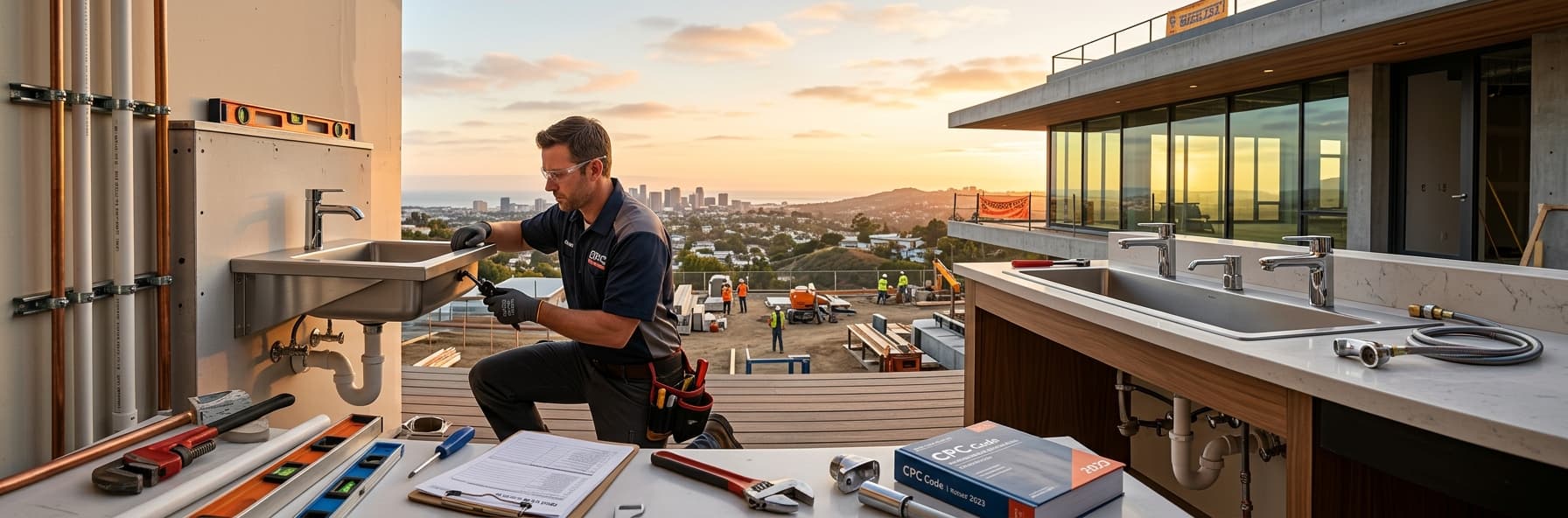
Plumbing fixture installation california professionals must master California Code of Plumbing (CPC) Section 422 to ensure compliant, safe, and durable installations. This comprehensive guide covers the critical requirements for both deck-mounted and wall-hung fixtures that appear frequently on the California C-36 plumbing license exam Part 4. Understanding these standards isn't just about passing the exam—it's fundamental to protecting building occupants and maintaining system integrity.
Understanding CPC Section 422: Foundation Requirements
CPC Section 422 establishes the foundational standards for all plumbing fixture installation throughout California. This section doesn't exist in isolation; it works in conjunction with Sections 418-421 (which address fixture design and material standards) to create a complete fixture compliance framework.The primary objective of CPC Section 422 is to ensure that:
- All fixtures are securely fastened and properly supported
- Installation methods prevent fixture movement under normal use
- Water damage risks are minimized through proper sealing
- Accessibility standards are maintained
- Material compatibility prevents corrosion and degradation
Deck-Mounted Sink Installation Requirements
Definition and Scope
Deck-mounted fixtures refer to plumbing units installed directly onto a counter, vanity, or sink rim surface. The most common deck-mounted fixtures include:
- Kitchen sinks and sink groups
- Lavatory sinks in bathrooms and commercial spaces
- Service sinks in utility areas
- Lab sinks in medical and research facilities
CPC Section 422 Deck-Mounted Specifications
CPC Section 422.1 requires that deck-mounted sink installation requirements include: #### Substrate Preparation Before installation, the substrate (counter material) must be:- Clean and free of debris
- Properly sealed with appropriate materials compatible with the sink rim
- Level within 1/4 inch per 10 feet (measured with a 10-foot straightedge)
- Capable of supporting the maximum load (typically 250 pounds for residential sinks)
- Sink mounting clips or fasteners must be installed at intervals not exceeding 6 inches
- Fasteners must be corrosion-resistant and compatible with both the sink material and substrate
- Stainless steel fasteners are preferred for sink installations
- The sink rim must fully contact the counter surface without gaps exceeding 1/16 inch
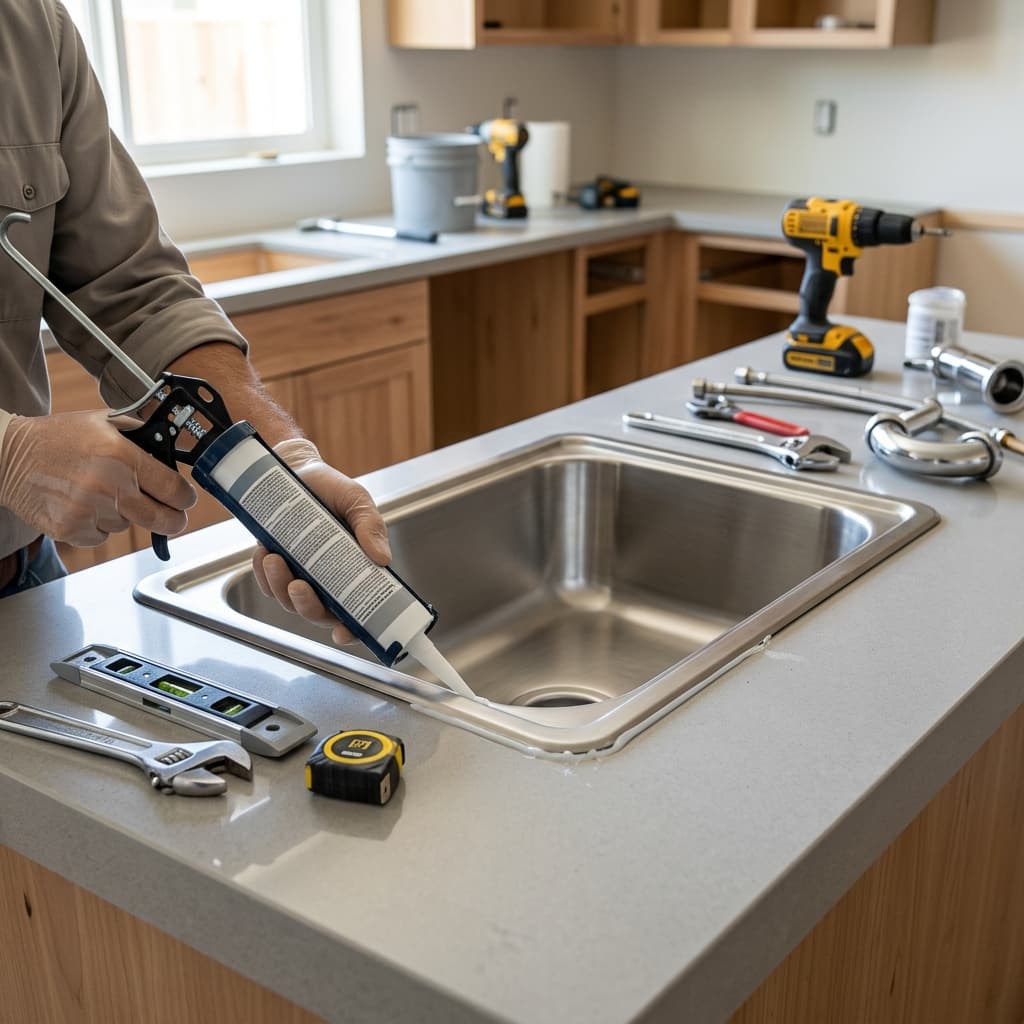
- A continuous bead of 100% silicone sealant (or polyurethane in high-moisture areas) must seal the joint between sink rim and counter
- Sealant should be applied both above and below the counter line
- Allow 24 hours for cure before water introduction
- Verify sealant compatibility with counter material (avoid silicone on natural stone without sealer)
Overflow Protection
CPC Section 422.2 addresses overflow requirements:- Kitchen sinks must have accessible overflow prevention through proper faucet design
- Lavatory sinks with integral overflow ports must have those ports functioning and unobstructed
- Secondary containment systems are required for sinks serving sensitive areas (laboratories, medical facilities)
Wall-Hung Toilet Installation Code Compliance
Carrier System Requirements
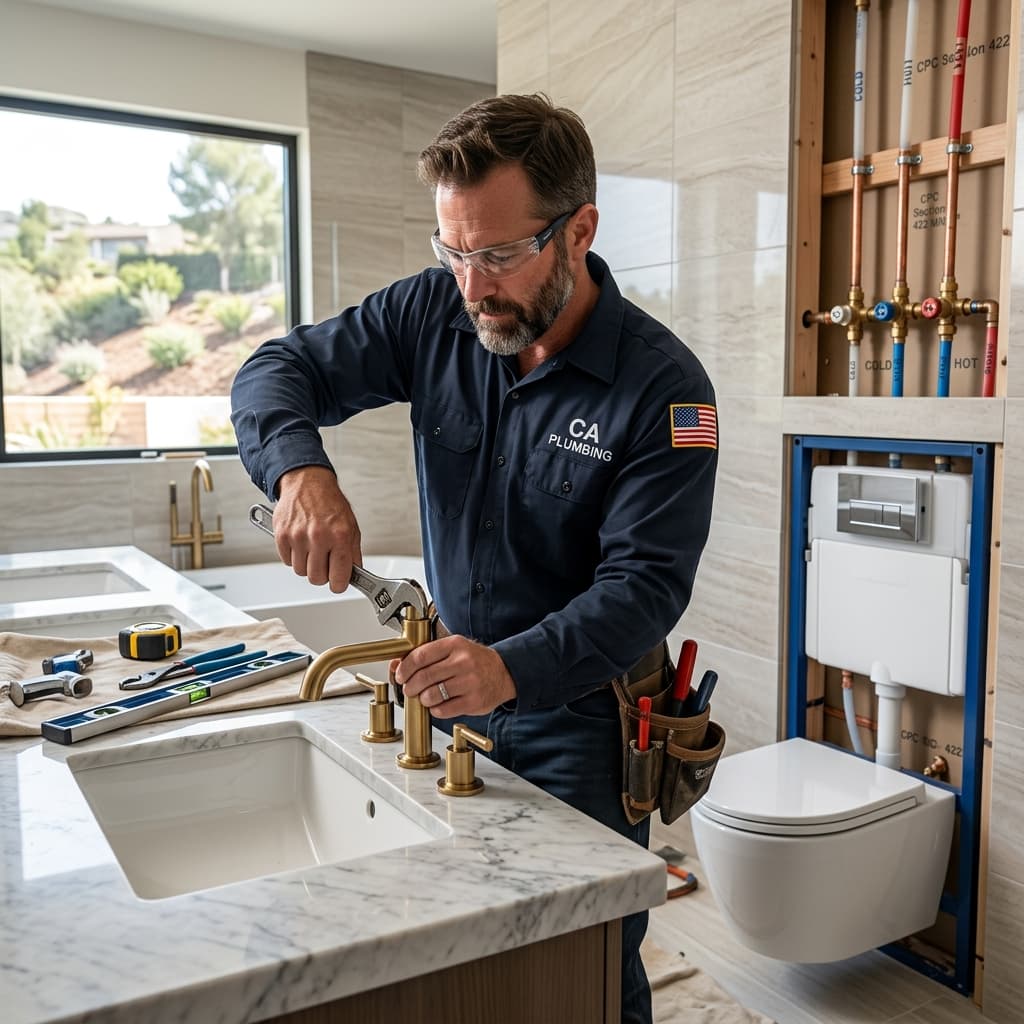
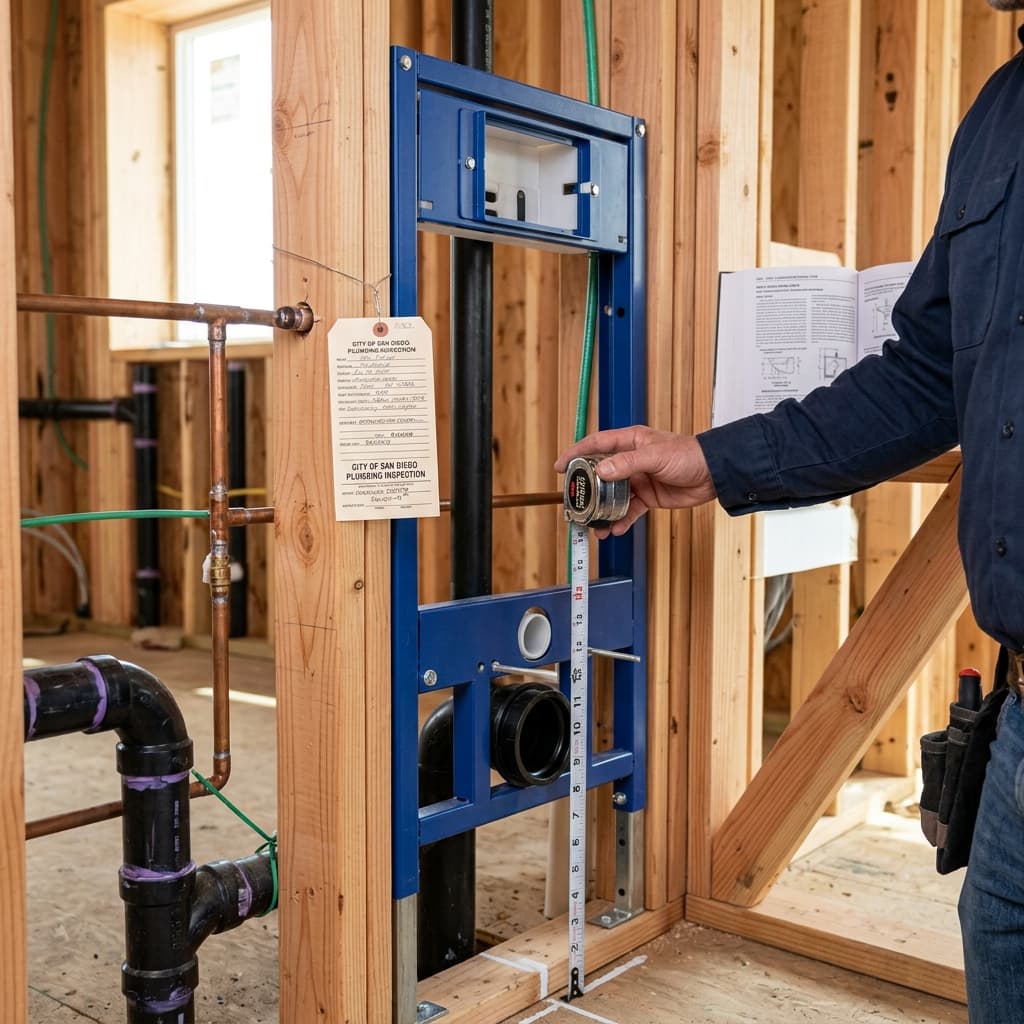
Wall-hung toilet installation code requirements are among the most heavily tested topics in CPC Section 422. These fixtures require specialized support systems called carriers or rough-in frames.
CPC Section 422.3 mandates: #### Carrier System Standards- Carriers must be certified to support minimum loads of 500 pounds for residential applications
- Commercial installations require 600-pound minimum capacity
- Carriers must be secured to structural framing members, not drywall
- Direct fastening to studs, blocking, or reinforced headers is required
- A wall-hung toilet supports approximately 350-400 pounds in normal use
- Carrier certification documents must be available for inspection
- Installation calculations verify that structural members can withstand concentrated loads
- Typical 2x6 or 2x8 framing with proper blocking accommodates standard carriers
- Fastening carriers to drywall only (insufficient support)
- Using carriers designed for residential applications in commercial settings
- Failing to verify structural capacity before installation
- Improper alignment of carrier with rough-in dimensions
Rough-In Mounting Height and Alignment
Wall-hung toilet installation requirements specify precise positioning:
- Center line to wall: 12 inches (±1/2 inch) - this is the standard rough-in measurement
- Height of carrier: 16-18 inches above finished floor (varies by fixture design)
- Slope of carrier: Must be level (±1/8 inch per 10 feet) to prevent water pooling and fixture rocking
- Structural alignment: Carrier must be square with wall surfaces
Concealment and Access Requirements
CPC Section 422.4 addresses concealment:- Carriers may be concealed behind finish materials (drywall, tile, stone)
- Concealment must allow future access for maintenance and repair
- Access panels (minimum 18" x 18") must be provided at carrier locations
- Panel locations must be marked clearly or documented in as-built drawings
- Concealment materials cannot impede water drainage or ventilation
Wall-Hung Lavatory and Sink Installation
Beyond toilets, wall-hung fixtures require equally rigorous compliance:
Support Requirements for Wall-Hung Lavatories
CPC Section 422.5 specifies:- Wall-hung lavatories must be supported on carriers rated for minimum 300 pounds
- Support brackets bolted directly to wall studs (with blocking if necessary) are acceptable alternatives to full carriers
- Spacing between support points cannot exceed 24 inches
- Support hardware must be stainless steel or equivalent corrosion-resistant material
Rim Height and Accessibility
CPC Section 422 incorporates accessibility requirements from California Title 24:
- Standard rim height: 34-36 inches above finished floor
- Accessible lavatories (ADA-compliant): 34 inches maximum from floor to rim (some jurisdictions allow up to 36 inches)
- Clearance below rim: 27 inches minimum depth for knee clearance in accessible installations
Material Compatibility and Corrosion Prevention
Fastener Selection
CPC Section 422 requires careful material selection to prevent galvanic corrosion:
Acceptable Fastener Materials:- Stainless steel (most common and preferred)
- Hot-dipped galvanized steel (in non-saline environments)
- Brass or bronze (for water contact applications)
- Plastic or nylon hardware (for moisture-sensitive applications)
- Copper fasteners with steel sinks (galvanic corrosion)
- Aluminum fasteners in wet environments (oxidation and failure)
- Bare steel fasteners with stainless steel fixtures (corrosion)
Substrate Material Considerations
Installation requirements vary by substrate:
Laminate Counters:- Support plates required under sink rim to distribute load
- Sealant must prevent water infiltration into substrate layers
- Deck-mounted sink installation on laminate requires solid backing support
- Manufacturer's installation instructions must be followed
- Some solid surface materials require specific adhesive systems
- Edge sealing requirements vary by material composition
- Must be sealed before fixture installation
- Some stone materials incompatible with silicone sealants
- Polyurethane or manufacturer-specified sealants may be required
- Thicker mounting hardware necessary due to material brittleness
Fixture Support System Calculations
Load Path Analysis
Understanding load paths is essential for both exam success and practical installation:
- Load origination: Weight of fixture plus water plus user
- Load transmission: Through mounting fasteners to substrate/structural members
- Load distribution: Across structural members to primary framing
Spacing and Fastener Requirements
CPC Section 422.6 requires:- Fasteners spaced at intervals not exceeding manufacturer's specifications (typically 6-8 inches)
- Minimum of 4 fasteners for fixtures up to 24 inches wide
- Additional fasteners for longer fixtures (1 per 8-12 inches of fixture width)
- Fasteners must be installed through reinforced areas or into blocking
Seal and Gasket Requirements
Water-Tightness Standards
Every connection between a fixture and its supply or drain must be water-tight:
Supply Connections:- Compression fittings must have washers (rubber or nylon appropriate for temperature)
- Solder joints must be smooth with uniform solder coverage
- Unions or disconnect fittings must be accessible and functional
- Slip-nut connections require rubber washers and proper tightening (hand-tight plus 1/4 turn)
- Caulked connections require 100% silicone or polyurethane
- No gaps exceeding 1/32 inch at drain connections
Common Installation Violations and Exam Scenarios
Understanding common violations reinforces code requirements:
Violation: Improper Carrier Installation
- Issue: Carrier fastened to drywall instead of structural members
- Code Reference: CPC Section 422.3
- Consequence: Fixture failure under load; water damage
- Exam Question Format: "Which structural member must support a wall-hung toilet carrier?"
Violation: Missing Sealant at Deck-Mounted Fixture
- Issue: Deck-mounted sink installed without sealant, allowing water to seep behind counter
- Code Reference: CPC Section 422.2
- Consequence: Substrate degradation; mold growth; water damage
- Corrective Action: Removal, sealant application, reinstallation
Violation: Incorrect Rough-In Measurements
- Issue: Toilet carrier set at 10 inches from wall instead of 12 inches
- Code Reference: CPC Section 422.3
- Consequence: Fixture misalignment; appearance issues; potential leaks at connection points
Violation: Incompatible Fastener Materials
- Issue: Copper fasteners used with stainless steel fixture
- Code Reference: CPC Section 422.1
- Consequence: Galvanic corrosion; fastener failure; fixture instability
Preparation Strategies for C-36 Exam Part 4
To master fixture installation questions on your C-36 exam:
Study Focus Areas
- Carrier system requirements - Load ratings, fastening methods, rough-in measurements
- Deck-mounted specifications - Substrate preparation, fastening intervals, sealant requirements
- Material compatibility - Fastener selection, corrosion prevention, surface-specific requirements
- Load calculations - Fastener spacing, support distribution, structural verification
- Accessibility standards - Rim heights, clearances, ADA requirements
Practice Question Types
- Scenario-based questions describing installation conditions and asking for code compliance assessment
- Multiple-choice questions testing specific measurements and requirements
- Calculation questions determining fastener quantity and spacing
- Application questions matching fasteners to fixture/substrate combinations
Key Resources
- Official CPC Section 422 (California Code of Plumbing)
- Fixture manufacturer installation instructions (referenced by CPC Section 422)
- IAPMO (International Association of Plumbing and Mechanical Officials) guidance documents
- California Title 24 accessibility requirements
Conclusion
CPC Section 422 fixture installation requirements form a critical knowledge domain for California C-36 plumbing license candidates. Whether installing deck-mounted sinks requiring proper sealant and fastening procedures or wall-hung toilets demanding specialized carrier systems and load verification, plumbing professionals must master these standards.
Success on Part 4 of the C-36 exam requires not just memorizing code sections but understanding the underlying principles: load distribution, material compatibility, water-tightness, and safety. By studying fixture requirements comprehensively and practicing with scenario-based questions, candidates can confidently address installation compliance questions.
Remember that code compliance protects building occupants, prevents water damage, and ensures fixture longevity. The investment in thorough CPC Section 422 study pays dividends throughout your plumbing career.