
# CPC Section 422 Water Heater Installation: Temperature Control, Expansion Tanks, and Relief Valve Requirements
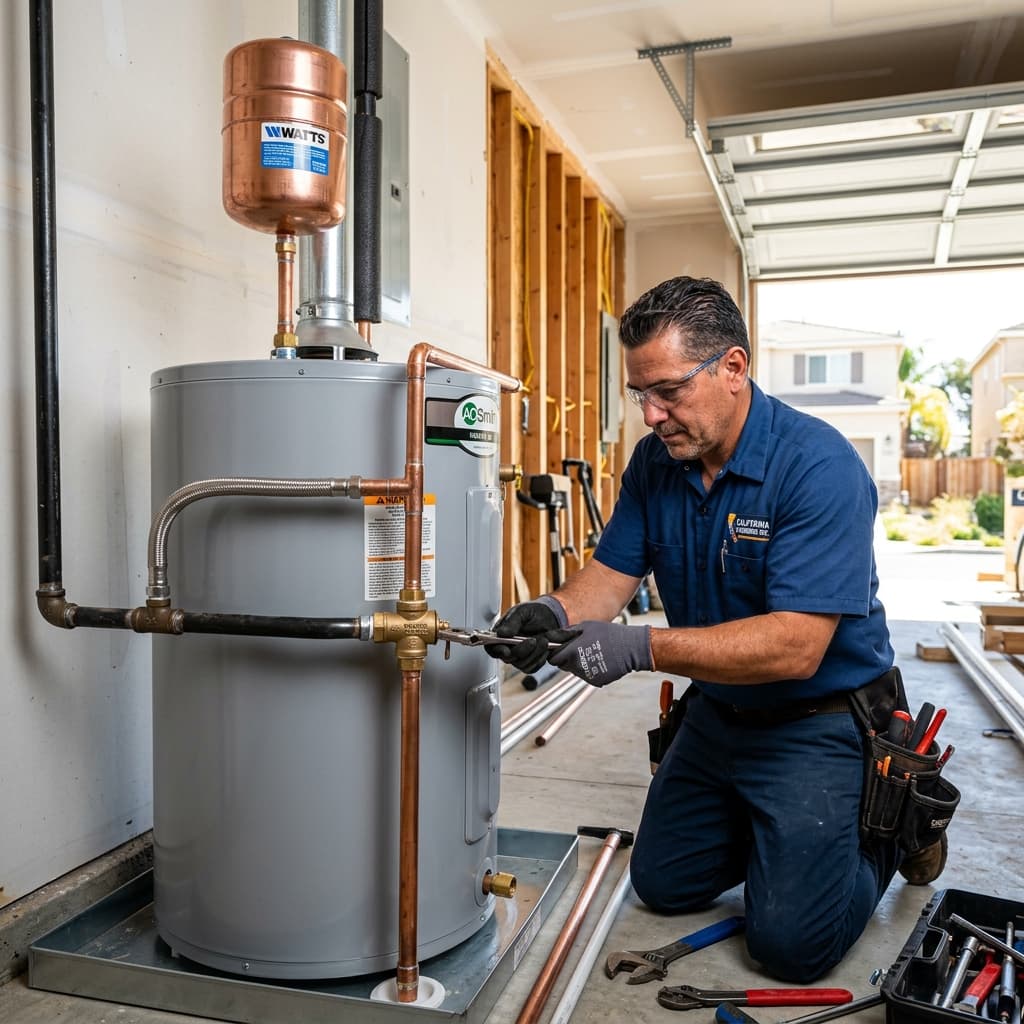
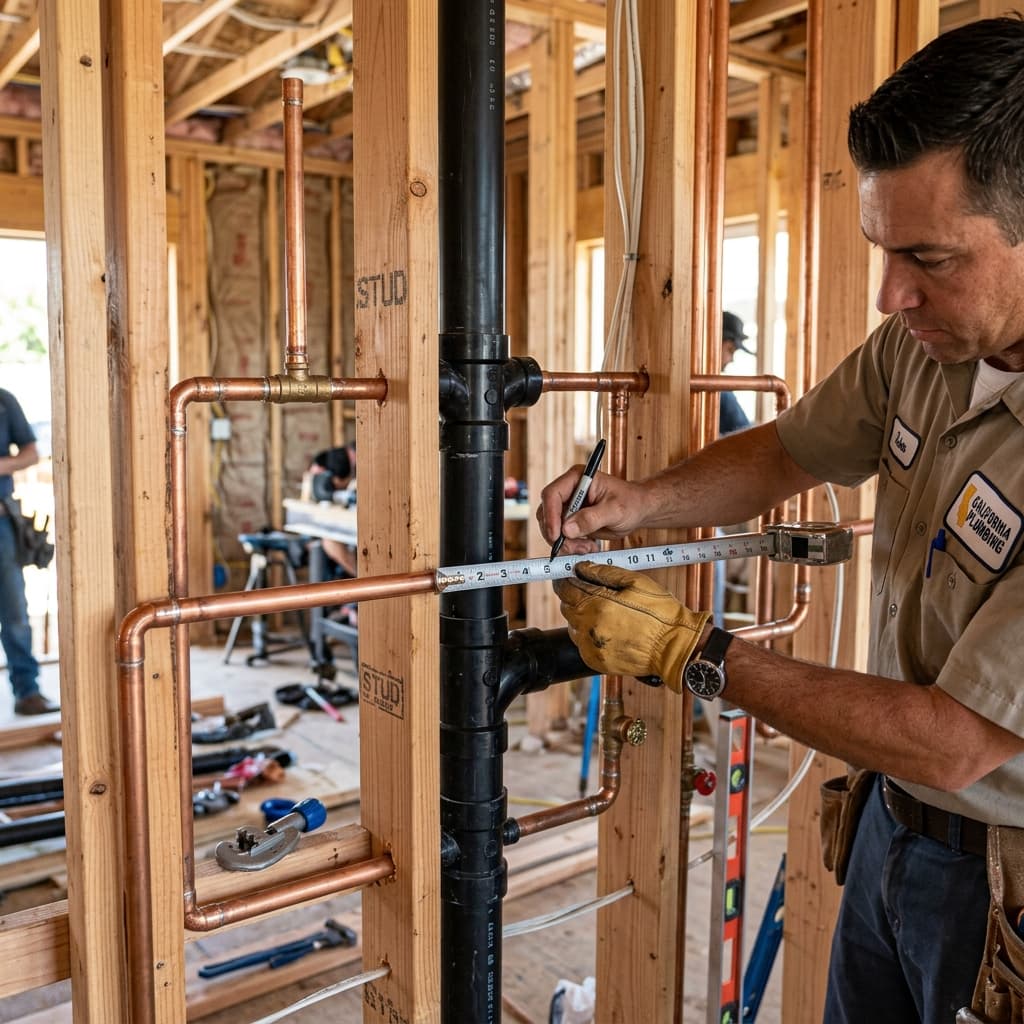
Water heater installation represents one of the most critical responsibilities for California plumbers. CPC Section 422 water heater requirements establish comprehensive safety standards that protect occupants from scalding, pressure hazards, and system failures. Whether you're preparing for the C-36 plumbing exam or installing residential and commercial water heating systems, mastering these regulations is essential for code compliance and public safety.Understanding CPC Section 422 Scope and Purpose
CPC Section 422 governs the design, installation, and safety requirements for all water heating equipment in California. This section directly supports the California Plumbing Code's fundamental objective: protecting public health and safety while ensuring proper water heating functionality.
The regulations in Section 422 address three critical areas:
- Temperature and pressure relief protection
- Thermal expansion accommodation
- Temperature limiting and anti-scalding devices
Temperature and Pressure Relief Valves: The First Line of Defense
Why T&P Relief Valves Are Mandatory
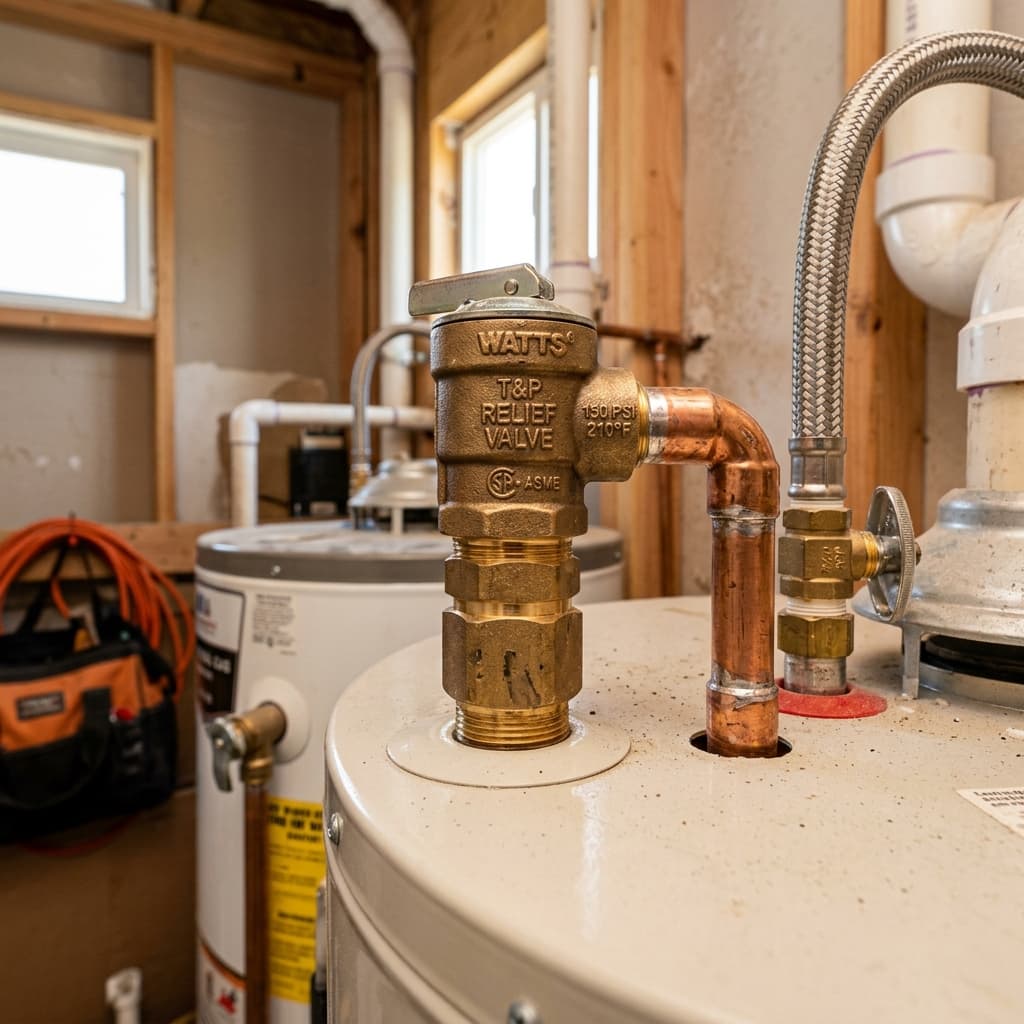
Water heaters generate significant pressure as water heats. Unlike cold water, hot water expands—a principle known as thermal expansion. Without proper pressure relief, internal tank pressures can exceed safe limits, creating an explosion hazard. The temperature and pressure relief valve serves as the critical safety device preventing this dangerous scenario.CPC Section 422.1 requires that every water heater be protected by a temperature and pressure relief (T&P) valve. This valve must:
- Open automatically when temperature reaches 210°F (98.9°C) or pressure reaches the valve's rated setting
- Discharge at or near the top of the water heater tank
- Be sized according to the water heater's input rating
T&P Relief Valve Sizing Requirements
The sizing of relief valves is not arbitrary—it's calculated precisely based on the water heater's input rating, measured in BTU per hour (BTU/h) or kilowatts (kW).
CPC Section 422.1.1 establishes the sizing table:| Water Heater Input Rating | Relief Valve Capacity (GPM) | |---------------------------|------------------------------| | 0 to 75,000 BTU/h | 15 GPM minimum | | 75,001 to 100,000 BTU/h | 20 GPM minimum | | 100,001 to 150,000 BTU/h | 30 GPM minimum | | 150,001 to 200,000 BTU/h | 40 GPM minimum |
For water heaters exceeding 200,000 BTU/h, divide the input by 5,000 to determine the minimum GPM capacity.
Exam Tip: Questions frequently present a water heater input rating and ask for the correct relief valve size. Memorize this table and the calculation formula for larger units.Installation Requirements for Relief Valve Discharge
Proper discharge piping is just as important as valve selection. CPC Section 422.1.2 specifies that relief valve discharge piping must:
- Be copper, brass, galvanized steel, or other approved material
- Have a minimum diameter equal to the valve outlet (typically ¾-inch)
- Extend to a safe point of discharge that prevents scalding and property damage
- Terminate no more than 6 inches above the floor or into an approved drain
- Not be trapped or blocked in any manner
Common Installation Mistakes
Plumbing students often encounter these violations during inspection scenarios:
- Undersized relief valves on high-input water heaters
- Discharge pipes that terminate above fixture supply (potential for backflow contamination)
- Discharge pipes routed to exterior without draining (freezing risk in cold climates)
- Multiple water heaters on a single relief valve (insufficient capacity)
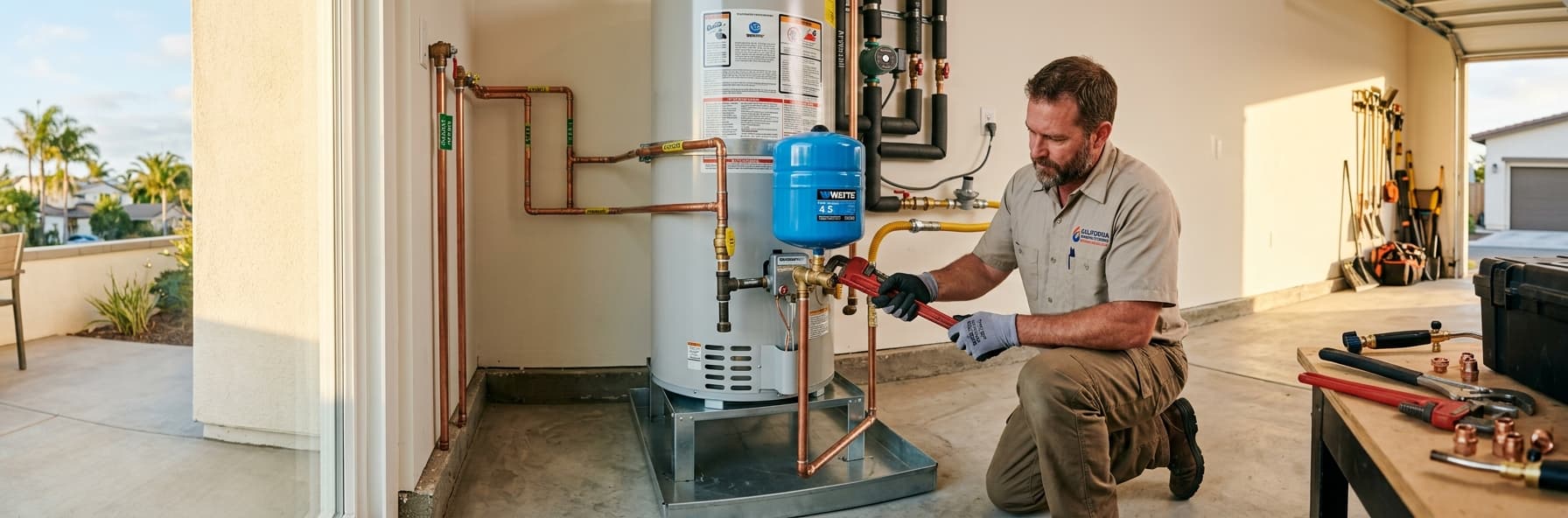
Expansion Tanks: Addressing Thermal Expansion
Understanding Thermal Expansion in Closed Systems
As water heats from 40°F to 140°F, it expands approximately 2-3% of its volume. In open water supply systems with direct vent to atmosphere, this expansion poses no problem—excess water simply flows back to the main. However, in closed systems (those with check valves, backflow preventers, or pressure regulators), this expansion has nowhere to go, creating dangerous pressure buildup.
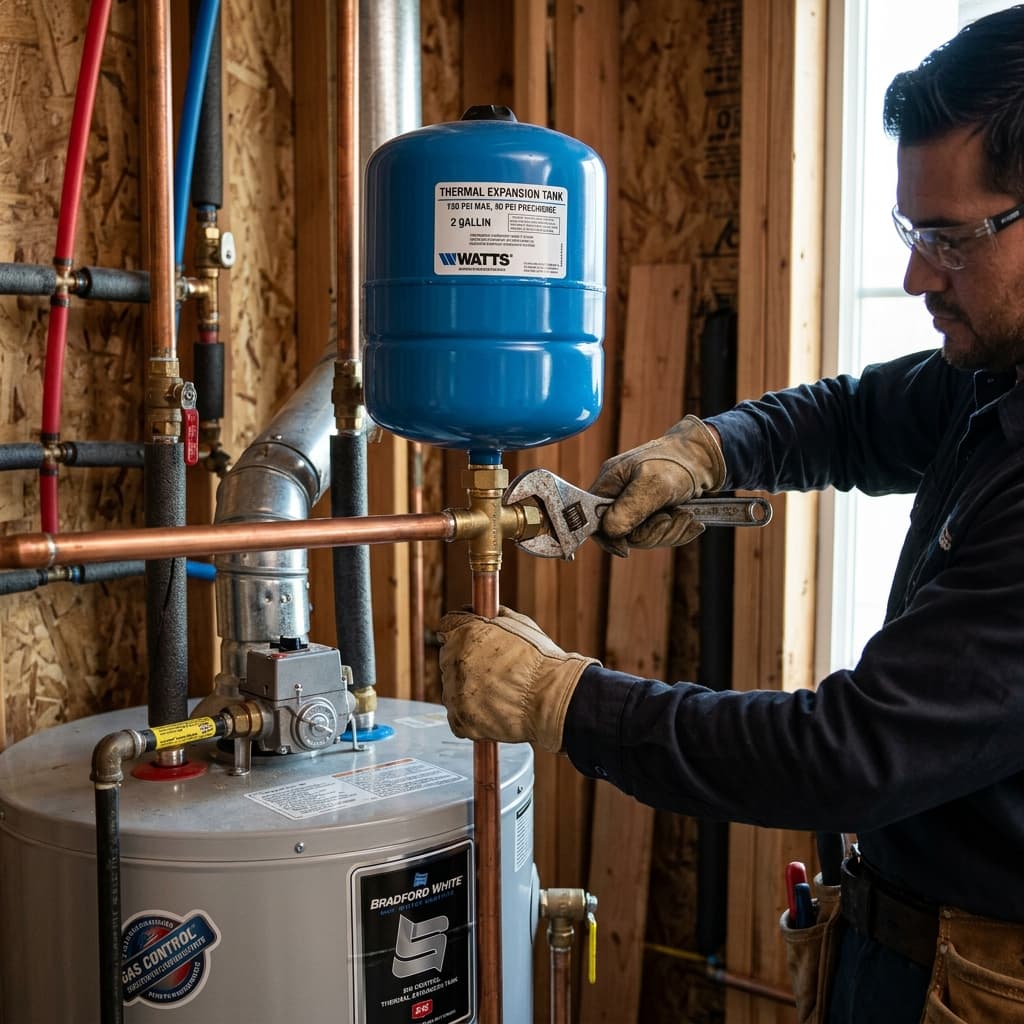
CPC Section 422.2 requires expansion tanks on all closed water supply systems serving water heaters.Expansion Tank Sizing Calculations
Unlike relief valve sizing, expansion tank calculation is more complex and frequently appears on C-36 exams. You must determine:
- Total water volume in the system
- Water expansion percentage (typically 2-3%)
- Initial water pressure in the system (usually 40-60 PSI)
- Relief valve setting on the water heater (typically 75 PSI for most residential units)
Expansion Tank Volume (gallons) = System Volume × Expansion Rate / (Relief Pressure - Initial Pressure) / (Initial Pressure + 14.7) × (Relief Pressure + 14.7)
Practical Example: For a 40-gallon water heater in a closed system:- System volume: 50 gallons (tank plus piping)
- Expansion rate: 3%
- Initial pressure: 50 PSI
- Relief valve setting: 75 PSI
Expansion Tank Installation Requirements
CPC Section 422.2.1 specifies proper expansion tank installation:
- Tank must be connected to the water supply line between the check valve and water heater inlet
- Never connect expansion tank downstream of the relief valve
- Use dielectric unions if connecting steel tanks to copper piping
- Tank must be accessible for maintenance
- Tanks should be installed vertically for most models
- Initial pre-charge pressure should equal the static pressure of the water system
Temperature Limiting and Anti-Scalding Devices
The Scalding Hazard
Hot water poses serious scalding risks, particularly to children, elderly persons, and people with disabilities. CPC Section 422.3 addresses this hazard through temperature limiting requirements.
Key Statistics: Water at 156°F causes third-degree burns in 1 second. At 140°F, full-thickness burns occur in 3-5 seconds. At 120°F, it takes 10 minutes to cause severe burns.CPC Section 422.3 Temperature Limiting Requirements
All water heaters must be equipped with or set to deliver water no hotter than 120°F (48.9°C) at the point of use, with specific exceptions:
- Commercial/industrial processes requiring higher temperatures
- Dishwashing equipment requiring 140°F+ water
- Laundry operations exceeding 120°F
- Automatically blend hot and cold water to maintain set temperature
- Must be installed at the water heater outlet or at individual fixtures
- Approved under CPC Section 308.3 for anti-scald protection
- Water heater thermostats set to 120°F delivery temperature
- Less reliable than mixing valves, as tank temperature may drift
- Subject to unauthorized adjustment
- Water heater thermostats set to appropriate temperature
- Mixing valves at fixtures provide secondary protection
Thermostatic Mixing Valve Specifications
When selecting TMVs, verify:
- Valve size matches outlet (typically ¾-inch for residential units)
- Temperature range includes 120°F setting
- Flow rate capacity accommodates fixture demand
- Pressure ratings match system pressure
- Certification to appropriate standards (ASSE 1016 or equivalent)
Interaction Between Relief Valves, Expansion Tanks, and Temperature Control
Understanding how these three components work together distinguishes competent plumbers from those who simply install equipment.
The Safety System Overview
- Temperature control (thermostatic valve or thermostat) limits the maximum water temperature, reducing pressure generation
- Expansion tank accommodates inevitable thermal expansion in closed systems
- Relief valve provides final emergency protection if either control mechanism fails
Common Code Violations and Exam Scenarios
Scenario 1: Water heater with check valve but no expansion tank- Violation: CPC Section 422.2
- Consequence: Excessive pressure buildup, potential tank failure
- Solution: Install appropriately-sized expansion tank
- Violation: CPC Section 422.1.2
- Problem: Trap prevents free discharge during relief event
- Solution: Extend discharge pipe with air gap to drain
- Violation: CPC Section 422.3
- Risk: Severe scalding hazard
- Solution: Install TMV at heater outlet or reduce temperature setting
Practical Application for the C-36 Exam
Knowledge Areas to Master
Part 3: Water Supply and Distribution frequently tests your understanding of:- Relief valve sizing calculations based on input ratings
- Expansion tank sizing procedures and formulas
- Temperature limiting device requirements and selection
- Discharge piping sizing and installation rules
- System component interactions
Study Strategy
- Memorize the relief valve sizing table for inputs up to 200,000 BTU/h
- Practice expansion tank calculations with several example systems
- Review TMV specifications and installation requirements
- Study code violations through practice exam questions
- Understand the "why" behind each requirement for application questions
Sample Exam Questions
Question 1 (Relief Valve Sizing): A gas-fired water heater has an input rating of 120,000 BTU/h. What is the minimum relief valve capacity required?- A) 15 GPM
- B) 20 GPM
- C) 30 GPM
- D) 40 GPM
- A) Only on commercial systems
- B) Only if requested by the owner
- C) Always when a check valve or backflow preventer creates a closed system
- D) Only when the water heater exceeds 75 gallons
Installation Best Practices
Pre-Installation Planning
Before beginning any water heater installation:
- Identify system type (open vs. closed)
- Determine input rating from equipment specifications
- Calculate required relief valve size
- Calculate expansion tank volume if needed
- Specify temperature limiting method
- Plan discharge piping routes before installation
Quality Installation Checklist
□ Relief valve properly sized for heater input □ Relief valve located at or near top of tank □ Discharge pipe diameter matches valve outlet □ Discharge pipe routed to safe, visible termination □ Discharge pipe free of traps or blockages □ Expansion tank pre-charged to system pressure □ Expansion tank connected between check valve and heater □ Thermostatic mixing valve installed and set to 120°F □ All dielectric unions installed where dissimilar metals meet □ System pressure tested and documented
Conclusion
CPC Section 422 water heater requirements represent essential safety knowledge for California plumbers. The temperature and pressure relief valve, expansion tank, and temperature limiting device form an integrated protection system that prevents dangerous pressure conditions and scalding hazards.Success on the C-36 exam Part 3 section requires thorough understanding of:
- Relief valve sizing based on input ratings
- Expansion tank calculations for closed systems
- Temperature limiting device selection and installation
- Proper discharge piping requirements
- The interaction between all three protection mechanisms
---
Ready to test your knowledge? Review your state's CPC Section 308 water distribution requirements to understand backflow prevention's role in creating closed systems requiring expansion tanks. Then progress to CPC Section 424 for solar water heating systems to see how these safety principles apply to advanced heating technologies.