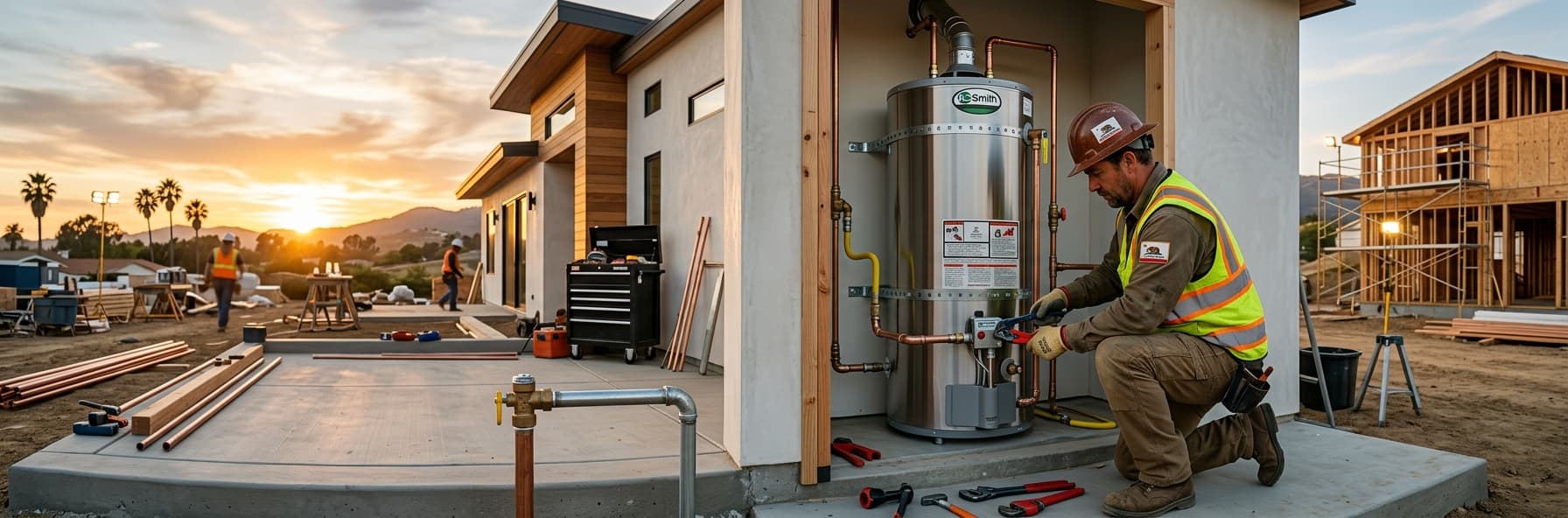
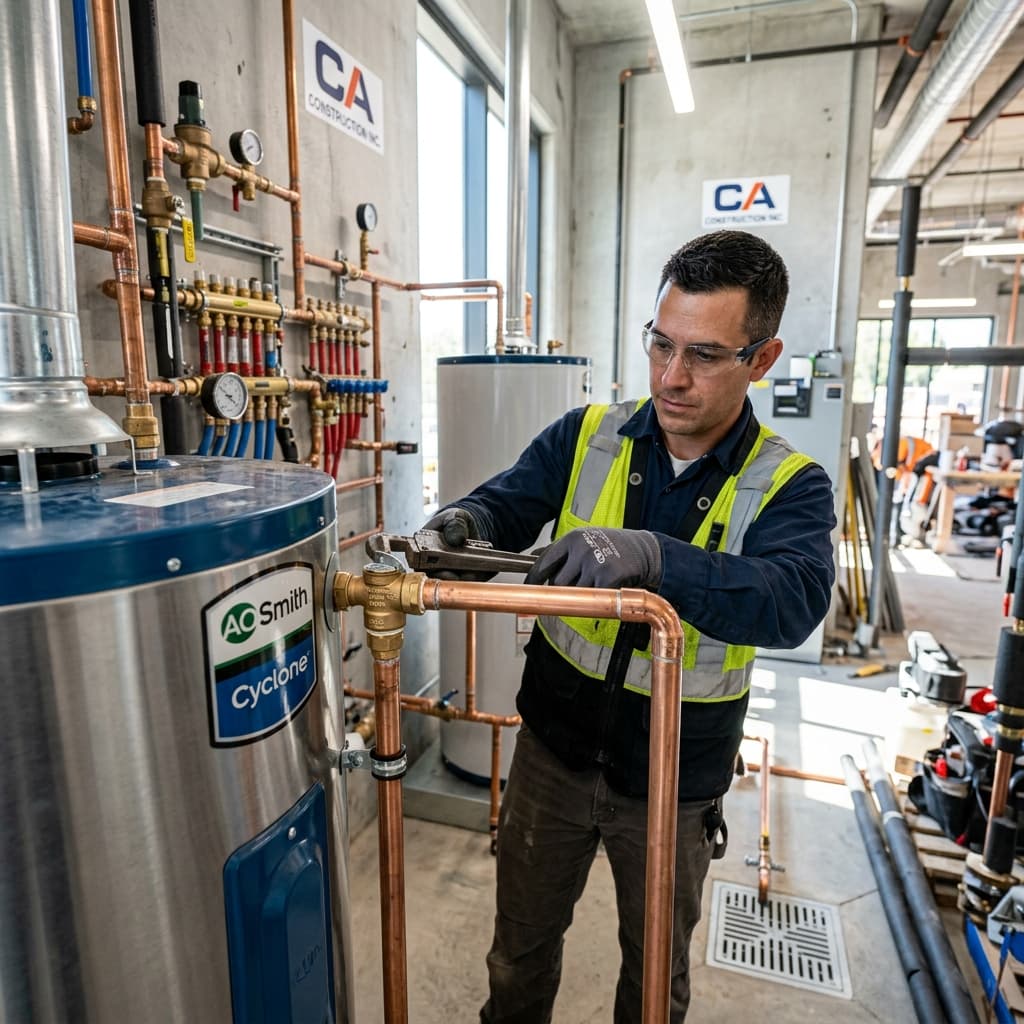

# CPC Section 422 Water Heater Installation: Temperature, Pressure, and Safety Requirements for C-36 Exam
Water heater installation represents one of the most heavily tested topics on the California C-36 plumbing exam. CPC Section 422 water heater regulations establish mandatory safety standards that protect homes and businesses from pressure buildup, scalding, and equipment failure. Understanding these requirements isn't just about passing the exam—it's about ensuring public safety and preventing catastrophic failures in residential and commercial installations. As a plumbing contractor preparing for Part 2: Water Supply and Distribution, mastering water heater installation requirements California and the specific provisions of CPC Section 422 will significantly boost your exam performance and professional credibility.Understanding CPC Section 422: The Foundation
CPC Section 422 provides comprehensive guidance for water heater installation, covering everything from equipment certification to discharge piping. This section applies to both storage-type and instantaneous water heaters used for domestic hot water supply.Key Regulatory Scope
CPC Section 422 establishes requirements for:
- Equipment certification and labeling standards
- Temperature and pressure control devices
- Relief valve installation and discharge
- Expansion tank requirements
- Piping materials and sizing
- Support and seismic bracing
- Access and clearance provisions
Temperature Control Requirements
Thermostatic Mixing Valves (TMV)
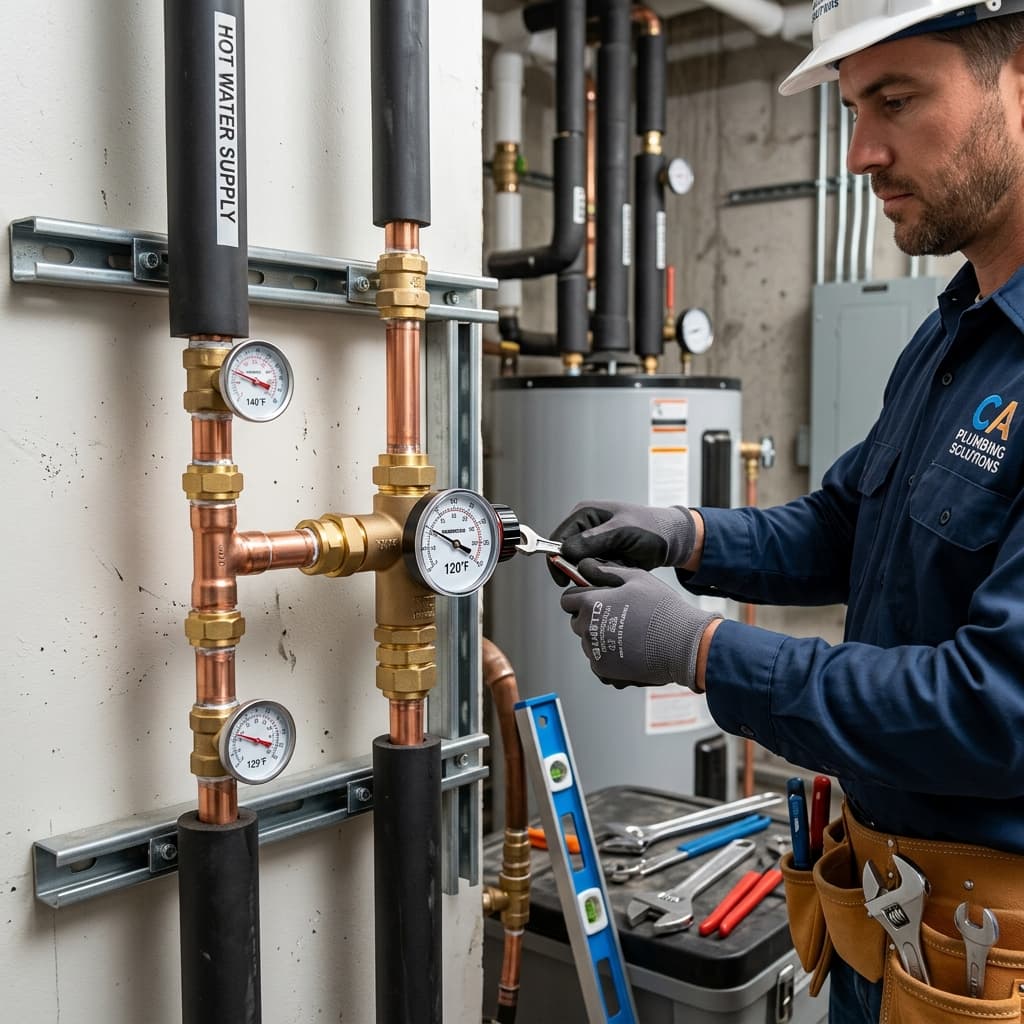
One of the most critical water heater safety codes California requirements involves temperature control at the point of use. CPC Section 422.1 mandates thermostatic mixing valve (TMV) installation in specific applications to prevent scalding injuries, particularly in vulnerable populations. Key Requirements:- TMVs must deliver water at temperatures not exceeding 120°F (49°C) to bathing fixtures
- Exceptions include commercial applications and industrial processes where higher temperatures are necessary
- TMVs must be certified to ASSE 1016 or ASME A112.27.1 standards
- Annual inspections and maintenance are required to ensure proper operation
Water Heater Temperature Settings
While the water heater itself may operate at higher temperatures for sanitization purposes (typically 140°F/60°C), the delivered water temperature must be controlled. This dual-temperature strategy prevents bacterial growth while protecting users from scalding injuries.
Exam Tip: Remember that temperature pressure relief valve requirements serve multiple purposes—controlling temperature at point-of-use is separate from pressure relief protection at the heater itself.Pressure and Temperature Relief (TPR) Valves
TPR Valve Installation Requirements
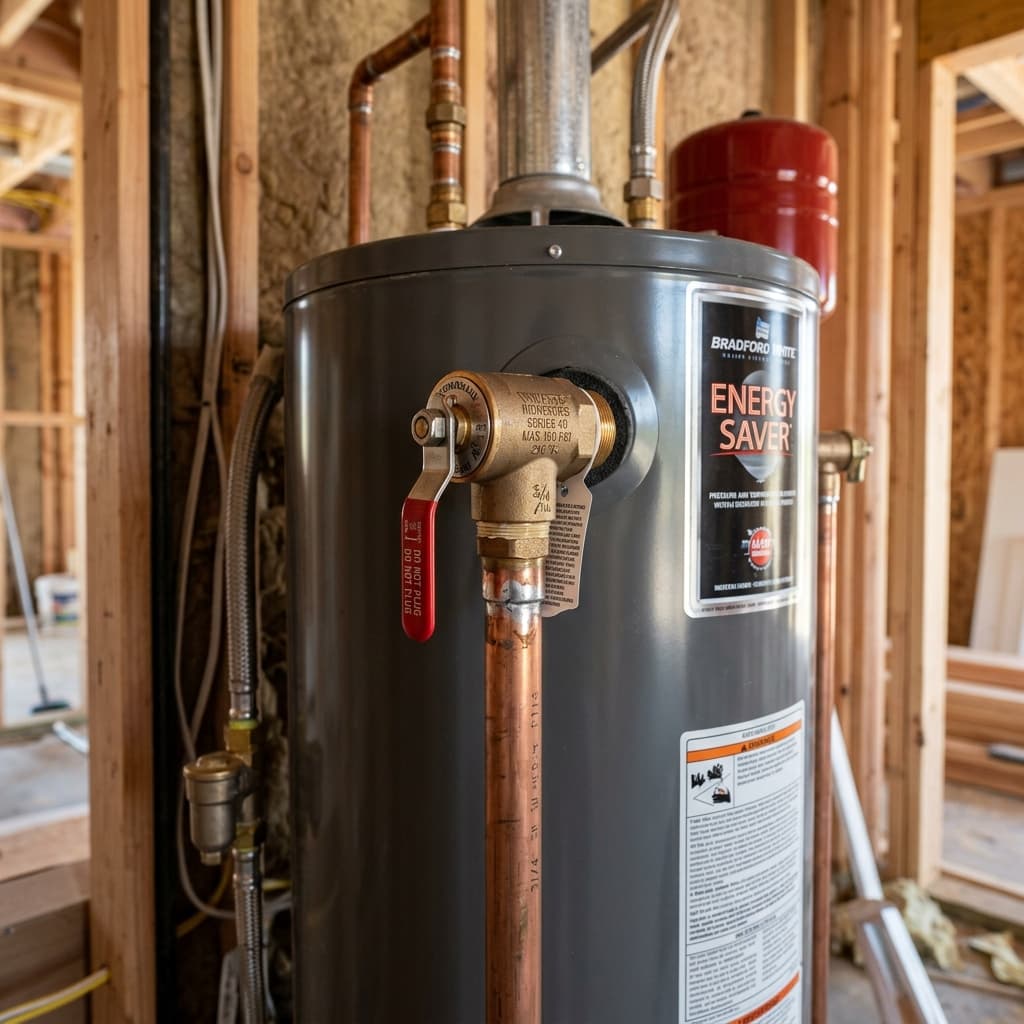
CPC Section 422.2 establishes detailed requirements for temperature and pressure relief valves, which are the primary safety devices protecting water heaters from dangerous pressure buildup.
Critical Installation Points:- Location: Must be installed within 6 inches of the top of the tank on storage heaters
- Capacity: Must have capacity rating equal to or greater than maximum heater input in BTU/hr
- Pressure Setting: Shall not exceed the tank's maximum working pressure (typically 150 PSI)
- Access: Must be readily accessible for inspection and maintenance
- Testing: All TPR valves must carry the ANSI Z21.22 or CSA 4.4 certification mark
Discharge Piping for TPR Valves
The discharge piping carries expelled water safely away from the heater and occupants. CPC Section 422.3 provides specific guidance:
Discharge Piping Requirements:- Material: Copper, brass, CPVC, PVC, or other approved materials (never galvanized iron)
- Diameter: Minimum 3/4-inch copper or equivalent
- Pitch: Must slope downward toward termination point at minimum 1/4-inch per foot
- Termination: Must drain to approved location (floor drain, exterior, sump pit)
- Visible Discharge: Preferred method to allow visual inspection of valve operation
- Air Gap: Minimum 6 inches above fixture or floor drain
- Obstruction Prevention: Must not be subjected to freezing temperatures or obstruction
Expansion Tank Requirements
Why Expansion Tanks Matter
Modern plumbing systems with closed-loop configurations create dangerous pressure conditions as water heats and expands. CPC Section 422.4 requires expansion tanks in systems where thermal expansion cannot be safely accommodated.
Expansion Tank Sizing Formula:The exam may include expansion tank calculation questions. The basic principle involves:
- Minimum tank volume = 10% of water heater capacity
- Example: A 50-gallon water heater requires minimum 5-gallon expansion tank
- Adjustments: Considerations for water supply pressure and temperature differential
Installation Specifications
- Location: Mounted on cold water supply line between main shutoff and water heater
- Orientation: Diaphragm tanks typically installed horizontally
- Pressure: Pre-charge pressure typically set at 12 PSI for residential applications
- Isolation: Must include isolation valve for servicing
- Connection: Minimum 1/2-inch connection (1-inch preferred for heaters over 100 gallons)
Relief Valve Pressure Settings and Standards
Understanding Pressure Classifications
CPC Section 422 references specific pressure classification standards:
- ANSI Z21.22 - Gas water heater relief valves
- ASME Section IV - Pressure vessel standards
- CSA 4.4 - Canadian Standards Association equivalent
Pressure Relief Valve Operation
A properly functioning TPR valve should:
- Prevent overpressure - Opens when pressure exceeds tank rating
- Allow thermal relief - Opens when temperature rises above safe levels
- Reseat properly - Closes when conditions normalize
- Discharge visibly - Allows observation of valve function
Testing Requirements
Relief valves must be:
- Manually tested annually by lifting the test lever
- Observed for discharge - Water should flow freely and stop when lever released
- Never blocked - Discharge must remain unobstructed
- Replaced if faulty - Non-functional valves must be replaced immediately
Water Heater Support and Seismic Requirements
Bracing Standards
California's seismic activity requirements make proper water heater support critical. CPC Section 422.14 addresses seismic resistance:
- Bracing method: Approved seismic bracing or strapping
- Support points: Typically two points—upper and lower portions
- Materials: 5/8-inch diameter rods or approved metal strapping
- Anchoring: Securely anchored to structural members, never to flexible piping
Connection Flexibility
While seismic bracing must be rigid, supply connections must incorporate flexibility:
- Flexible connectors or risers on both hot and cold supply lines
- Purpose: Allows heater movement during seismic events without pipe rupture
- Length: Minimum 18 inches of flexible connection recommended
Clearance and Access Requirements
Physical Access for Maintenance
CPC Section 422 establishes minimum clearance requirements:
- Front access: 30 inches minimum for burner access and cleaning
- Top access: 24 inches minimum above water heater for relief valve service
- Combustion air: 18 inches minimum on sides for gas heaters
- Ventilation: Adequate space for vent pipe installation and inspection
Confined Space Restrictions
Water heaters cannot be installed in:
- Sleeping areas - Fire and safety hazard
- Bathrooms - Restricted by energy code and safety considerations
- Bedrooms - Carbon monoxide risk for gas units
- Crawlspaces - Generally prohibited; exceptions require specific approvals
Common CPC Section 422 Exam Questions
Question Type 1: Relief Valve Sizing
Scenario: "A 75,000 BTU/hr water heater requires what relief valve capacity?" Answer: The relief valve must have capacity equal to or greater than the heater's input rating—in this case, minimum 75,000 BTU/hr capacity.Question Type 2: Discharge Piping Material
Scenario: "What material is approved for TPR valve discharge piping?" Answer: Copper, brass, CPVC, or PVC. Galvanized iron is NOT approved.Question Type 3: Expansion Tank Sizing
Scenario: "A 40-gallon water heater requires expansion tank minimum size of?" Answer: 4 gallons (10% of 40 gallons)Question Type 4: TMV Temperature Setting
Scenario: "At what maximum temperature must thermostatic mixing valves deliver water to bathing fixtures?" Answer: 120°F (49°C) per CPC Section 422.1Question Type 5: TPR Valve Location
Scenario: "A temperature and pressure relief valve must be installed within ___ inches of the top of the water heater tank." Answer: 6 inches maximum per CPC Section 422.2Practical Application: Complete Water Heater Installation
Understanding how these requirements work together in an actual installation helps cement exam knowledge:
Step-by-Step Compliance Checklist
- Equipment selection - NSF/ANSI certified, appropriate capacity
- Location verification - Proper room type, adequate clearance
- Support installation - Seismic bracing and flexibility
- Supply connections - 3/4-inch copper with flexibility
- TPR valve installation - Within 6 inches of top, proper certification
- Discharge piping - 3/4-inch copper, sloped, visible termination
- Expansion tank - 10% sizing, proper pre-charge
- TMV installation - Point-of-use temperature control
- Vent installation - Proper draft, termination above roof
- Final testing - Relief valve operation, no leaks
Study Tips for C-36 Exam Success
Memorization Strategies
- TPR location: "Top 6 inches" - remember as the heater's "safety hat"
- Expansion tank sizing: "10% rule" - easier to recall than complex formulas
- Temperature limit: "120 degrees for safety" - scalding prevention
- Discharge materials: "Never galvanized" - corrosion is the enemy
Practice Question Approach
When answering CPC Section 422 questions:
- Identify the component - Is it TPR valve, expansion tank, or TMV?
- Recall the standard - CPC Section 422.1, 422.2, 422.3, or 422.4?
- Apply the requirement - Size, location, material, testing
- Verify compliance - Does the answer meet California standards?
Common Exam Mistakes to Avoid
- Confusing TPR location with relief valve discharge piping
- Forgetting the 10% expansion tank sizing rule
- Assuming galvanized iron is acceptable for discharge piping
- Not recognizing sealed system vs. open system expansion requirements
- Mixing up thermostatic mixing valve temperature limits with heater settings
California-Specific Amendments to CPC Section 422
Energy Conservation Requirements
California's Title 24 energy standards impose additional water heater requirements:
- Insulation requirements - Minimum R-13 for gas; R-16 for electric
- Pipe insulation - First 6 feet of hot water piping
- Standby loss limits - Reduces energy waste during non-use periods
Water Conservation Standards
- Low-flow fixtures - Integrated TMV requirements
- Hot water delivery - Minimum distance requirements to reduce waste
Climate Considerations
California's diverse climate (coastal, desert, mountain) affects installation requirements:
- Freeze protection - Relevant in mountain and high-elevation areas
- Corrosion resistance - Coastal installations require enhanced protection
- Seismic design - Enhanced bracing in high-risk earthquake zones
Conclusion
CPC Section 422 water heater installation requirements represent essential knowledge for C-36 plumbing exam Part 2 success. Mastery of temperature pressure relief valve requirements, expansion tank sizing, discharge piping specifications, and thermostatic mixing valve applications will prepare you for exam questions and real-world installations.Remember that these safety codes exist to protect occupants from scalding injuries, pressure vessel failure, and equipment damage. By thoroughly understanding and applying CPC Section 422 standards, you'll pass the C-36 exam with confidence while demonstrating the professional knowledge that California homeowners and building inspectors expect from licensed plumbers.
Focus your study efforts on the key requirements: TPR valve location (within 6 inches of top), expansion tank sizing (10% minimum), discharge piping materials (never galvanized), TMV temperature limit (120°F), and proper seismic bracing. Master these core concepts, practice application questions, and you'll be well-prepared for exam day.