

# CPC Section 406-407: Fixture Connection & Rough-In Requirements for C-36 Exam
Understanding CPC section 406 fixture connection requirements is absolutely critical for passing the California C-36 plumbing contractor exam. These sections establish the foundational standards that govern how plumbing fixtures must be installed, connected, and roughed-in throughout any plumbing system. Whether you're studying for Part 2 or preparing for on-site inspections, mastering these specifications will ensure code compliance and exam success.What Are Fixture Connection Requirements?
CPC Section 406 addresses the fundamental principles of how fixtures connect to the water supply and drainage systems. These requirements go beyond simply attaching pipes—they encompass proper support, accessibility, water pressure delivery, and drainage capability.
The California Plumbing Code divides fixture connection standards into several critical categories that exam candidates must understand:
Essential Components of Fixture Connections
Supply Line Connections: Every fixture requiring water supply must have properly sized, supported supply lines that deliver water at adequate pressure and volume. The code specifies minimum and maximum pressure requirements to protect fixtures and prevent damage. Drainage Connections: All fixtures must drain to approved drainage systems through properly sized trap arms and drain lines. The slope, diameter, and configuration of these drainage connections directly impact system performance. Fixture Support Systems: Fixtures must be securely fastened and supported according to their weight and the materials used. Inadequate support creates liability issues and code violations. Accessibility Requirements: Fixture connections must be accessible for maintenance, repair, and inspection. Hidden or inaccessible connections violate CPC standards.Understanding CPC Section 406 in Detail
CPC Section 406 specifically covers fixture connection standards that apply universally across California plumbing installations. This section ensures consistency and reliability in how fixtures perform within plumbing systems.
Key Requirements Under CPC Section 406
Fixture Supply ConnectionsAccording to CPC Section 406.2, all fixtures must be supplied with water meeting minimum pressure and volume standards. The code typically requires:
- Minimum water pressure of 20 psi at the fixture
- Maximum water pressure of 80 psi (without pressure regulators)
- Adequate supply line sizing to deliver required gallons per minute
CPC Section 406.3 mandates that every fixture with a drain must have a properly installed trap. The trap seal must be maintained at all times to prevent sewer gases from entering the building. Critical specifications include:
- Trap seal depth of 2-4 inches for most fixtures
- No more than one fixture per trap (with limited exceptions)
- Traps must be accessible for cleaning
- P-traps are standard for most fixtures; S-traps are prohibited in most applications
Fixtures must include overflow provisions to prevent water damage. Sinks, lavatories, and similar fixtures require overflow holes or drains that connect to the main drainage system, not separately.
Rough-In Specifications: The Foundation of Quality Installation
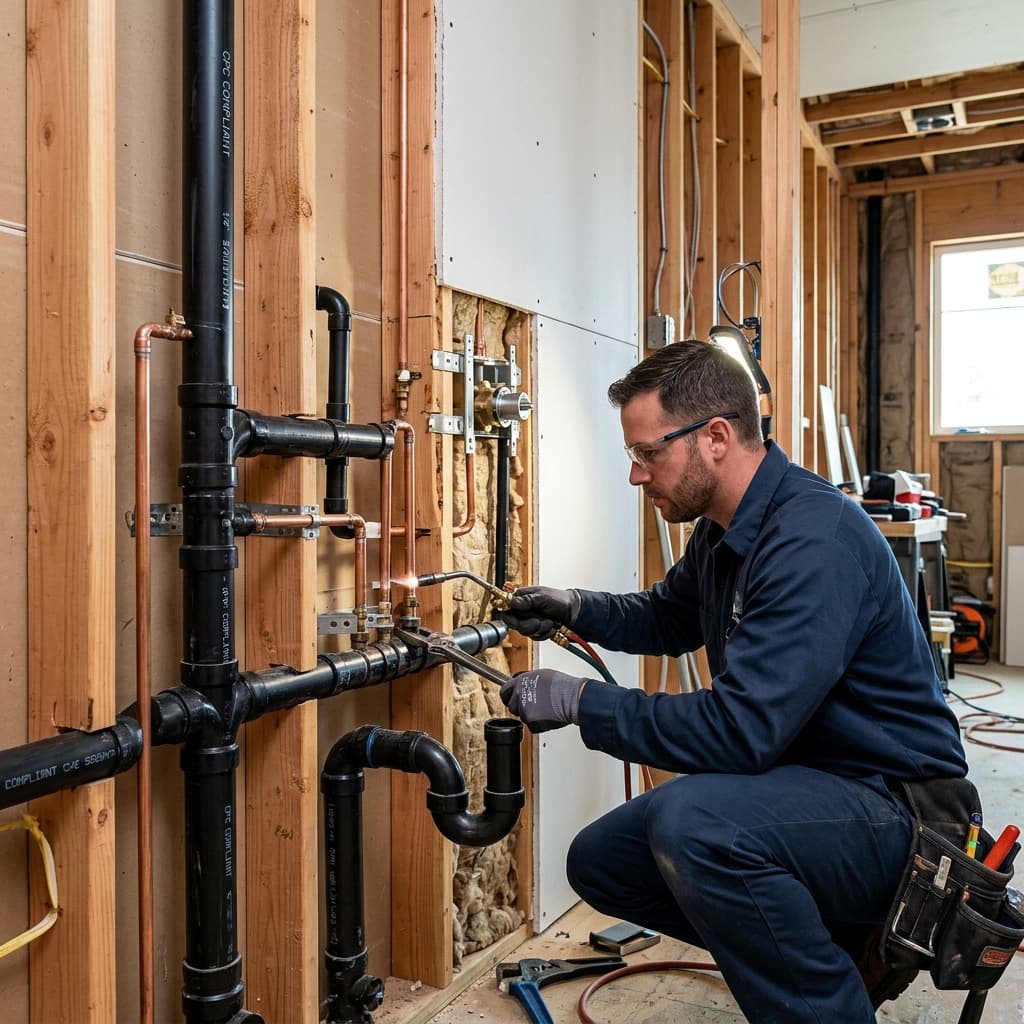
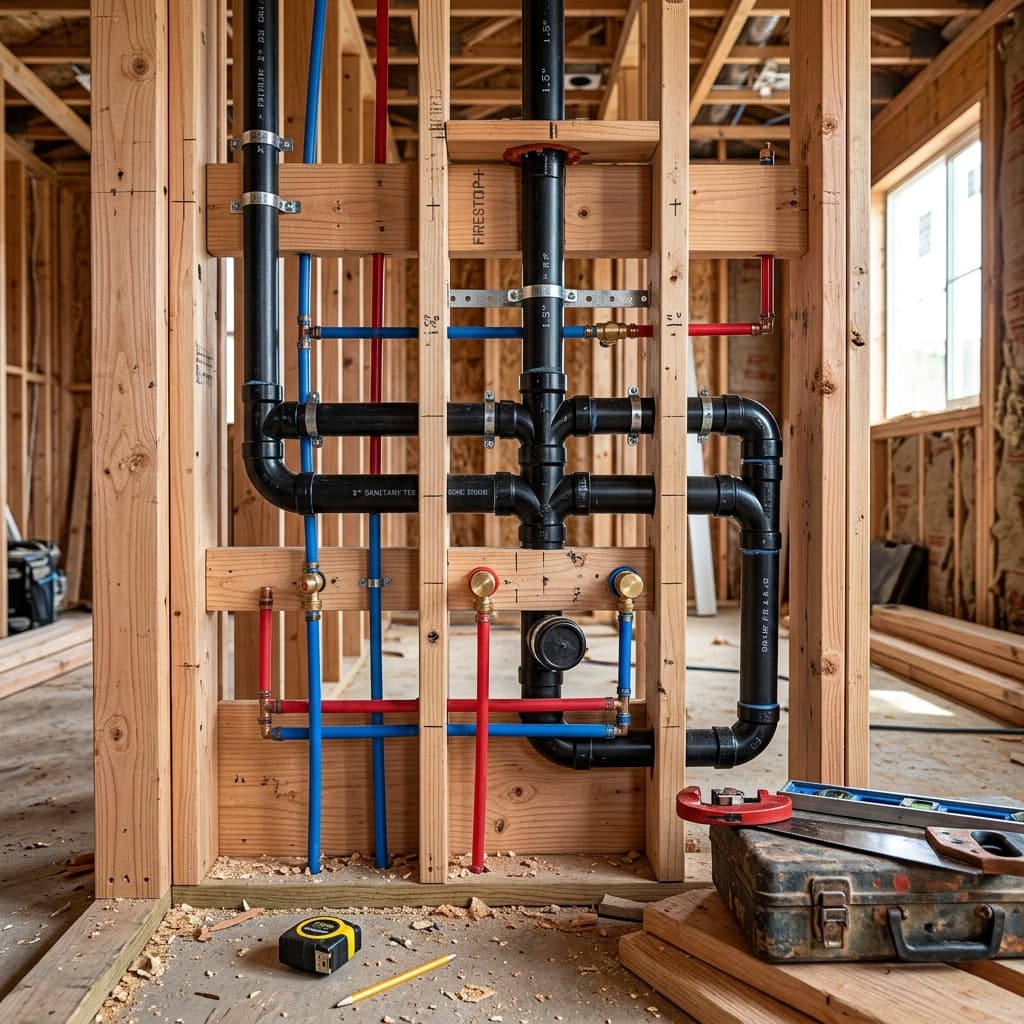
Fixture rough-in requirements California standards demand that all supply lines, drain lines, and fixture supports be installed before walls, floors, and ceilings are closed. This rough-in stage is critical and heavily emphasized on the C-36 exam.What Constitutes a Proper Rough-In?
A complete rough-in installation includes:
Supply Line Rough-In- All water supply lines installed, pressure-tested, and ready for fixture connection
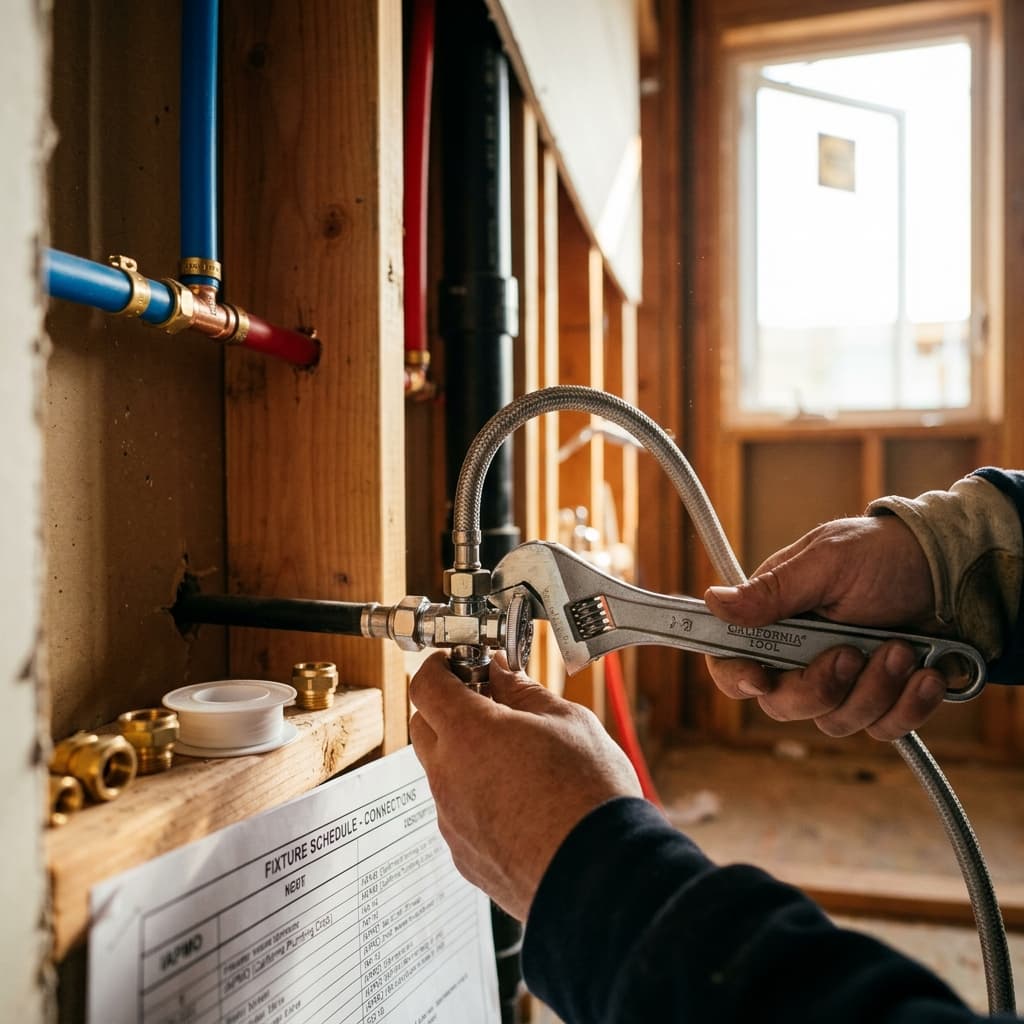
- Shutoff valves installed at each fixture location
- Lines properly supported every 32 inches for horizontal runs and 48 inches for vertical runs
- Proper pitch maintained to prevent water hammer and air entrapment
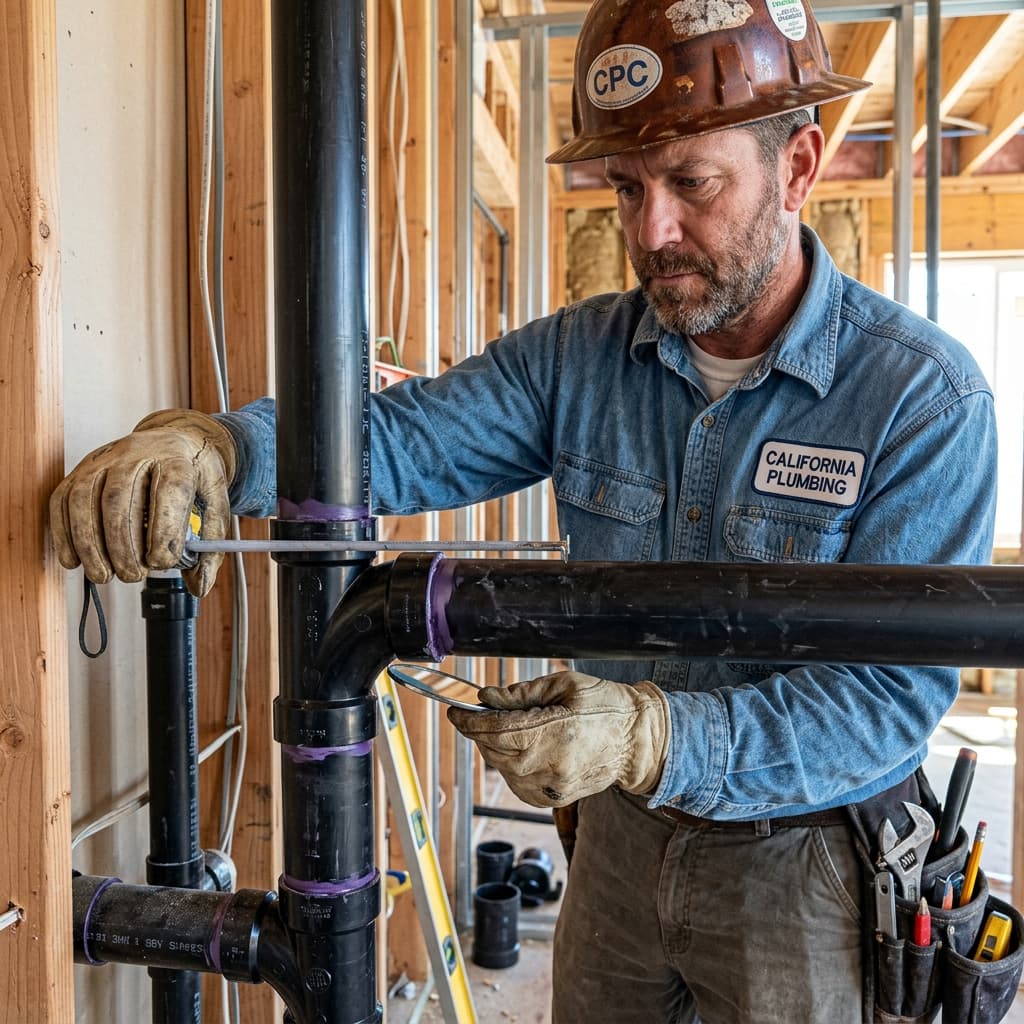
- All drain, waste, and vent (DWV) lines installed and tested
- Proper slope of 1/4 inch per foot for gravity drains
- All vent stacks properly sized and positioned
- Cleanouts installed for accessibility
- Rough-in heights established according to fixture specifications
- Support blocking installed for wall-hung fixtures
- Floor openings cut to proper dimensions
- All connections ready for fixture installation
Timing of Rough-In Inspection
CPC Section 406.4 requires inspection of rough-in work before concealment. This is a critical exam topic:
- Rough-in inspection must occur before walls, floors, or ceilings are closed
- Inspector verifies proper installation, sizing, support, and accessibility
- Any deficiencies must be corrected before concealment
- Final inspection occurs after fixtures are installed and system is operational
Plumbing Fixture Installation Standards
Beyond basic connections, plumbing fixture installation standards encompass specific requirements for different fixture types. The C-36 exam tests knowledge of installation requirements for common fixtures.Water Closet Installation Requirements
Water closets present unique installation challenges addressed in CPC standards:
- Bowl must be set on a wax ring or approved alternative
- Flange must be secured to the flooring (not just resting on it)
- Bolts must be properly tightened without cracking the bowl
- Seat and lid must be securely fastened
- Shut-off valve must be installed on supply line
- Water pressure must be 20-80 psi
Lavatory Installation Standards
Lavatories require specific support and connection specifications:
- Wall-hung lavatories must have blocking installed during rough-in
- Proper height typically ranges from 30-36 inches to rim
- Supply lines positioned for easy connection
- Pop-up drain assembly must operate smoothly
- Overflow must connect properly to main drain
Sink Installation Specifications
Kitchen and utility sinks demand proper support and drainage:
- Sink rim must be level or pitched slightly toward drain
- Support must prevent flexing when load is applied
- Garbage disposal (if installed) must be properly secured
- Supply lines properly installed with shutoff valves
- Trap must be accessible for cleaning
Shower and Bathtub Requirements
These fixtures present water protection challenges:
- Proper waterproofing membranes installed during rough-in
- Valve bodies installed at proper height before rough-in inspection
- Escutcheons positioned to cover rough openings
- Drain lines properly pitched to prevent ponding
- Mixing valve set to maximum safe temperature (usually 120°F)
C-36 Exam Fixture Specifications: What You Must Know
For C-36 exam fixture specifications, focus on memorizing specific measurements, pressures, and requirements that appear repeatedly on exams:Critical Measurements to Memorize
| Specification | Requirement | |---|---| | Minimum Water Pressure | 20 psi | | Maximum Water Pressure | 80 psi | | Trap Seal Depth | 2-4 inches | | Supply Line Support (Horizontal) | 32 inches maximum | | Supply Line Support (Vertical) | 48 inches maximum | | Drain Slope | 1/4 inch per foot | | Lavatory Height | 30-36 inches to rim | | Water Closet Rough-In | 12 inches from wall to center |
Common Exam Questions About Fixture Connections
Exam questions typically ask scenarios like:
- "A water line is delivering 100 psi to a fixture. What must be installed?" (Answer: Pressure regulator per CPC Section 406.2)
- "Before walls are closed, what inspection is required?" (Answer: Rough-in inspection per CPC Section 406.4)
- "How far apart can supply line support hangers be installed?" (Answer: 32 inches for horizontal runs)
- "What's the maximum water closet rough-in distance?" (Answer: 12 inches from wall to center)
Common Code Violations and How to Avoid Them
Understanding what not to do is equally important: Improper Support Installation- Installing support hangers more than 32 inches apart on horizontal lines
- Failing to install blocking during rough-in for wall-hung fixtures
- Using inadequate materials for support clamps
- Failing to install pressure regulators when supply pressure exceeds 80 psi
- Installing fixtures without adequate pressure (below 20 psi)
- Not testing pressurized systems before concealment
- Installing drain lines without proper slope
- Exceeding maximum trap arm lengths
- Failing to install cleanouts at specified intervals
- Using prohibited trap configurations (S-traps)
- Concealing shut-off valves where they cannot be accessed
- Installing cleanouts behind permanent structures
- Routing supply or drain lines through walls without proper access points
Practical Application: Rough-In Checklist for Exam Success
Use this checklist when studying rough-in requirements:
Before Rough-In Inspection:- [ ] All supply lines installed and pressure-tested
- [ ] All drain, waste, and vent lines installed
- [ ] Proper slope verified on all gravity drains (1/4"/foot)
- [ ] All fixtures supported with proper blocking
- [ ] Fixture rough-in heights verified
- [ ] All connections accessible for maintenance
- [ ] Shutoff valves installed at each fixture
- [ ] Cleanouts installed at proper intervals
- [ ] Rough-in inspection scheduled and completed
- [ ] Inspection certificate obtained
- [ ] Deficiencies corrected before concealment
- [ ] Photo documentation of rough-in (when required)
California Plumbing Code Fixture Requirements Integration
For comprehensive exam preparation, understand how CPC Section 406-407 connects to other code sections:
CPC Section 308 - Water Supply establishes pressure and quality standards that impact fixture connection requirements. CPC Section 309 - Sanitary Drainage details drain sizing and configuration, directly affecting how fixtures connect to waste systems. CPC Section 310 - Venting specifies vent stack sizing and configuration, essential for proper fixture drainage.Final Exam Preparation Strategy
To master fixture connection requirements:
- Memorize Key Numbers: Write down all measurements, pressures, and distances repeatedly until they're automatic responses.
- Study Fixture Types: Focus on the five most common fixtures (water closets, lavatories, kitchen sinks, bathtubs, showers) and their specific requirements.
- Understand Rough-In Sequencing: Know the exact order: rough-in installation → rough-in inspection → concealment → fixture installation → final inspection.
- Practice Scenario Questions: Most C-36 exam questions present installation scenarios requiring you to identify code requirements or violations.
- Review Real-World Applications: When possible, observe actual installations to see how code requirements translate to practical work.