


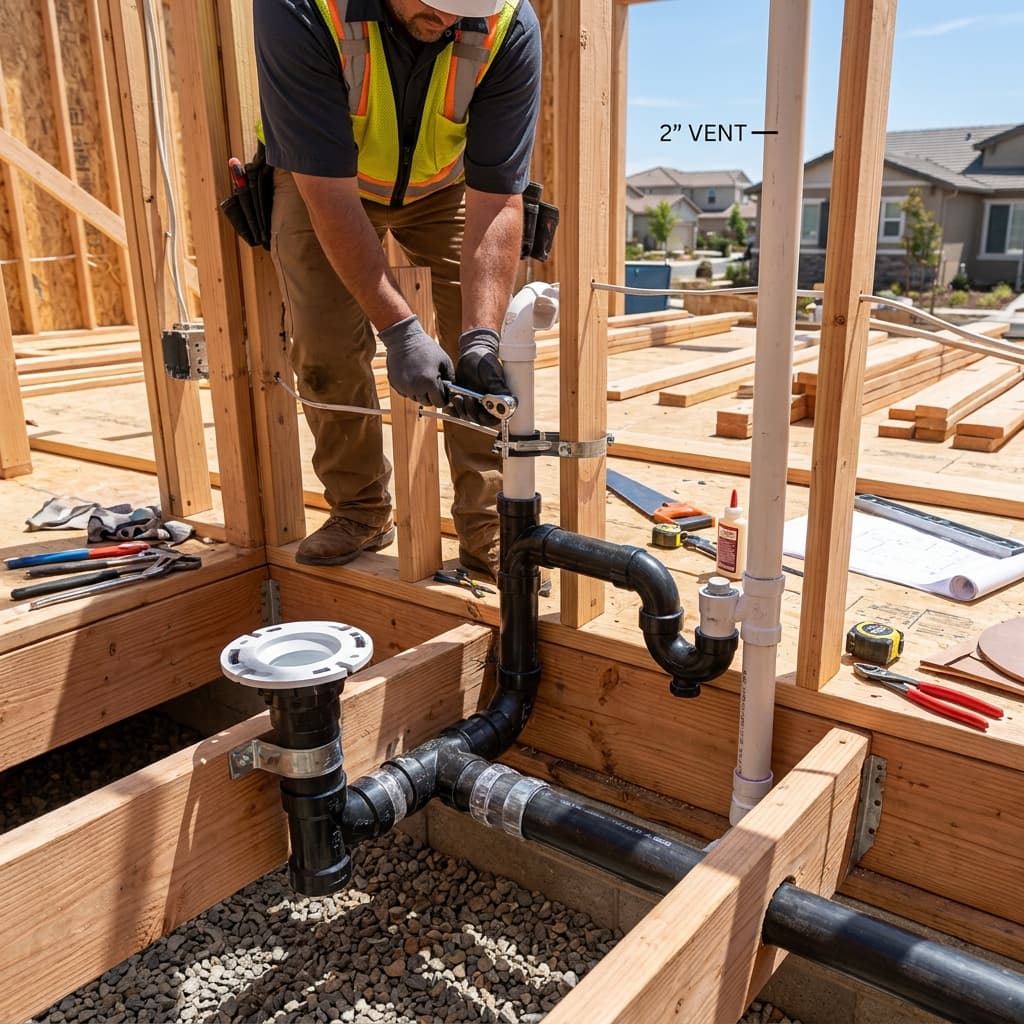


# CPC Section 403 Drainage System Calculations: Fixture Unit Load and Pipe Sizing for C-36 Exam Success
Introduction: Understanding CPC Section 403
CPC Section 403 drainage calculations form the backbone of plumbing system design and represent a critical knowledge area for C-36 certification candidates. Whether you're preparing for your first attempt or retaking the exam, mastering fixture unit load calculations and drainage pipe sizing under the California Plumbing Code is essential for success.The drainage system is often described as the "lungs" of a plumbing installation—it must efficiently remove wastewater while preventing backups, siphonage, and contamination. Section 403 of the CPC provides the mathematical framework that allows plumbers and designers to size drainage components correctly, ensuring code compliance and system functionality.
This comprehensive guide walks you through the fundamentals of CPC Section 403, provides worked examples, and highlights exam-specific tips to help you confidently answer calculation questions on test day.
What is CPC Section 403?
CPC Section 403 addresses the fundamental requirements for sizing and calculating drainage systems. This section establishes:
- Fixture unit methodology for quantifying drainage loads
- Minimum pipe sizing requirements based on fixture unit totals
- Slope requirements that affect drainage capacity
- Drainage system capacity tables referenced throughout the code
Understanding Fixture Units: The Foundation of Drainage Calculations
What is a Fixture Unit?
A fixture unit is a standardized measurement representing the rate of wastewater discharge from a plumbing fixture. The California Plumbing Code establishes fixture unit values for virtually every fixture type based on its typical usage patterns and discharge volume.Rather than calculating actual gallons per minute, which varies by user behavior and building type, the code simplifies sizing through fixture units. This approach has proven effective for over 80 years of plumbing practice.
Key Principle
One fixture unit equals 7.5 gallons per minute of drainage capacity. This baseline metric allows engineers and plumbers to work with consistent values across different fixture types and installation scenarios.Common Fixture Unit Values (CPC Table 422.1)
The California Plumbing Code Table 422.1 provides fixture unit assignments. Here are the most frequently tested values:
| Fixture Type | Fixture Units | |---|---| | Lavatory | 1 | | Toilet/Water Closet | 4 | | Shower | 2 | | Bathtub | 2 | | Kitchen Sink (single) | 2 | | Kitchen Sink (double) | 3 | | Laundry Sink | 2 | | Floor Drain | 1 | | Urinal (stall) | 4 | | Urinal (wall-hung) | 2 | | Drinking Fountain | 1 |
Exam Tip: Memorize the top 10 fixture unit values. These appear on approximately 40% of drainage calculation questions.Calculating Total Fixture Unit Load
To calculate the total fixture unit load for a drainage line:
- Identify all fixtures connected to the drainage line
- Look up each fixture's unit value in CPC Table 422.1
- Multiply the value by the number of fixtures of that type
- Sum all fixture unit values
- 2 lavatories (1 FU each) = 2 FU
- 1 toilet (4 FU) = 4 FU
- 1 shower (2 FU) = 2 FU
#### Worked Example 2: Commercial Kitchen Drainage
A restaurant kitchen has:- 3 double kitchen sinks (3 FU each) = 9 FU
- 2 floor drains (1 FU each) = 2 FU
- 1 grease trap serving all sinks (counted as a single fixture equivalent)
Drainage Pipe Sizing: From Fixture Units to Pipe Diameter
The Sizing Relationship
Once you've calculated fixture units, the next step is determining appropriate pipe diameter. This sizing depends on three critical factors:
- Total fixture unit load (calculated above)
- Pipe slope (typically 1/4" per foot for horizontal drainage)
- Pipe material and roughness characteristics
CPC Table 703.2: Stack Sizing
CPC Table 703.2 provides maximum fixture unit loads for drainage stacks by pipe diameter and height. This table answers the critical exam question: "What size pipe do I need?"
Standard Stack Sizing Reference (1/4" slope):| Pipe Diameter | Maximum FU (Single Stack) | Maximum FU (Multiple Stacks) | |---|---|---| | 1.5" | 3 | Not permitted | | 2" | 6 | 10 | | 2.5" | 12 | 20 | | 3" | 20 | 48 | | 4" | 160 | 240 |
Important Distinction: Stack vs. Horizontal Drainage
- Vertical stacks carry larger loads than horizontal drains at the same diameter
- Horizontal drainage lines must maintain minimum 1/4" per foot slope
- Building drains (main horizontal line leaving the building) size differently than branch drains
Worked Example 3: Sizing a Bathroom Drain Stack
Your fixture unit calculation shows 8 FU total for the restroom from Example 1. What pipe size is required?
Using CPC Table 703.2:- 1.5" pipe: Maximum 3 FU ❌ (insufficient)
- 2" pipe: Maximum 6 FU ❌ (insufficient)
- 2.5" pipe: Maximum 12 FU ✓ (adequate)
Horizontal Drain Sizing and Slope Considerations
Horizontal drainage lines require special attention because gravity assistance is limited. The slope requirement of 1/4" per foot (sometimes 1/8" for certain applications) is critical to sizing calculations.
CPC Table 703.3: Horizontal Drain Sizing
This table addresses horizontal branch and building drains:
| Pipe Diameter | Max FU (1/4" slope) | Max FU (1/8" slope) | |---|---|---| | 1.5" | 1 | 1 | | 2" | 3 | 2 | | 2.5" | 4 | 3 | | 3" | 6 | 5 | | 4" | 20 | 16 | | 6" | 160 | 125 |
Key Exam Point: The 1/4" per foot slope is standard for most residential applications. When slope is reduced, drainage capacity decreases significantly.Worked Example 4: Sizing a Building Drain
A small commercial building generates:- First floor: 15 FU (bathrooms, kitchens, etc.)
- Second floor: 12 FU
- Total: 27 FU entering building drain
- 4" pipe at 1/4" slope: Maximum 20 FU ❌ (insufficient)
- 6" pipe at 1/4" slope: Maximum 160 FU ✓ (more than adequate)
Drainage System Capacity Calculations for Different Building Heights
Multi-Story Considerations
Building height affects drainage stack sizing because of cumulative fixture unit loads. CPC Section 403 and the referenced CPC Table 703.2 account for this through:
- Single-stack sizing (all fixtures on one vertical line)
- Multiple parallel stacks (fixtures distributed across building width)
- Separate stack categories for 3-story buildings versus greater heights
Exam Strategy Note
Most C-36 exam questions assume standard residential or small commercial buildings (3-4 stories maximum). Master these scenarios before studying high-rise calculations.
Common Exam Mistakes and How to Avoid Them
Mistake 1: Forgetting to Include All Fixtures
Students often miss floor drains, utility sinks, or equipment drains. Before calculating, list every fixture in writing to avoid omissions.Mistake 2: Confusing Fixture Unit Values
Mixing up single vs. double sink values or toilet vs. urinal values is common. Keep a reference table visible while working problems.
Mistake 3: Ignoring Slope Requirements
Selecting pipe size from the stack table when the question involves horizontal drainage is a frequent error. Always identify whether the line is vertical or horizontal before consulting sizing tables.Mistake 4: Oversizing or Undersizing by One Pipe Size
Remember that you must meet the minimum requirement from tables. The next pipe size up is acceptable, but don't round down.Practice Problem: Full System Calculation
Scenario
A two-story medical office building contains:
First Floor:- 2 bathrooms, each with: 2 lavatories, 2 toilets, 1 sink
- 1 break room with: 1 sink, 1 water cooler
- Total: 1 floor drain
- 3 bathrooms, each with: 2 lavatories, 2 toilets
- 1 laboratory with: 2 sinks, 2 floor drains
- Total: 2 floor drains
- Calculate total fixture units for the entire building
- Size the main drainage stack
- Size the building drain (with 1/4" slope)
Solution
First Floor Fixtures:- Bathrooms: 2 × (2 lav + 2 toilets + 1 sink) = 2 × (2 + 8 + 2) = 24 FU
- Break room: 1 sink + 1 water cooler = 2 + 1 = 3 FU
- Floor drain: 1 FU
- Subtotal: 28 FU
- Bathrooms: 3 × (2 lav + 2 toilets) = 3 × (2 + 8) = 30 FU
- Laboratory: 2 sinks + 2 floor drains = 4 + 2 = 6 FU
- Subtotal: 36 FU
- 4" pipe: Maximum 160 FU ✓ Adequate
- 4" pipe: Maximum 20 FU ❌ Insufficient
- 6" pipe: Maximum 160 FU ✓ Adequate
Study Tips for CPC Section 403 Mastery
- Create flashcards with fixture unit values and reference them daily
- Solve 20+ practice problems focusing on different building types
- Draw diagrams of drainage systems while calculating to visualize the problem
- Mark your code book with frequently-used tables (CPC Tables 422.1, 703.2, 703.3)
- Take timed practice exams to build calculation speed and accuracy
Related California Plumbing Code Sections
Understanding CPC Section 403 requires familiarity with related sections:
- CPC Section 308: Definitions (fixture unit, slope, pitch)
- CPC Section 702: Sanitary Drainage System requirements
- CPC Section 706: Cleanouts and accessibility
- CPC Section 803: Storm Drainage (similar calculations apply)
Final Thoughts: Preparing for Exam Success
CPC Section 403 drainage system calculations may seem complex initially, but the methodology is logical and consistent. By mastering fixture unit identification, memorizing key table values, and practicing calculation problems, you'll approach exam day with confidence.
Remember: The California Plumbing Code exists to protect public health and safety. Proper drainage sizing prevents backups, contamination, and system failures. Your ability to accurately calculate these systems directly impacts building safety.Start with single-fixture and single-story problems, gradually increasing complexity. Use every study opportunity to strengthen your calculation skills. On exam day, work methodically through each problem, double-checking your fixture unit totals before consulting sizing tables.
You've got this. Your C-36 success starts with mastering Section 403.
---META_END---