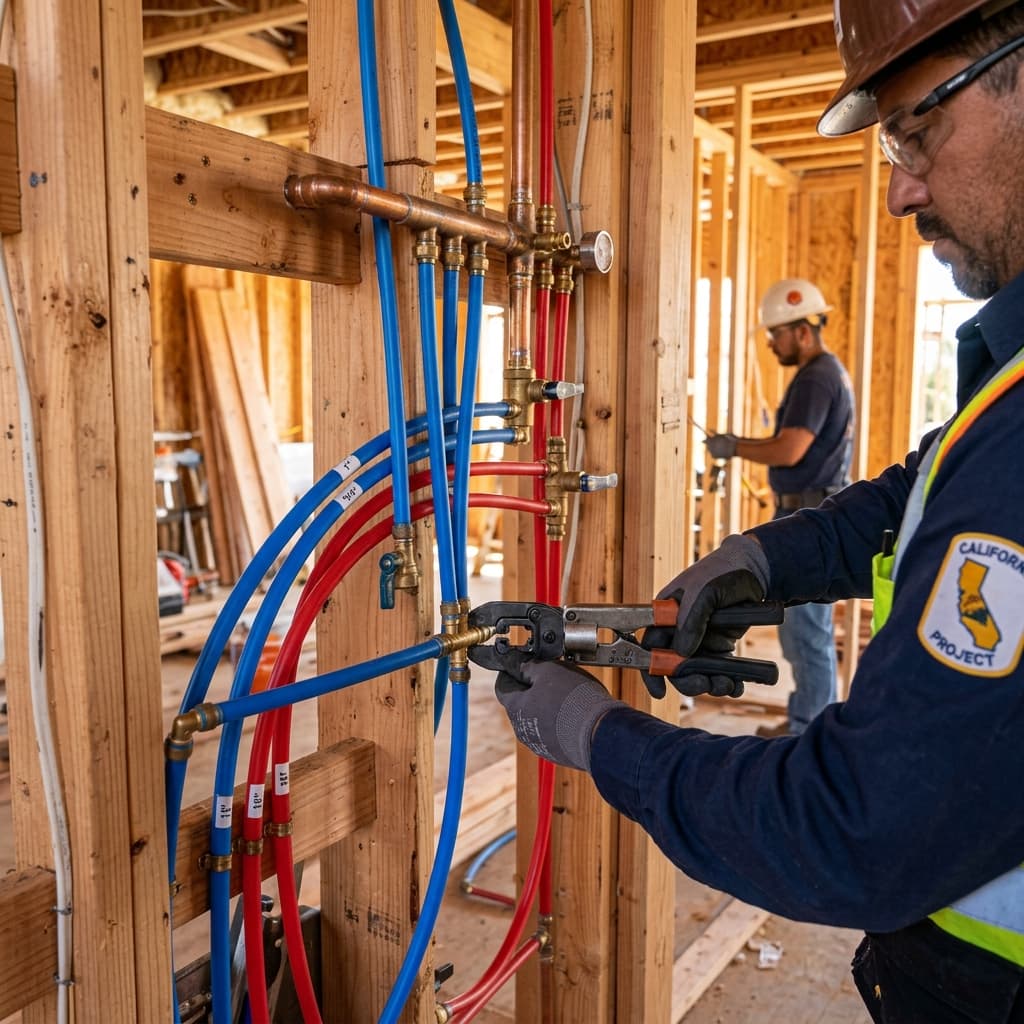

# Fixture Unit Load Calculations: Master Simultaneous Demand for Water Supply Sizing
Accurate fixture unit load calculations are fundamental to designing residential and commercial water supply systems in California. Rather than sizing piping to accommodate every fixture running simultaneously—which would be wasteful and economically unfeasible—plumbers apply demand factors based on probability analysis. This blog post breaks down how to master combination fixture unit load calculations and understand the simultaneous demand principles that govern CPC Section 422 compliance.Understanding Fixture Unit Load Calculations in CPC Section 422
California Code of Regulations Title 24, Part 5 (California Plumbing Code) Section 422 establishes the framework for water supply design based on fixture unit demand loads. This section is critical for Part 2: Water Supply and Distribution Systems of the C-36 exam.What Are Fixture Units?
A fixture unit is a standardized measure of water demand used to calculate the simultaneous flow rate required for a building's water supply system. One fixture unit equals approximately 7.5 gallons per minute (GPM), though actual demand calculations use probability-based demand load tables rather than direct multiplication. CPC Section 422.1 defines the purpose of demand load calculations:"Water supply systems shall be designed for the maximum simultaneous demand. The maximum simultaneous demand shall be calculated based on the fixture unit load table for the type of occupancy."
Why Not Size for All Fixtures?
Imagine a 20-unit apartment building. If the water supply main were sized to accommodate all bathrooms, kitchens, and outdoor hose bibs running simultaneously, the pipe diameter would be oversized by 200-300%. This approach would:
- Unnecessarily increase material costs
- Create dead legs prone to stagnation
- Reduce water velocity and pressure
- Violate water conservation principles under Title 24
The Fixture Unit Demand Load Table (CPC Section 422.2)
CPC Section 422.2 provides demand load values for common fixtures. Here's an excerpt of typical residential fixture units:| Fixture Type | Fixture Units | |---|---| | Toilet (flushometer valve) | 10 | | Toilet (tank) | 5 | | Lavatory | 1 | | Bathtub/Shower | 2 | | Kitchen sink | 2 | | Laundry tub | 2 | | Outdoor hose connection | 5 | | Water heater | 1 |
Exam Tip: Memorize that toilets with flushometer valves demand double the units of tank toilets. This distinction appears frequently on Part 2 questions.How Simultaneous Demand Factors Work
The magic of demand load calculations lies in the demand factor—a percentage applied to total fixture units to account for simultaneous use probability.Cold Water vs. Hot Water Demand
When calculating combined hot and cold water demand:
- List all fixtures requiring hot water (bathtub, shower, kitchen sink, laundry tub)
- List all fixtures requiring cold water only (toilet, outdoor hose, water heater)
- Calculate separate demand loads for hot and cold water systems
- Apply demand factors based on cumulative fixture units
| Total Fixture Units | Demand Factor | |---|---| | 1-10 | 100% | | 11-20 | 90% | | 21-50 | 80% | | 51-100 | 60% | | 101-200 | 50% | | Over 200 | 40% |
Practical Example: Single-Family Home
A typical 3-bedroom single-family residence has:
Cold Water Only:- 3 toilets (tank) = 3 × 5 = 15 fixture units
- 1 outdoor hose = 5 fixture units
- Total cold water = 20 fixture units
- 2 lavatories = 2 × 1 = 2 fixture units
- 1 shower = 1 × 2 = 2 fixture units
- 1 bathtub = 1 × 2 = 2 fixture units
- 1 kitchen sink = 1 × 2 = 2 fixture units
- Total hot water = 8 fixture units
- 20 fixture units × 90% demand factor (from table) = 18 fixture units
- 18 fixture units × 7.5 GPM = 135 GPM equivalent
- 8 fixture units × 100% demand factor = 8 fixture units
- 8 fixture units × 7.5 GPM = 60 GPM equivalent
Combination Fixture Demand Calculations
Combination fixtures present unique challenges. These include:- Tub/shower combinations
- Combination sink/laundry tub units
- Kitchen/utility sink combinations
"Where a combination fixture serves multiple purposes, the demand load shall be the larger of the individual fixture unit values, not the sum of all values."
Tub/Shower Combination Example
A single tub/shower combination unit has:- Bathtub demand: 2 fixture units
- Shower demand: 2 fixture units
- Combination demand: 2 fixture units (not 4)
Three-Compartment Sink (Commercial)
In restaurant kitchens, three-compartment sinks present a common exam question:
- Each compartment as separate fixture: 2 fixture units each = 6 total
- Three-compartment sink combination: 3 fixture units (one valve system)
Advanced: Multi-Unit Building Calculations
For apartment buildings and multi-family dwellings, demand factor calculations become more complex due to accumulation of fixture units.
10-Unit Apartment Building Example
Per Unit:- 1 toilet (tank) = 5 FU
- 1 lavatory = 1 FU
- 1 shower = 2 FU
- 1 kitchen sink = 2 FU
- Per-unit total = 10 FU
- 10 units × 10 FU = 100 total fixture units
- From demand factor table: 100 FU = 60% demand factor
- Design demand: 100 FU × 60% = 60 fixture units
- Required supply: 60 FU × 7.5 GPM = 450 GPM
Peak Load Adjustments
CPC Section 422.5 permits adjustments for peak demand periods in commercial buildings:- Offices and schools: Apply full demand factor tables
- Restaurants: May require adjustment upward due to concentrated meal-period demand
- Hotels: Hot water demand increases significantly
Common C-36 Exam Mistakes to Avoid
Mistake #1: Summing All Fixture Units Without Demand Factors
Incorrect: 100 total fixture units in a building = 100 × 7.5 = 750 GPM Correct: 100 fixture units × 60% demand factor = 60 fixture units = 450 GPMMistake #2: Adding Combination Fixture Units
Incorrect: Tub (2 FU) + Shower (2 FU) = 4 FU combined Correct: Max of 2 FU or 2 FU = 2 FU combinedMistake #3: Forgetting Separate Hot/Cold Calculations
Some buildings require separate hot and cold water supply systems with different demand profiles. Calculate each independently.
Mistake #4: Ignoring CPC Section 422 Exceptions
CPC Section 422.6 permits alternate calculation methods for:- Mobile home parks
- Recreational vehicle parks
- Certain industrial facilities
Practical Application: Sizing the Water Service Main
Once demand load is calculated, you can determine appropriate water main diameter using velocity-based sizing:
Formula:Velocity (ft/sec) = GPM ÷ (0.408 × D²)
Where D = pipe diameter in inches
- Try 2" copper main: 450 ÷ (0.408 × 4) = 275 ft/sec (too high—will create noise and erosion)
- Try 3" copper main: 450 ÷ (0.408 × 9) = 122 ft/sec (still high)
- Try 4" copper main: 450 ÷ (0.408 × 16) = 68.6 ft/sec (acceptable)
Study Tips for C-36 Exam Success
- Create flashcards of fixture unit values by occupancy type (residential vs. commercial)
- Practice calculations with increasingly complex building scenarios
- Memorize demand factor breakpoints (10 FU, 20 FU, 50 FU, 100 FU, 200 FU)
- Work through 5-10 complete building scenarios before exam day
- Reference CPC Section 422 tables during practice to build familiarity
Conclusion
Fixture unit load calculations and understanding simultaneous demand are non-negotiable competencies for the California C-36 plumbing exam. By applying demand factors from CPC Section 422, you'll design water supply systems that are both adequate and economical. Remember: sizing for simultaneous demand—not peak possible demand—is the hallmark of professional plumbing design.Master these calculations, and you'll not only pass Part 2, but you'll also develop the practical skills needed for residential and commercial plumbing design in California.
---
Ready to test your knowledge? Review the C-36 Water Supply Sizing Practice Problems or explore CPC Section 422 Code Interpretation for deeper mastery.