# California Plumbing Code Section 422: Greywater Systems C-36 Exam Guide
California Plumbing Code Section 422 governs the design, installation, and maintenance of greywater systems throughout the state. For C-36 plumbing exam candidates, understanding this section is essential for Part 2: Water Supply and Distribution. Greywater systems represent an increasingly important water conservation strategy in California, and the plumbing code establishes strict requirements to ensure public health and system safety.
What is Greywater and Why Does CPC Section 422 Matter?
Greywater refers to wastewater from household sources like sinks, showers, bathtubs, washing machines, and laundry facilities—but specifically excludes toilet waste (blackwater). The California Plumbing Code Section 422 provides the regulatory framework that allows property owners to reuse this water for irrigation and toilet flushing when systems meet specific design and safety standards.
For C-36 exam candidates, Section 422 is particularly important because:
- It addresses water reuse and conservation, key sustainability themes in modern plumbing codes
- It establishes specific installation and design requirements that directly appear on Part 2 exams
- It requires understanding of system components, filtration, and backflow prevention
- Residential greywater systems are becoming commonplace in California properties
CPC Section 422 Scope and Application
Permitted Greywater Sources
California Plumbing Code Section 422.1 defines acceptable greywater sources. For your C-36 exam preparation, memorize these permitted sources:
Allowed Greywater Sources:- Bathroom sinks and lavatories
- Showers and bathtubs
- Washing machines (clothes washers)
- Laundry facilities
- Toilet waste (blackwater)
- Kitchen sink wastewater
- Dishwasher discharge
- Any water containing fecal matter or hazardous substances
System Types Covered Under Section 422
The code recognizes two primary greywater system categories:
1. Branched Drain Systems Branched drain systems distribute greywater directly from fixtures to landscape areas without storage or treatment. These simpler systems are subject to less stringent requirements but have limitations on usage and distribution methods. 2. Collected Systems Collected systems gather greywater in a tank or reservoir before distribution. These allow greater flexibility in application methods but require additional components like filtration, maintenance access, and overflow provisions.CPC Section 422 Design Requirements
Filtration and Treatment Standards
CPC Section 422.2 establishes filtration requirements based on system type and application method:
For Subsurface Irrigation:- Minimum 100-micron filtration required
- Filters must be cleanable or replaceable
- Bypass valves prevent system damage during filter clogging
- 200-micron filtration minimum
- Additional treatment may be required for public health protection
- Mulch filters or sand filters acceptable when properly designed
- 50-micron filtration or equivalent treatment
- Disinfection may be required depending on system design
- Storage tank design must prevent contamination
Storage Tank Requirements
If your greywater system includes a collection tank, CPC Section 422.2 mandates:
- Tank capacity sizing based on landscape irrigation demand
- Overflow provisions to safely dispose of excess greywater
- Drain provisions for system maintenance and cleaning
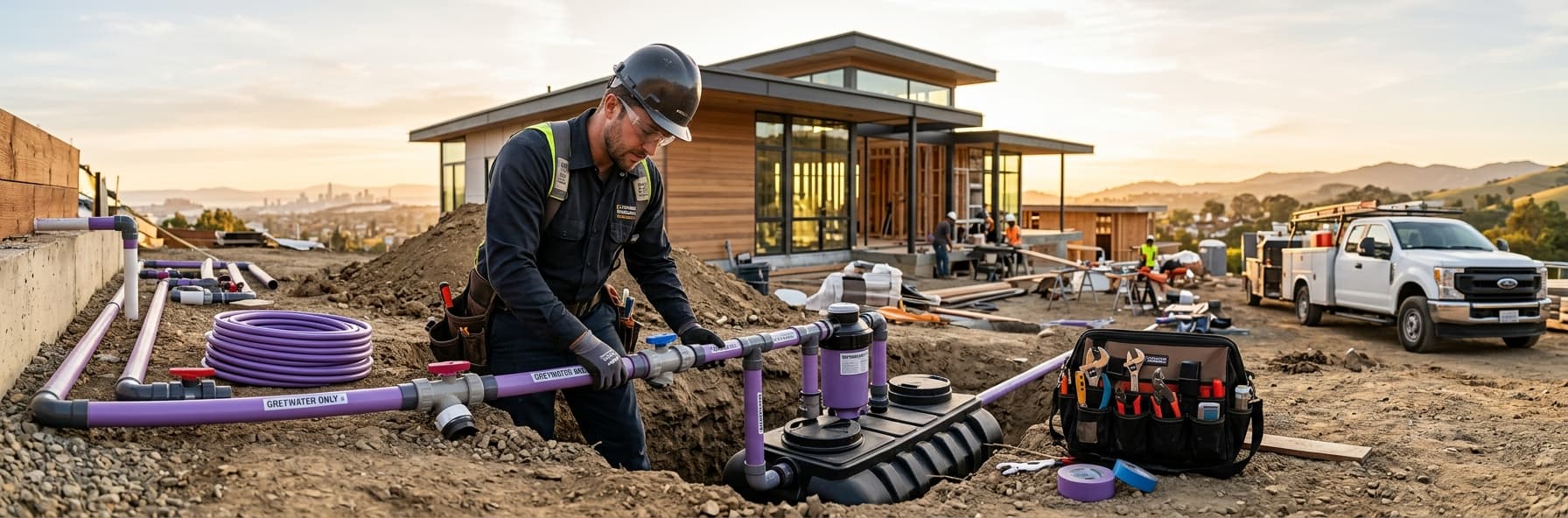
- Access openings minimum 18 inches for inspection and cleaning
- Screening to prevent debris accumulation and mosquito breeding
- Backflow prevention on inlet connections to prevent contamination of potable water
Piping and Distribution
CPC Section 422.2 requires specific piping standards:
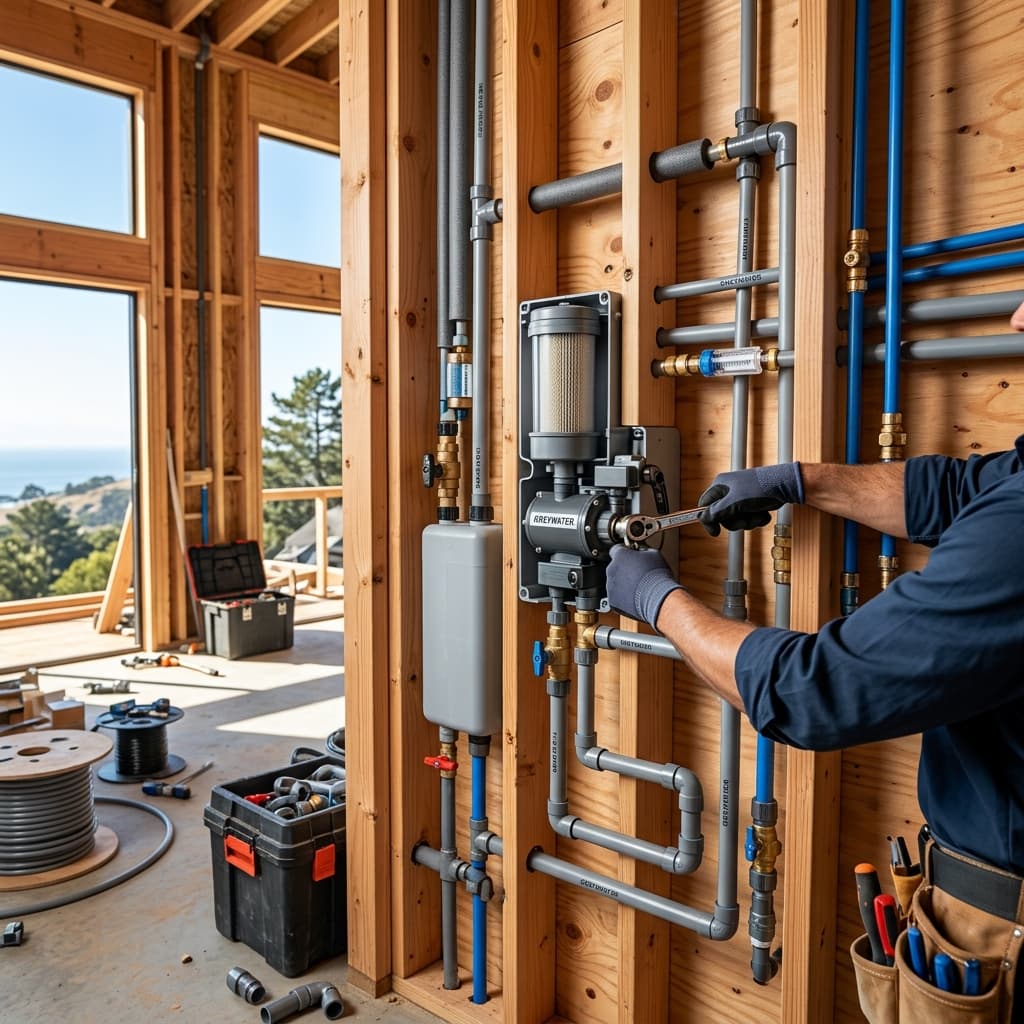
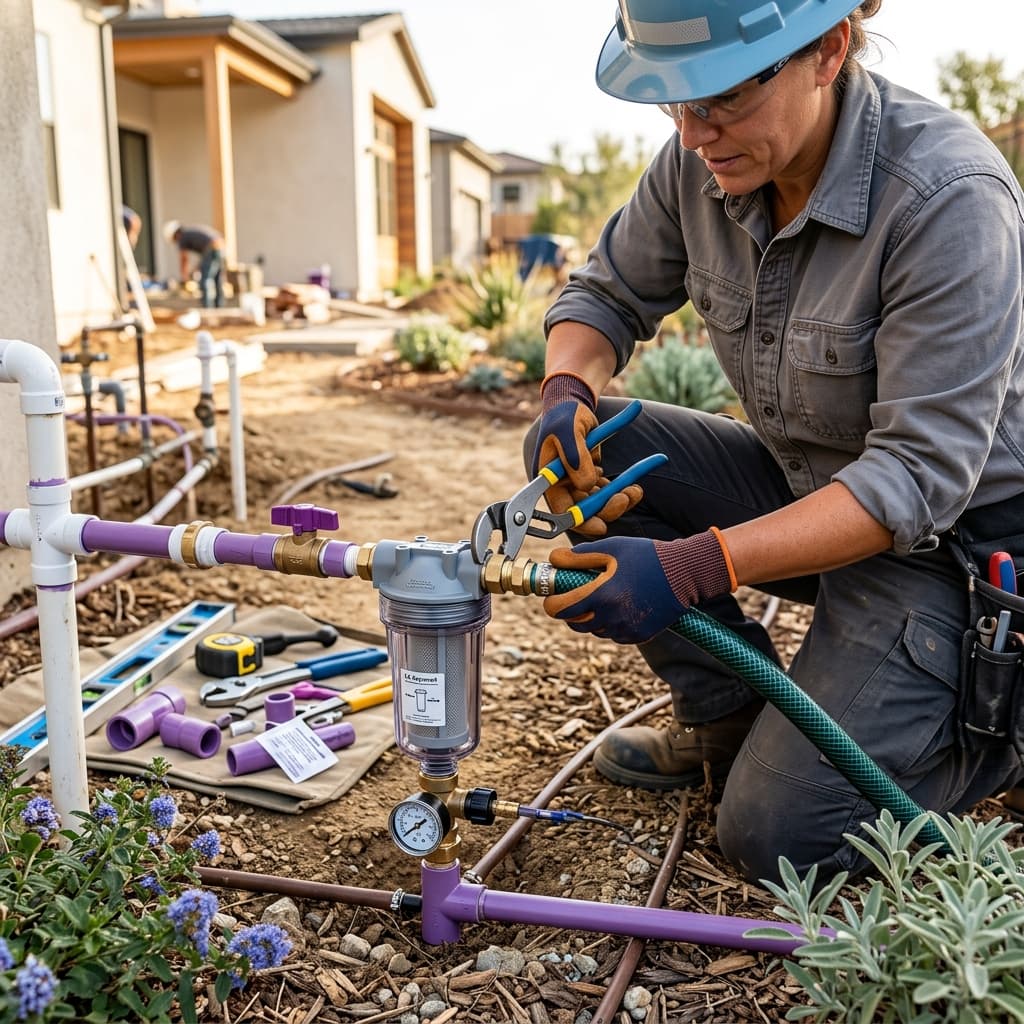
- Greywater piping must be clearly identified (typically purple or labeled)
- Piping must be separate from potable water lines
- Minimum depth burial requirements apply (typically 12 inches)
- Proper slope and grade requirements ensure drainage
- Valves and shutoff provisions enable system maintenance
Residential Greywater Requirements for C-36 Exam
Design Parameters You Must Know
System Sizing: The code requires systems to be designed based on:- Daily greywater generation from fixtures
- Seasonal landscape irrigation demand
- Climate and rainfall patterns in the service area
- Residential systems limited to single-family dwellings (with some exceptions)
- System capacity typically limited to serving landscape within property boundaries
- Design flow rates based on fixture demand calculations
Backflow Prevention
CPC Section 422.1 explicitly requires backflow prevention devices. For C-36 candidates, understand these requirements:
- Cross-connection prevention: Greywater systems must not interconnect with potable water supply
- Air gaps or approved backflow prevention devices required at all connections
- Check valves prevent reverse flow of greywater into potable lines
- Vacuum breakers prevent siphoning of greywater into potable water
Maintenance Access and Cleanouts
CPC Section 422.2 requires systems to include:
- Accessible cleanout locations at direction changes
- Filter access points for cleaning and replacement
- Maintenance documentation and operation manuals
- Clear labeling of all greywater components
Common C-36 Exam Questions on Section 422
Understanding common question patterns helps you prepare effectively:
Question Type 1: Source Identification "Which of the following is NOT a permitted greywater source under CPC Section 422?"- Correct answer: Kitchen sink (contains food waste)
- Why others are wrong: Bathroom sinks, showers, washing machines are all permitted
- Correct answer: 100-micron filtration
- Why others are wrong: 200-micron is for above-ground; 50-micron is for toilet flushing
- Correct answer: Storage tank with overflow provisions
- Why others are wrong: Both need filtration and backflow prevention
Installation Standards and Best Practices
Pre-Installation Requirements
Before installation, code-compliant systems require:
- Permit and plan review through local jurisdiction
- Design calculations showing source flow and demand matching
- Maintenance plan for system operation
- Operator certification in some jurisdictions
Installation Sequence
Proper installation follows this sequence:
- Install greywater collection point (tank or branched drain starting point)
- Install filtration system with accessible filter locations
- Install piping with proper slope and grade (minimum 1/4" per foot)
- Install backflow prevention and check valves
- Install distribution points with shutoff valves
- Test system integrity before operation
- Verify labeling and documentation
Common Installation Violations to Avoid
C-36 exam scenarios often test knowledge of code violations:
- Inadequate filtration for application method
- Improper backflow prevention allowing cross-connection
- Kitchen sink connection to greywater system
- Toilet waste mixing with greywater
- Undersized piping causing flow restrictions
- Lack of maintenance access preventing filter changes
- No clear labeling of greywater system components
System Maintenance and Operational Requirements
Owner Responsibilities
CPC Section 422 places operational responsibilities on property owners:
- Regular filter cleaning/replacement (typically monthly to quarterly)
- System inspection for leaks or damage
- Tank cleaning to prevent sediment accumulation
- Verification that only permitted sources feed the system
- Documentation of maintenance activities
Inspection and Compliance Verification
Code officials verify compliance through:
- Visual inspection of system components
- Backflow prevention testing using approved methods
- Documentation review of maintenance records
- Flow testing to verify proper distribution
- Labeling verification of all system components
CPC Section 422 vs. Related Code Sections
Understanding how Section 422 relates to other code sections strengthens your exam preparation:
CPC Section 307 - General Requirements
Related blog: CPC Section 307 General Plumbing Requirements- Section 307 establishes baseline water quality and reuse principles
- Section 422 applies these principles specifically to greywater systems
CPC Section 608 - Backflow Prevention
Related blog: CPC Section 608 Backflow Prevention- Section 608 provides detailed backflow prevention specifications
- Section 422 references Section 608 requirements for greywater systems
CPC Section 422 and Local Amendments
California allows local jurisdictions to adopt amendments that may be:
- More restrictive than state code
- Climate-specific for different regions
- Situation-specific for water-scarce areas
Test-Taking Strategies for Section 422 Questions
What the Exam Emphasizes
Based on analysis of historical C-36 exams, Section 422 questions typically focus on:
- Source identification (50% of questions)
- Filtration requirements (25% of questions)
- System components and backflow prevention (15% of questions)
- Installation violations (10% of questions)
Study Approach
Effective preparation includes:
- Memorize permitted sources - This is tested frequently
- Understand filtration - Why different micron ratings apply to different applications
- Know system components - Can you identify what's missing from a system description?
- Practice scenario questions - Real exam questions present situations requiring analysis
Red Flags in Answer Choices
When evaluating answer choices on greywater questions:
- Kitchen sink references - Usually indicates incorrect answers
- Toilet waste mentions - Never permitted in greywater systems
- Vague filtration references - Correct answers specify micron ratings
- Missing backflow prevention - Code-compliant systems always include this
Final Exam Preparation Checklist
Before taking your C-36 exam, verify you can:
- [ ] List all permitted greywater sources from memory
- [ ] Explain why kitchen sink and toilet waste are excluded
- [ ] Calculate filtration requirements based on application method
- [ ] Identify required system components (tank, filters, backflow devices)
- [ ] Describe installation sequence and slope requirements
- [ ] Recognize common code violations in scenario questions
- [ ] Explain maintenance responsibilities and inspection procedures
- [ ] Distinguish between branched drain and collected systems
Conclusion
California Plumbing Code Section 422 establishes comprehensive greywater system standards that are essential knowledge for C-36 exam candidates. By mastering permitted sources, filtration requirements, system components, and installation standards, you'll be well-prepared for Part 2: Water Supply and Distribution questions addressing greywater systems.
The key to success is understanding not just the "what" (what must be installed) but the "why" (why these requirements protect public health and water quality). This deeper understanding helps you answer even unfamiliar scenario questions correctly.
Continue your exam preparation by reviewing CPC Section 307 General Requirements and CPC Section 608 Backflow Prevention to understand how Section 422 fits into the broader regulatory framework.