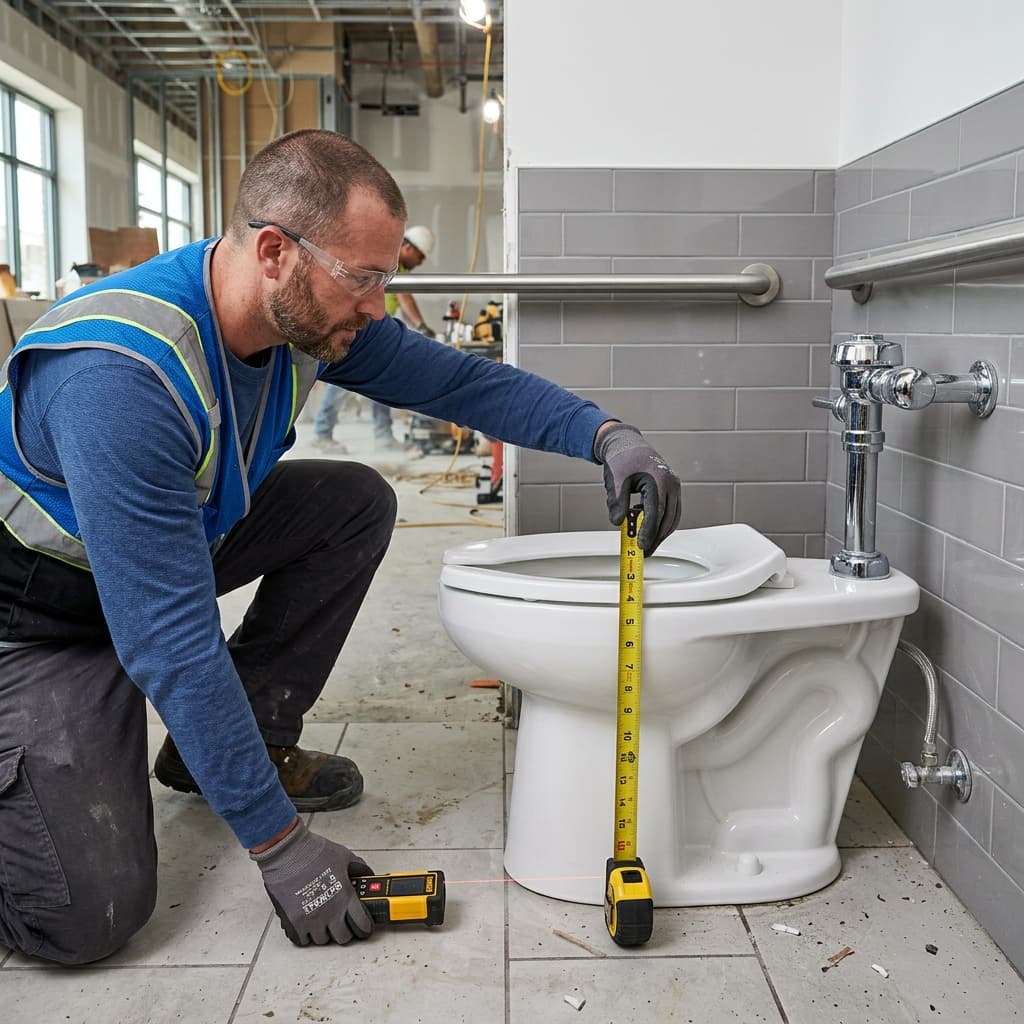
# California Plumbing Code Section 422: ADA Compliance Requirements for C-36 Exam
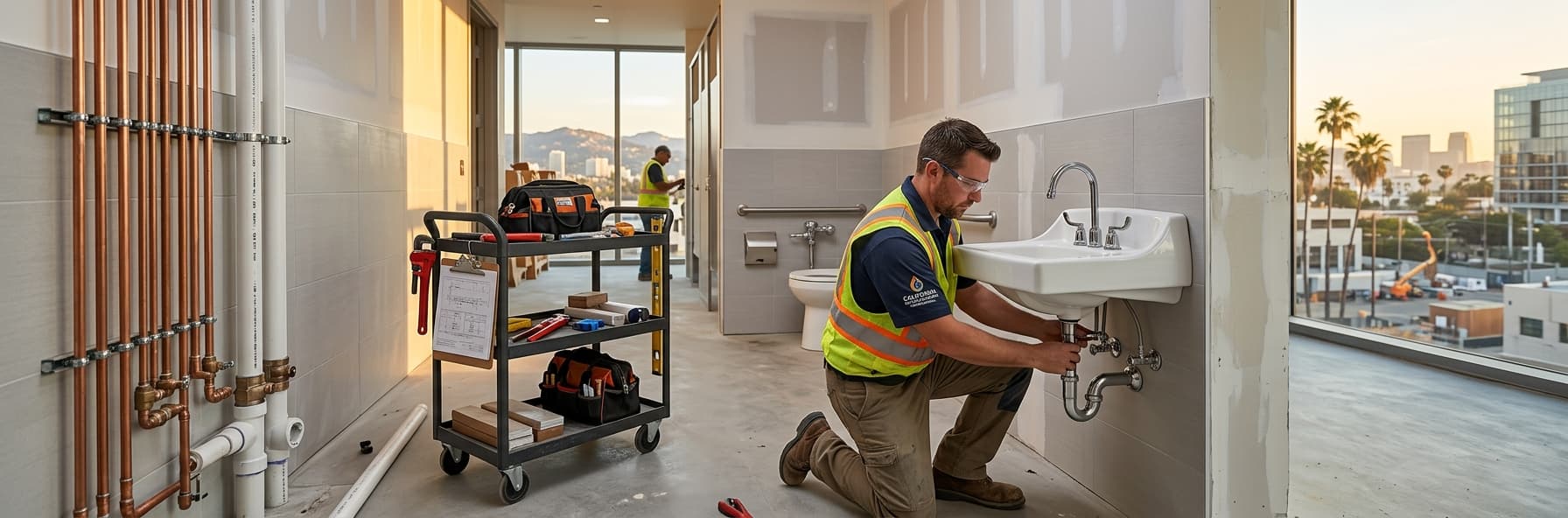
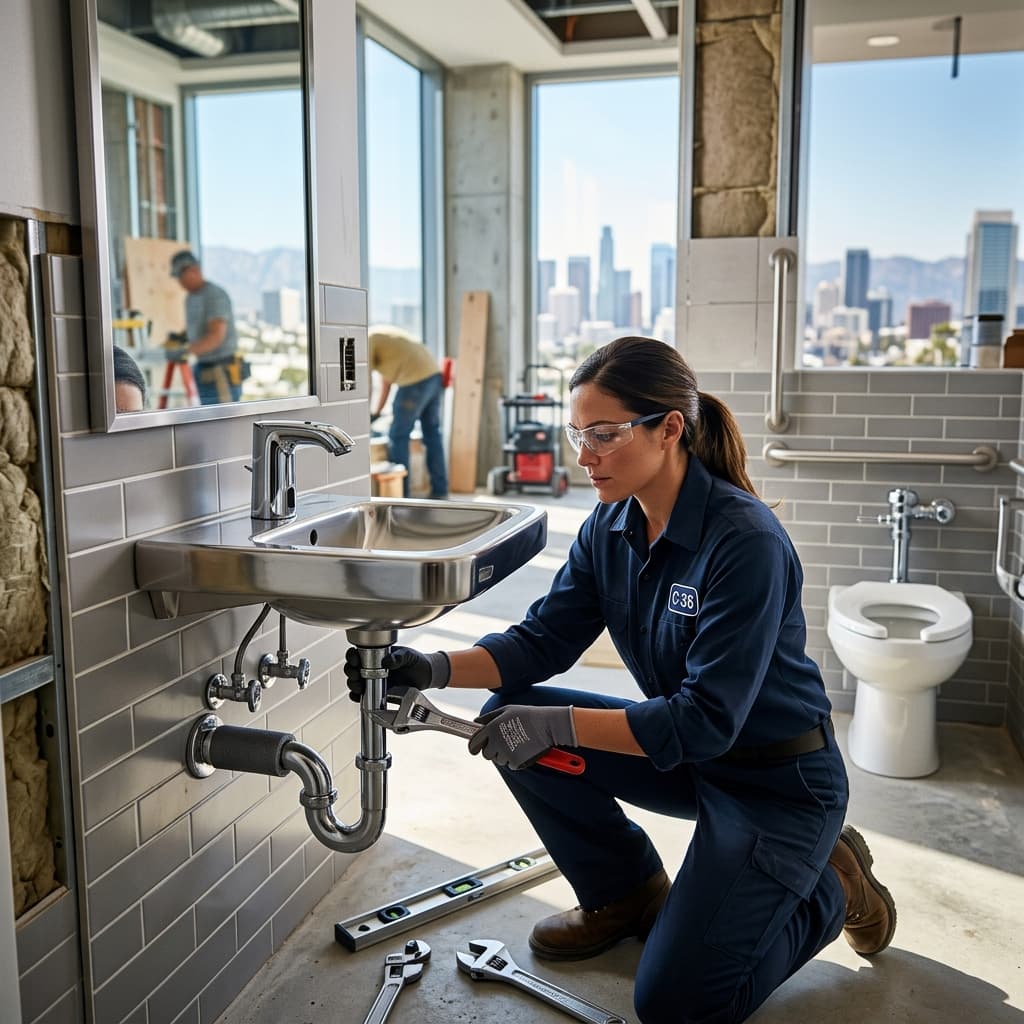
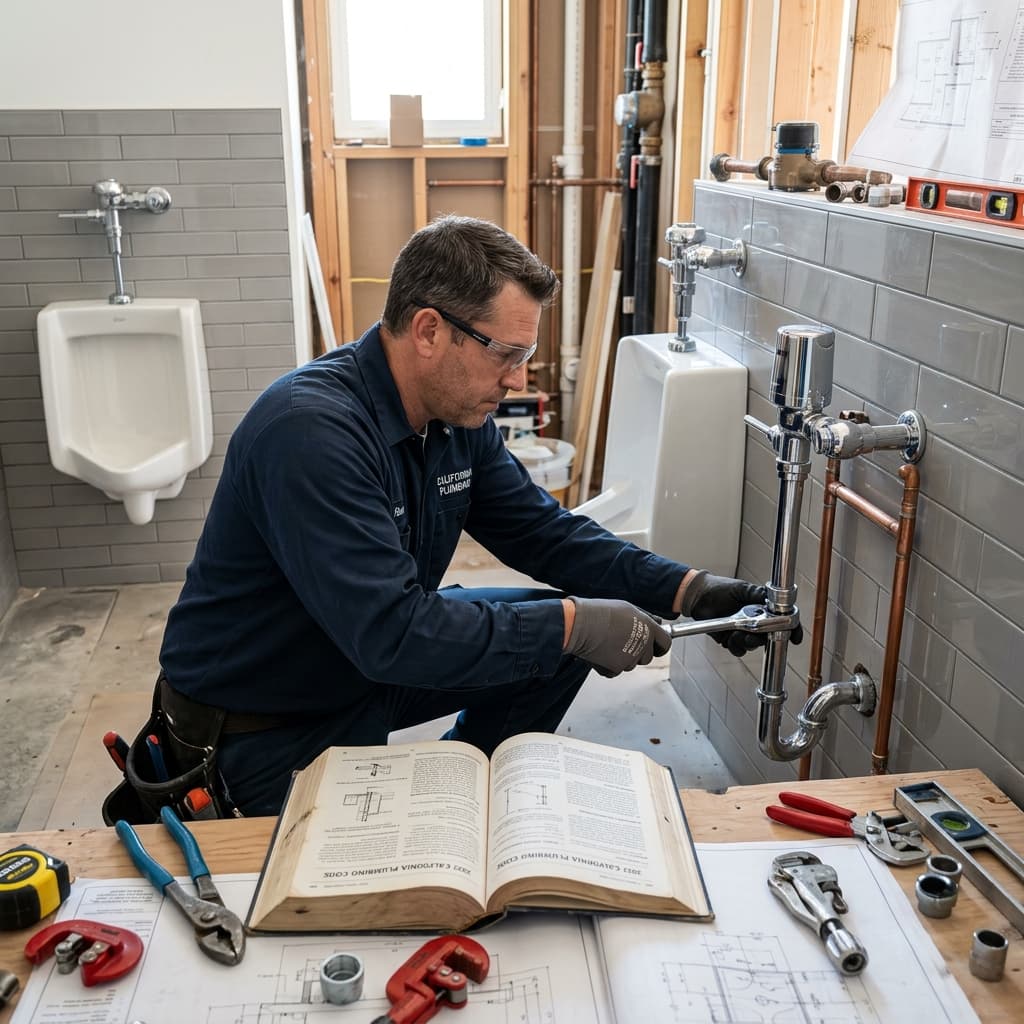
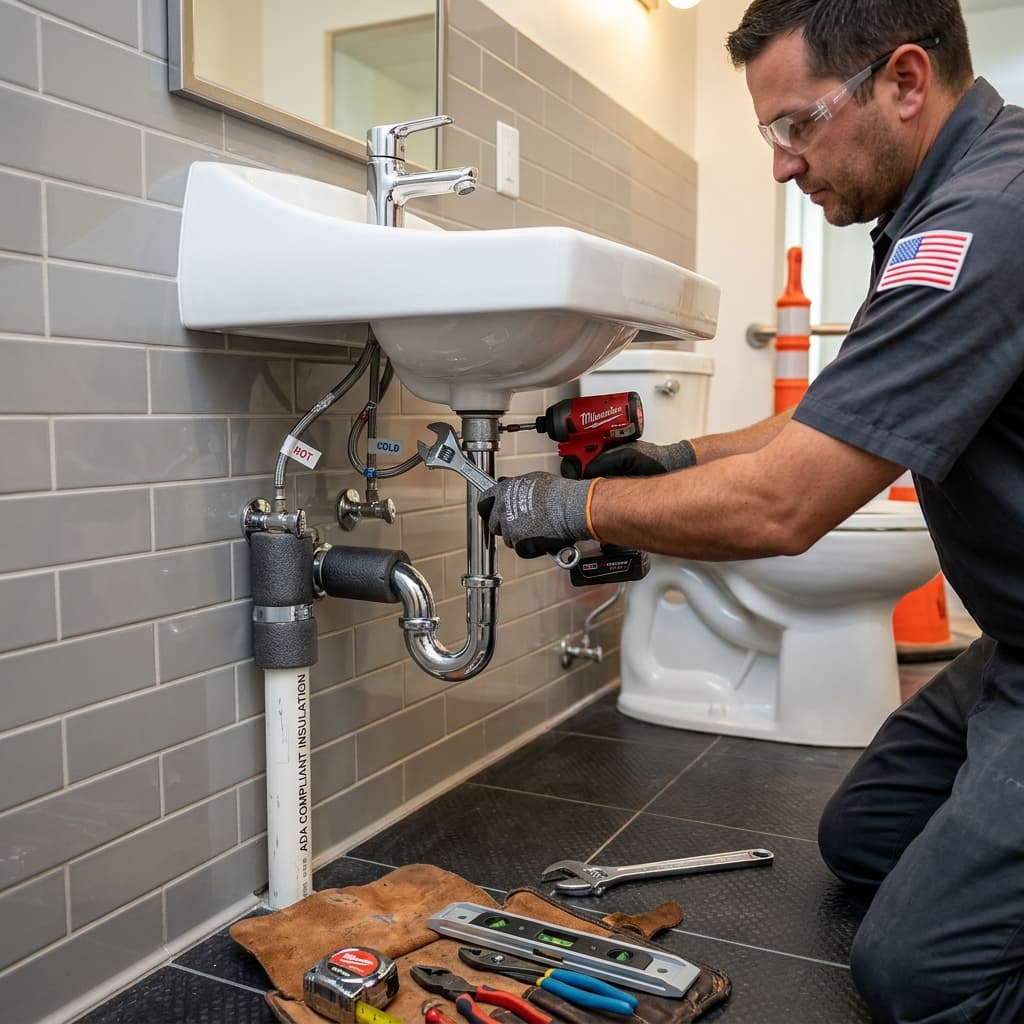
California Plumbing Code Section 422 establishes comprehensive accessibility requirements for plumbing fixtures in public accommodations, commercial facilities, and multi-family residential buildings. For C-36 plumbing license candidates, mastering these ADA compliance standards is critical for exam success and professional practice.This guide explores the mandatory accessibility requirements, fixture specifications, and practical applications you'll encounter on your C-36 certification exam.
Understanding California Plumbing Code Section 422 Fundamentals
What Is Section 422?
California Plumbing Code Section 422 implements the Americans with Disabilities Act (ADA) Accessibility Guidelines (ADAAG) and California Title 24 Standards. This section defines how plumbing fixtures must be designed, installed, and positioned to accommodate individuals with disabilities.
Key principle: All plumbing fixtures in public and common-use areas must be accessible to the maximum extent feasible without requiring modifications or special equipment.Scope of Application
Section 422 applies to:
- Public accommodations (restaurants, retail, offices, theaters)
- Commercial facilities (employee work areas, common use circulation paths)
- Multi-family dwellings (common use areas, accessible units)
- Alterations and additions to existing buildings
- New construction in all jurisdiction types
Accessible Lavatory and Sink Requirements
Mounting Heights and Clearances
One of the most tested Section 422 topics involves lavatory installation specifications:
Standard mounting height: Lavatories must have rims mounted between 32 and 43 inches above the finished floor. The optimal height for accessibility is 34 inches. Knee clearance requirements:- Minimum clearance beneath sink: 27 inches high
- Minimum depth of knee space: 19 inches from wall
- Minimum width: 30 inches
Faucet Specifications
According to CPC Section 422.2, faucet controls must be:
- Lever-type, push-button, or electronic sensors
- Located within reach ranges (15-48 inches from floor, 20-48 inches from side approach)
- Operable with a single hand without tight grasping, pinching, or twisting of wrist
- Require no more than 5 pounds of force to operate
Water Closet Accessibility Standards
Stall Dimensions and Heights
Accessible water closets require specific spatial configurations tested extensively on C-36 exams:
Standard stall dimensions:- Minimum width: 60 inches (measured wall to wall)
- Minimum depth: 56 inches (measured from stall door to back wall)
- Seat height: 17-19 inches above finished floor (including toilet seat)
- Rear wall grab bar: 42 inches long minimum, located 6-12 inches above toilet seat
- Side wall grab bar: 42 inches minimum length, mounted 33-36 inches above finished floor
- Bar diameter: 1.25-1.5 inches with 1.5-inch clearance from wall
Stall Approach and Maneuvering
Clear floor space for approach must be:- Minimum 60 inches wide and 56 inches deep
- Located perpendicular to the water closet
- Extend to the full depth of the stall
Urinal Accessibility Requirements
Height and Clearance Specifications
Section 422 establishes specific requirements for accessible urinals:
Rim height: 17-19 inches above finished floor (same as water closet seats) Clear floor space:- 30 inches minimum width
- 48 inches minimum depth
- Allows for front or side approach
- Mounted 33-36 inches above finished floor
- Minimum 24 inches length
- Located 12 inches from centerline of urinal
Sink and Drinking Fountain Accessibility
Accessible Sink Specifications
Beyond lavatories, Section 422 addresses utility sinks, bar sinks, and other sink types:
Mounting requirements:- Maximum rim height: 34 inches above finished floor
- Knee clearance: 27 inches high, 19 inches deep minimum
- Accessible control location: Within 15-48 inch reach range
- Spout must extend 4-6 inches into sink from front edge
- Located to allow approach from wheelchair
Drinking Fountain Accessibility
Mounted height:- 36-43 inches from floor to spout outlet (standing users)
- 27-30 inches from floor to spout outlet (wheelchair users)
- When single fountain serves both, must provide dual heights
- Water stream arc: 4 inches minimum height
- Controls: Mounted on front or side (no rear-mounted controls)
- Bottle filling capability required (minimum 6-inch clearance below spout)
Accessible Bathroom Stall Configurations
Standard Accessible Stall
The standard accessible stall is the most common configuration on C-36 exams: Dimensions:- 60-inch minimum width
- 56-inch minimum depth
- 84-inch minimum height
- 32-inch minimum clear opening (measured at 60 inches height)
- Swing into stall preferred to maximize interior clear floor space
- Accessible hardware (lever handles, easy-to-operate latches)
Alternative Accessible Stall Configurations
CPC Section 422.4 permits alternate configurations:
Compartment stalls (front-approach):- 60-inch minimum width
- 53-inch minimum depth
- Grab bar locations modified for front approach
- 56-inch minimum width
- 60-inch minimum depth
- Grab bar positioning adjusted for side transfer approach
Emergency Showers and Eyewash Stations
Accessibility for Emergency Safety Equipment
Section 422 requires emergency showers and eyewash stations to be accessible:
Shower head height:- Operable controls: 38-48 inches above floor
- Controls must be accessible from standing and seated positions
- Lever-operated, push-button, or automatic sensors
- Located in common use areas where hazardous materials are present
- Operable height: 32-48 inches
- Adjacent clear floor space: 30 × 48 inches minimum
Reach Ranges and Approach Spaces
Forward Reach Requirements
CPC Section 308.2.1 defines forward reach ranges for accessible features:
From standing position:- Minimum 15 inches above floor
- Maximum 48 inches above floor
- Optimal range: 36-42 inches for most users
- Minimum 20 inches above floor
- Maximum 48 inches above floor
- Must provide at least 9 inches toe clearance
Side Reach Requirements
Side approach reach:- Minimum 15 inches above floor
- Maximum 54 inches above floor
- Optimal range: 40-48 inches for accessible controls
Common Mistakes on C-36 Accessibility Questions
Height Specification Errors
Mistake #1: Confusing grab bar heights (33-36 inches) with toilet seat heights (17-19 inches). Exam questions frequently test these distinct requirements. Mistake #2: Installing lavatory rims at 42 inches instead of the 32-43 inch range. While 42 inches is within range, 34 inches is the optimal accessibility height.Clearance Confusion
Mistake #3: Providing 18-inch knee clearance instead of the required 19 inches. These precise measurements are deliberately tested. Mistake #4: Misunderstanding the difference between clear floor space (unobstructed approach area) and knee clearance (space beneath fixtures). These are distinct requirements.Grab Bar Failures
Mistake #5: Installing grab bars on the wrong wall or at incorrect distances from the water closet. Section 422 specifies 6-12 inches above the toilet seat on rear walls and 33-36 inches on side walls. Mistake #6: Forgetting that grab bars must be continuous without breaks and support 250 pounds of concentrated load.ADA Compliance Documentation and Inspections
Permit Applications and Plans
When applying for permits involving Section 422 compliance:
- Accessibility schedules must accompany construction documents
- Dimensions clearly marked on all accessible fixtures
- Details showing grab bar locations and spacing
- Equipment specifications (faucet types, controls, materials)
Inspection Checkpoints
Building inspectors verify Section 422 compliance through:
- Height measurements using calibrated measuring devices
- Operational testing of faucets, valves, and controls
- Grab bar stability tests (applying 250-pound load)
- Clear floor space verification (no obstructions)
- Documentation review (manufacturer specifications, installation instructions)
Section 422 vs. Other California Codes
Relationship to Title 24
While California Plumbing Code Section 308.1 establishes basic fixture installation requirements, Section 422 adds accessibility overlays. Section 422 requirements supersede standard requirements when conflicts occur.Federal ADA Standards Hierarchy
The compliance hierarchy is:- California Plumbing Code Section 422 (most specific)
- California Title 24 Standards (state modifications)
- ADA Accessibility Guidelines (ADAAG) (federal baseline)
- IPC Standards (international baseline)
Study Strategies for Section 422 Exam Success
High-Probability Question Areas
Based on historical C-36 exams, focus on:
- Lavatory/sink mounting heights (34 inches optimal, 32-43 inch range)
- Grab bar specifications (height, length, load capacity)
- Water closet accessibility stall dimensions (60×56 minimum)
- Faucet control specifications (single-hand operation, 5-pound force maximum)
- Reach ranges (15-48 inch forward, 15-54 inch side)
Memory Techniques
Create mnemonics for frequently confused dimensions:
- "32-43 LAV" = Lavatory rim height range (32-43 inches)
- "34 OPTIMAL" = Best accessibility height (34 inches)
- "27 KNEES" = Knee clearance beneath fixtures (27 inches)
- "60×56 STALL" = Accessible water closet stall minimum (60 × 56 inches)
Practice Questions Framework
When answering practice questions on Section 422:
- Identify the fixture type (lavatory, water closet, urinal, etc.)
- Recall the specific height/dimension requirements
- Consider approach method (front, side, wheelchair, standing)
- Verify grab bar specifications if applicable
- Check for compliance with reach range requirements
Conclusion
California Plumbing Code Section 422 accessibility requirements represent a fundamental aspect of modern plumbing practice and C-36 exam content. The specific measurements, clearances, and operational standards established in Section 422 ensure that plumbing systems serve all building occupants safely and independently.
For C-36 candidates, mastery of these requirements demonstrates professional competence and commitment to universal design principles. By understanding the rationale behind each specification—not just memorizing dimensions—you'll answer exam questions with confidence and apply these standards effectively in your plumbing career.
Key takeaway: Section 422 isn't about memorizing random measurements; it's about understanding how to design and install plumbing systems that allow everyone, regardless of ability, to access facilities with dignity and independence.---
Need additional exam prep? Explore our comprehensive C-36 Plumbing License Exam Study Guide for integrated learning across all exam sections.