

# CPC Section 422: Bathroom and Laundry Fixture Installation Requirements for C-36 Exam
Understanding California Plumbing Code Section 422 is fundamental to passing the C-36 exam. This section establishes comprehensive standards for fixture installation that directly impact your ability to design compliant plumbing systems. Whether you're tackling fixture unit calculations or identifying installation requirements, mastery of Section 422 will strengthen your exam performance.Overview of CPC Section 422: Fixture Requirements
CPC Section 422 covers the installation requirements and standards for all plumbing fixtures used in buildings and structures. This section is critical because fixture specifications determine drainage capacity, water supply demands, and system design parameters.
Why Section 422 Matters for C-36 Candidates
The exam tests your knowledge of Section 422 through:
- Fixture unit value identification for various fixture types
- Installation requirement compliance questions
- Drain and supply sizing calculations based on fixture units
- Fixture classification and spacing standards
- Special requirements for commercial versus residential applications
Plumbing Fixture Unit Calculations
One of the most heavily tested concepts on the C-36 exam involves plumbing fixture unit calculations. CPC Section 422 assigns specific fixture unit values to each fixture type, and these values are essential for calculating drainage system capacity.Standard Fixture Unit Values
According to CPC Section 422.1, common fixture unit values include:
| Fixture Type | Fixture Units (DFU) | Notes | |---|---|---| | Water closet (toilet) | 4 | Most demanding fixture | | Lavatory (sink) | 1 | Standard bathroom sink | | Bathtub/shower | 2 | Single drain connection | | Kitchen sink (single) | 2 | Commercial varies | | Washing machine | 2 | Automatic washer | | Floor drain | 1 | Minimum fixture unit | | Bidet | 1 | Low-flow fixture | | Dishwasher | 2 | Commercial grade |
Calculating Total Fixture Units
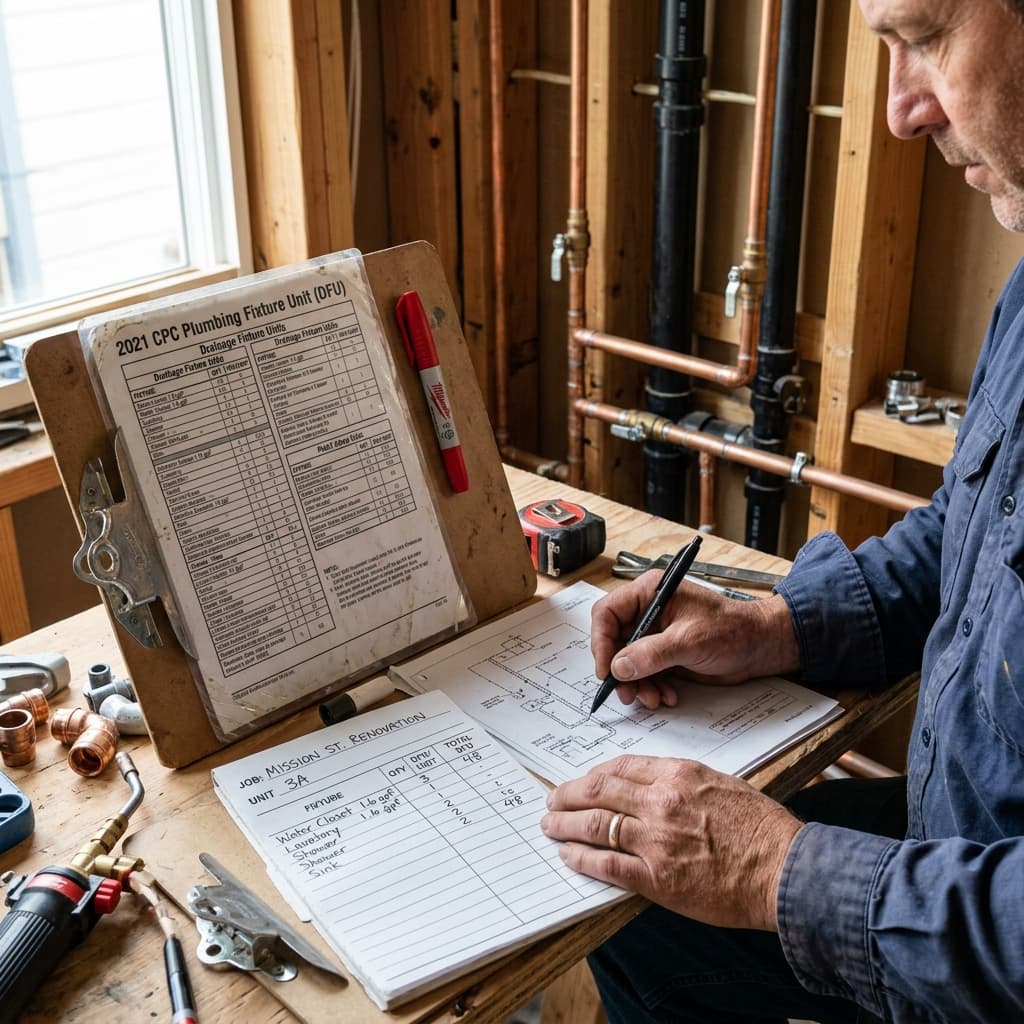
Exam Tip: When you see a question asking "What is the total fixture unit load for a 3-bathroom residential home with 2 kitchen sinks and a washing machine?" follow this calculation method: Example Calculation:- 3 bathrooms × 1 water closet (4 DFU) = 12 DFU
- 3 bathrooms × 1 lavatory (1 DFU) = 3 DFU
- 3 bathrooms × 1 bathtub (2 DFU) = 6 DFU
- 2 kitchen sinks × 2 DFU = 4 DFU
- 1 washing machine = 2 DFU
- Total = 27 Fixture Units
Bathroom Fixture Installation Requirements
Bathroom fixture installation requirements in California differ across residential and commercial applications. CPC Section 422 specifies spacing, support, slope, and material standards.Toilet Installation Standards
According to CPC Section 422, water closets must:
- Be installed on a solid, level surface
- Have adequate clearance for maintenance (minimum 15 inches from wall centerline)
- Connect to a 3-inch or 4-inch drain line (depending on fixture units served)
- Include a shutoff valve within 12 inches of the connection point
- Feature a trap with a minimum 2-inch seal depth
Lavatory and Sink Installation
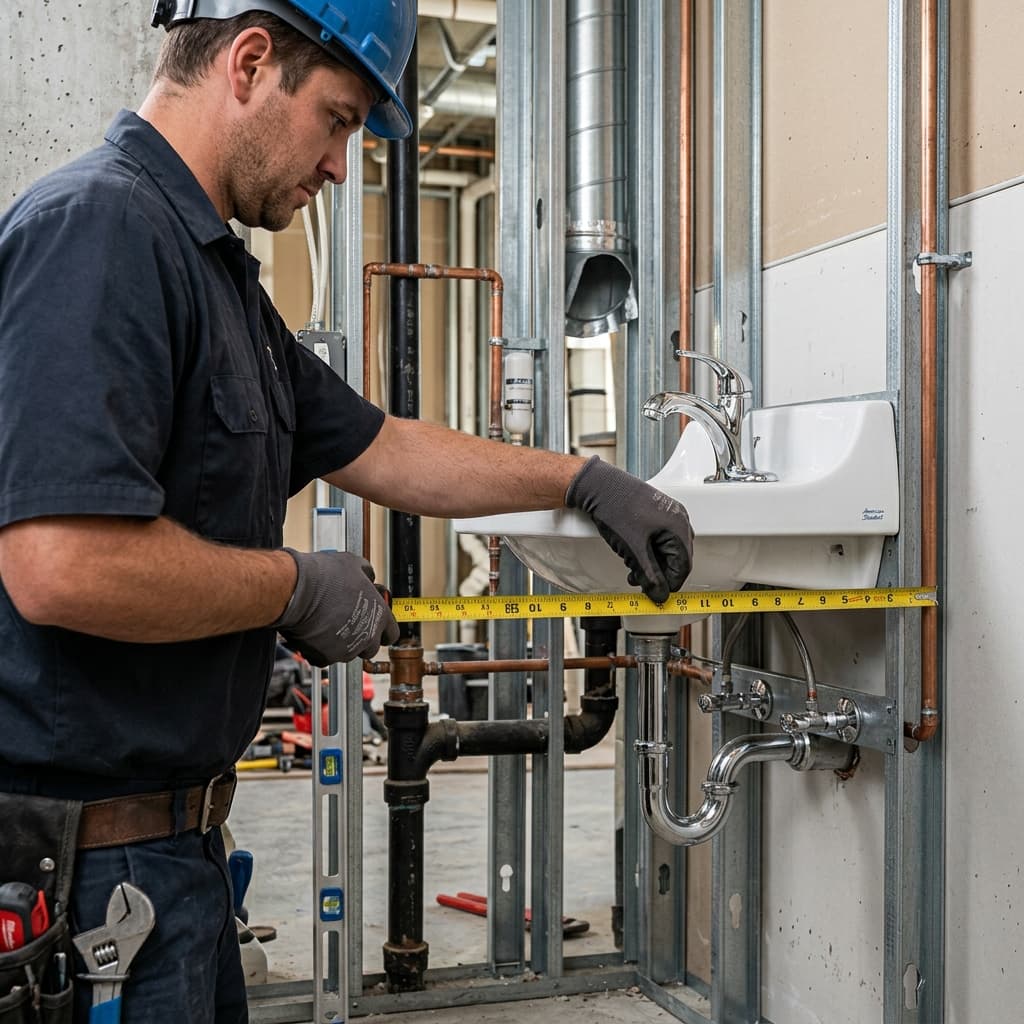
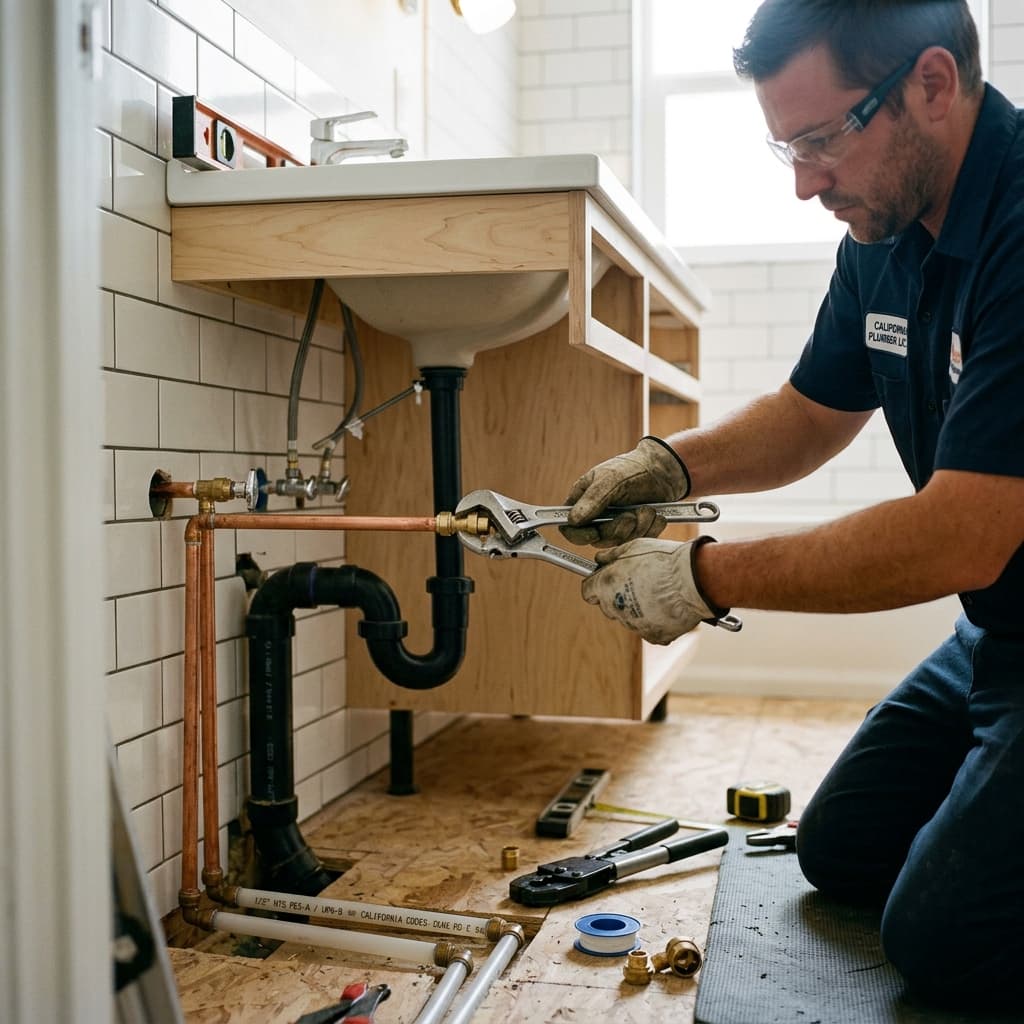
Lavatories and sinks must comply with CPC Section 422 requirements including:
- Trap location: Within 24 inches of the drain opening (CPC Section 309.3)
- Slope: Minimum 1/4 inch per foot toward the drain
- Rim height: Generally 30-36 inches from finished floor
- Support: Adequate support for fixture weight plus usage loads
- P-trap configuration: Properly sealed with water remaining in trap
Bathtub and Shower Installation
Bathtub and shower fixtures require specific installation standards:
- Drain connection to 2-inch or larger trap
- Anti-scald valve installation (mandatory in California)
- Access for cleaning and maintenance
- Proper slope of 1/4 inch per foot minimum
- Waterproofing of surrounding wall and floor areas (building code requirement)
Laundry Fixture Requirements California
Laundry fixture requirements in California present unique challenges because washing machines generate significant drainage demand and water volume. CPC Section 422 addresses these fixtures specifically.Washing Machine Specifications
Automatic washing machines are assigned 2 fixture units per CPC Section 422.1. Key installation requirements include:- Drain line size: Minimum 2-inch drain
- Trap and vent: Must be properly trapped and vented per CPC Section 308
- Drain outlet height: Between 24-48 inches above the trap seal (prevents siphonage)
- Standpipe: Many installations use a 2-inch standpipe (minimum 24 inches height, maximum 48 inches)
- Supply lines: Both hot and cold water with individual shutoff valves
Laundry Tub or Utility Sink
If a laundry room includes a sink or tub (in addition to washing machine):
- Assign 1 fixture unit (CPC Section 422.1)
- Install separate trap if not combined with washer drain
- Ensure adequate slope and support
- Locate shutoff valve within accessible distance
Common Installation Error
Exam Alert: A frequent mistake is improper standpipe height. If the standpipe extends below the washing machine discharge height, you'll get trap seal loss and siphonage problems. Always verify standpipe installation heights are between 24-48 inches above the trap weir.Fixture Classification and Spacing Standards
CPC Section 422 classifies fixtures into categories based on their function and drainage demand.
Fixture Categories
- Water Supply Fixtures
- Drainage Fixtures
- Combination Fixtures
Spacing Requirements
CPC Section 422 requires adequate spacing between fixtures for:
- Access and maintenance
- Installation and repair
- Proper operation
- Cleaning and sanitation
- 15 inches minimum from toilet centerline to adjacent fixture
- 21 inches minimum clearance in front of toilet
- Adequate distance between fixtures for proper use
Supply Line Sizing for Fixtures
Understanding fixture water supply demands is equally important as drainage calculations for C-36 success.
Fixture Supply Demand Values
CPC Section 422 also addresses water supply through fixture supply demand values:
- Toilet: 0.5 GPM (gallons per minute) supply demand
- Lavatory: 0.5 GPM
- Bathtub/shower: 2.0-2.5 GPM
- Kitchen sink: 1.5-2.0 GPM
- Washing machine: 2.0-2.5 GPM
Trap and Vent Requirements by Fixture Type
Each fixture type has specific trap and vent requirements defined in CPC Section 422 and related sections.
Trap Seals
- Minimum seal depth: 2 inches (CPC Section 309.2)
- Maximum seal depth: 4 inches (CPC Section 309.2)
- Trap arm: Cannot exceed 6 feet for 2-inch trap, 10 feet for 3-inch trap
Venting Requirements
- Every fixture must be vented (CPC Section 308)
- Vent must be within specific distances based on trap size and drain slope
- Wet venting allowed under CPC Section 308.4 (bathroom groups)
Special Fixture Installation Considerations
Combination Fixtures and Rough-in Planning
When designing bathrooms with multiple fixtures:
- Calculate total fixture units
- Size drain line accordingly
- Plan vent locations and sizes
- Ensure proper slope throughout
Commercial vs. Residential Requirements
CPC Section 422 includes provisions for both residential and commercial installations:
Residential bathrooms typically allow:- Single vent for multiple fixtures (wet venting under CPC Section 308.4)
- Standard trap and vent sizing
- Individual shutoff valves
- Individual venting for most fixtures
- Larger capacity planning
- More rigorous accessibility standards
- Higher-grade materials in some cases
Common C-36 Exam Questions on Section 422
Sample Question 1: Fixture Unit Calculation
"A 4-unit apartment complex has 4 units, each with 1 bathroom (toilet, lavatory, bathtub), 1 kitchen sink, and shared laundry area with 2 washers. What is the total fixture unit load?" Solution:- 4 toilets × 4 = 16 DFU
- 4 lavatories × 1 = 4 DFU
- 4 bathtubs × 2 = 8 DFU
- 4 kitchen sinks × 2 = 8 DFU
- 2 washers × 2 = 4 DFU
- Total: 40 DFU
Sample Question 2: Installation Requirements
"What is the maximum distance from a lavatory trap to the drain opening per CPC Section 309?" Answer: 24 inchesSample Question 3: Laundry Fixture Spacing
"A washing machine standpipe must be what height above the trap seal?" Answer: Minimum 24 inches, maximum 48 inches per CPC Section 422Key Section 422 Takeaways for Exam Success
- Memorize fixture unit values - These appear on nearly every C-36 exam
- Understand trap and vent relationships - Section 422 works with Sections 308 and 309
- Calculate total fixture loads - Multi-fixture problems are common exam questions
- Know installation spacing requirements - Especially for toilets and bathroom groups
- Distinguish residential from commercial - Different requirements apply to each
Practical Application in the Field
Understanding CPC Section 422 isn't just for passing the exam—it's essential for real-world plumbing work. Proper fixture installation ensures:
- System longevity and reliability
- Compliance with California building standards
- Prevention of callbacks and warranty issues
- Professional credibility with customers and inspectors
Study Tips for Section 422 Mastery
- Create flashcards with fixture unit values
- Practice calculation problems with multiple fixtures
- Review code tables in CPC Section 422
- Compare installation requirements across fixture types
- Study past exam questions focusing on Section 422 topics
Conclusion
CPC Section 422 represents fundamental knowledge every C-36 candidate must master. From fixture unit calculations that determine drainage capacity to specific installation requirements that ensure system functionality, this section forms the backbone of plumbing design and installation standards in California.
Focus your study efforts on understanding not just the "what" but the "why" behind each requirement. When you understand that fixture units reflect drainage demand, or that trap seals prevent sewer gas intrusion, the seemingly arbitrary specifications become logical and memorable.
Your success on the C-36 exam depends heavily on Section 422 proficiency. With dedicated study and practical understanding, you'll approach these questions confidently and correctly.
---META_SECTION--- Related Articles:- CPC Section 308: Vent System Requirements
- CPC Section 309: Traps and Cleanouts
- Drain Sizing Calculations Guide
- C-36 Exam Part 2 Study Guide
- CPC Section 422.1 - Fixture Unit Tables
- California Plumbing Code Appendix A - Fixture Unit Demand Values
- Sample calculation worksheets
- Interactive fixture identification quizzes