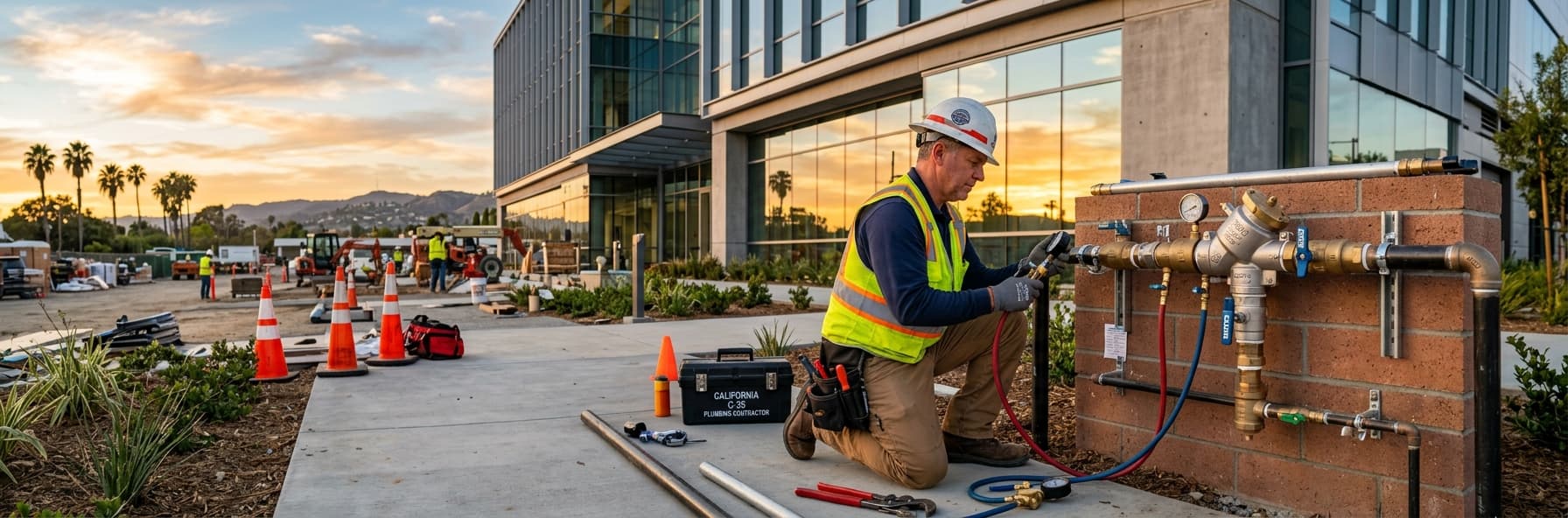
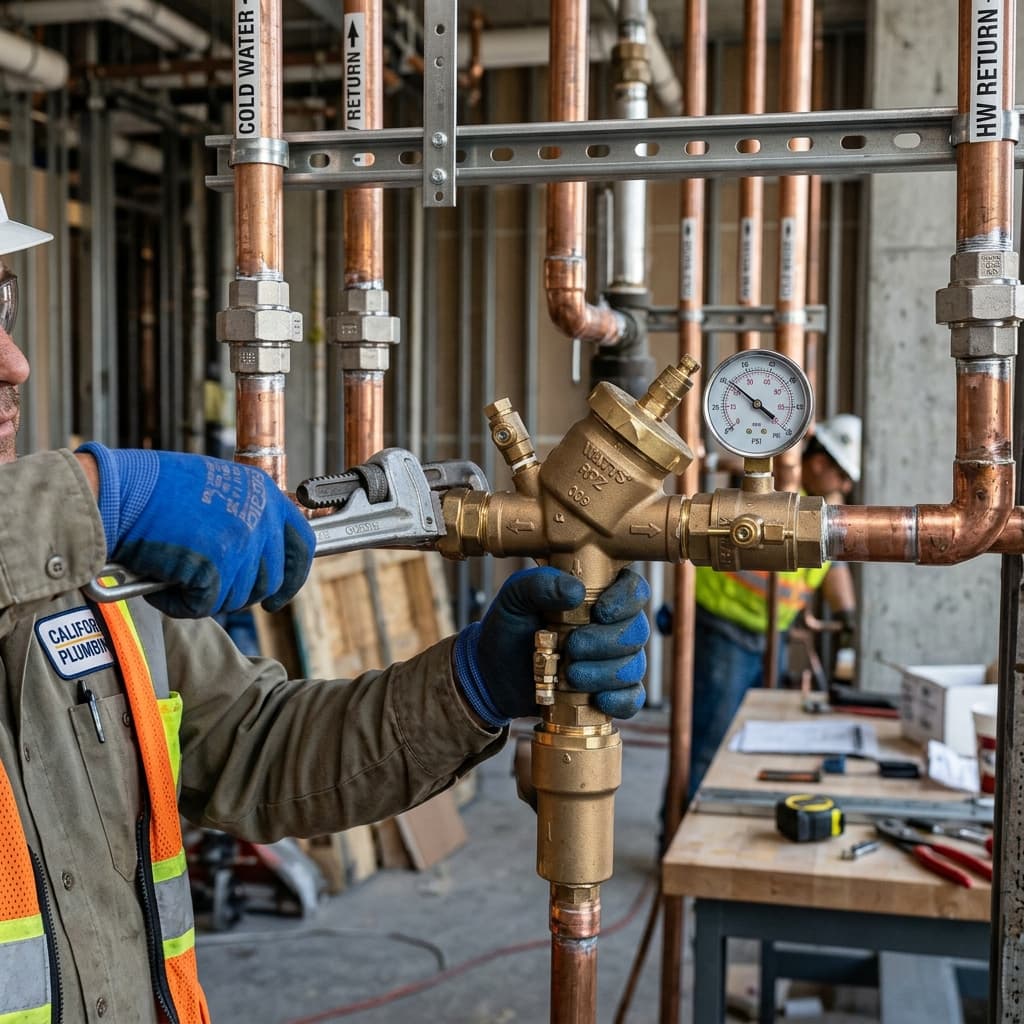

# Backflow Prevention Device Installation and Testing Requirements for C-36 Exam Success
Introduction: Why Backflow Prevention Matters on Your C-36 Exam
Backflow prevention california plumbing code requirements represent one of the most critical safety topics you'll encounter on the California C-36 plumbing contractor license exam. If you're preparing for Part 3: Water Supply and Distribution, understanding CPC Section 608 backflow prevention is non-negotiable for exam success and, more importantly, for protecting public health. Backflow occurs when contaminated water flows backward into the potable water supply system—a serious health hazard. The California Plumbing Code mandates specific devices and testing procedures to prevent this dangerous situation. This comprehensive guide will walk you through everything you need to know to pass your C-36 plumbing exam requirements and maintain professional competency.Understanding Backflow: The Fundamentals
Before diving into installation and testing specifics, you need a solid understanding of what backflow is and why it matters.
What Is Backflow?
Backflow is the undesired reverse flow of water or other liquids, mixtures, or substances into the distribution pipes of a potable water supply. This can occur through two mechanisms:
Backsiphonage: When pressure in the supply line drops below atmospheric pressure, creating a vacuum that pulls contaminated water backward into the system. Back Pressure: When downstream pressure exceeds upstream pressure, forcing contaminated water to flow backward into the potable supply.Why the Code Requires Prevention
California recognizes that backflow events pose serious public health risks. Contamination from commercial, industrial, or residential sources can sicken thousands of people. The state's response is straightforward: require proper backflow prevention devices at critical points in water systems.
CPC Section 608: Core Requirements Overview
CPC Section 608 Backflow Prevention establishes the legal framework for all backflow prevention in California. Here are the essential sections you'll see referenced on your C-36 exam:CPC Section 608.1: General Requirements
This section establishes that:- All potable water supplies shall be protected against backflow
- Protection must be provided at the point of service (building inlet)
- Protection must be installed at each point where contamination is likely
CPC Section 608.2: Protection of Individual Water Supplies
Individual water supplies—those serving single buildings or premises—must have backflow prevention devices that meet specific standards.
CPC Section 608.3: Air Gap Requirements
Air gaps (physical separations between potable and non-potable sources) must maintain a vertical distance of at least twice the diameter of the inlet pipe, with a minimum of 1 inch separation.
Types of Backflow Prevention Devices
The C-36 plumbing exam requirements will test your knowledge of device types. You must know when each device is appropriate and their installation specifications.Air Gap (Most Reliable)
An air gap is the most reliable backflow prevention method. It consists of a physical separation between a potable water outlet and potential contamination sources.
Characteristics:- No mechanical parts to fail
- Requires minimum 1-inch vertical separation (or 2× inlet pipe diameter, whichever is greater)
- Cannot be submerged
- Examples: Faucet positioned above sink rim, overflow pipe from tank to floor drain
Reduced Pressure Principle Backflow Preventer (RP)
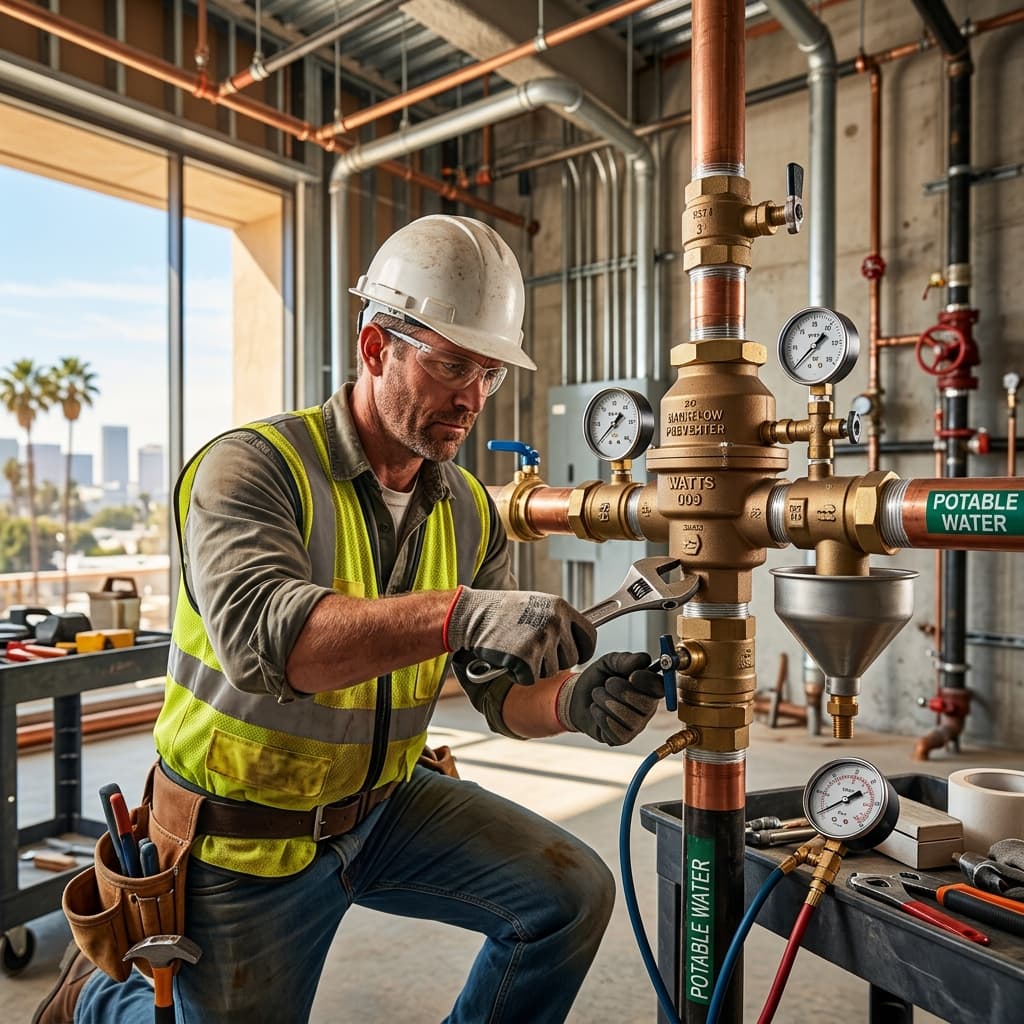
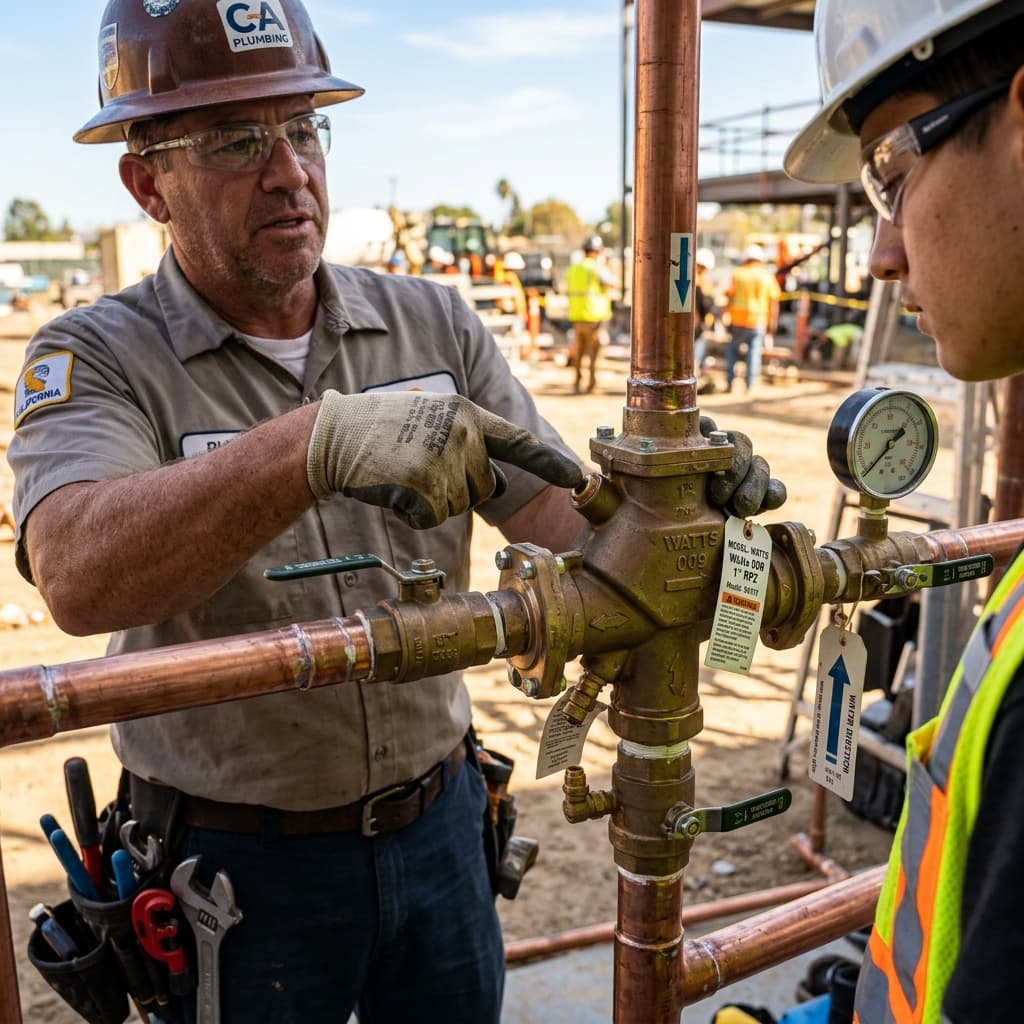
The Reduced Pressure Principle device is a mechanical backflow preventer with two check valves and a relief valve.
Characteristics:- Maintains pressure between the two check valves at 2-3 PSI below supply pressure
- If either check valve fails, the relief valve automatically drains the system
- Required downstream of irrigation systems, boiler fill connections, and chemical injection points
- Must be installed with isolating ball valves on inlet and outlet
- Requires accessible location for testing (typically at property line or building perimeter)
- Horizontal orientation preferred
- Minimum 12 inches of clearance below device for test cock access
- Drains to atmosphere (not into sewer)
- Annual testing required
Double Check Valve Backflow Preventer (DC)
The Double Check Valve assembly consists of two independently operating check valves with shutoff valves on inlet and outlet sides.
Characteristics:- Less expensive than RP devices
- Acceptable for lower hazard situations (CPC Section 608.13.3)
- Examples: lawn irrigation systems in residential settings, fire sprinkler systems
- Requires test cocks for inspection and testing
- Annual testing required
Pressure Vacuum Breaker (PVB)
The Pressure Vacuum Breaker prevents backsiphonage by allowing air to enter the system if pressure drops.
Characteristics:- No relief valve (cannot prevent back pressure)
- Cannot be used where back pressure is possible
- Typically installed on hose bibs, lawn sprinkler systems, and similar equipment
- Must be installed at least 12 inches above the highest point of use
- Requires annual testing and maintenance
Combination Pressure and Vacuum Breaker (SVB)
Also called Spill-Resistant Vacuum Breaker, this device prevents backsiphonage without creating overflow.
Characteristics:- More compact than standard vacuum breakers
- Integral check valve and relief mechanism
- Suitable for sinks and similar low-hazard cross-connections
- Lower cost than other mechanical devices
- Requires testing per manufacturer specifications
Installation Requirements: What Your C-36 Exam Will Cover
Point of Installation
Understanding where to install backflow prevention devices is crucial for exam success.
CPC Section 608.2 requires protection at:- The point of service (building water meter connection)
- Individual appliance connections where cross-connection risk exists
- Each point where hazardous contamination is likely
- Building Service Line: Main backflow preventer protecting entire building
- Irrigation Systems: RP or DC device at valve controlling system
- Boiler Fill: RP device preventing contaminated water return
- Lab Wastewater Connections: RP device in high-hazard situations
- Hose Bibs: SVB or PVB at each outdoor outlet
- Fire Sprinkler Systems: DC or RP device (depends on hazard level)
Installation Standards
Your exam will test knowledge of proper installation practices:
Orientation: Horizontal installation is preferred for mechanical devices. Vertical installation may be acceptable but requires verification that all test cocks remain accessible. Clearance: Maintain minimum 12 inches of clearance below devices for test cock access. This requirement applies to RP and DC devices. Isolation Valves: Install ball valves (not gate valves) on both inlet and outlet sides of mechanical backflow preventers. This allows for isolation during testing and maintenance. Drain Location: Relief drains must empty to atmosphere (typically at grade level or via clear drain line) and cannot connect to sanitary sewer systems under most circumstances. Check local jurisdiction requirements. Connection Quality: Use proper pipe materials and fittings. Ensure no leaks at connections that could allow contamination.Testing Requirements and Certification
This section represents a significant portion of the CPC section 608 backflow prevention content on your C-36 exam.Who Can Test Devices?
CPC Section 608.8 specifies that testing must be performed by:- State-certified cross-connection control specialists
- Licensed plumbing contractors
- Designated utility personnel
- Individuals certified by recognized testing programs
Testing Frequency
Annual testing is the standard requirement for all mechanical backflow prevention devices under CPC Section 608.8.1. Testing must be documented with certificates that include:- Date of test
- Device location and type
- Test results (Pass/Fail)
- Tester name and certification number
- Device manufacturer and serial number
- Maintenance actions taken, if any
Testing Procedures
While detailed testing procedures aren't typically required for C-36 exam success, understanding the general process demonstrates competency:
Reduced Pressure Device Testing:- Isolate device with ball valves
- Connect test kit to device test cocks
- Close outlet isolation valve
- Observe supply pressure and relief pressure
- Verify relief valve function by opening relief manually
- Check check valve seating
- Record results
- Isolate and connect test kit
- Apply pressure to inlet side
- Verify first check valve holds pressure
- Verify second check valve holds pressure
- Document pass/fail results
Common Testing Failures
Devices fail testing for several reasons:
- Check valve seat deterioration: Corrosion or mineral deposits prevent proper sealing
- Relief valve malfunction: Valve stuck open or unable to function
- Contamination: Foreign material in valve
- Pressure differential problems: Device cannot maintain required pressure differential
Hazard Assessment: Determining Device Requirements
CPC Section 608.13 classifies cross-connections by hazard level. Your exam will require understanding these classifications.
High-Hazard Cross-Connections
High-hazard situations involve potential contact with substances that could cause serious illness or death:
- Medical gas systems
- Reclaimed water connections
- Chemical injection systems
- Laboratory wastewater
- Radioactive material handling
- Pesticide/herbicide application equipment
Low-Hazard Cross-Connections
Low-hazard situations involve potential contact with substances unlikely to cause serious health problems:
- Lawn irrigation systems (residential)
- Fire sprinkler systems (non-chemical)
- Hose bibs on single-family residences
- Appliance fill connections (washers, dishwashers)
Documentation and Record-Keeping
A critical aspect of plumbing contractor license exam study involves understanding documentation requirements.Contractor Responsibilities
As a licensed plumbing contractor, you must:
- Maintain records of all backflow devices installed (location, type, serial number)
- Ensure testing certificates are obtained and filed
- Notify property owners of testing requirements and results
- Maintain compliance with jurisdictional requirements
- Train employees on proper installation and testing procedures
Documentation Contents
Proper records should include:
- Device manufacturer and model number
- Serial number
- Installation date and location
- Test certificates with dates and results
- Maintenance or replacement history
- Isolating valve locations
- Drain line routing
- Property owner contact information
Common C-36 Exam Questions and Answers
Question Type 1: Device Selection
Scenario: A homeowner wants to install a lawn irrigation system in an area without reclaimed water service. What backflow prevention device is most appropriate? Answer: A Double Check Valve (DC) device or Pressure Vacuum Breaker (PVB) is acceptable. However, an air gap would be the most reliable option. Why: Lawn irrigation without reclaimed water represents a low-hazard cross-connection. An air gap exceeds code requirements and is always the safest choice.Question Type 2: Installation Requirements
Scenario: Where should a Reduced Pressure Principle device be installed on a residential boiler fill system? Answer: At the boiler fill connection, with isolation ball valves on inlet and outlet, minimum 12 inches of clearance below the device, and drain line to atmosphere. Why: This location protects against the specific hazard while allowing for testing and maintenance.Question Type 3: Testing and Compliance
Scenario: A backflow prevention device fails its annual testing. What must the contractor do? Answer: The device must be repaired or replaced immediately. The system cannot operate with a failed backflow preventer. A new test certificate must be obtained after repair/replacement. Why: Failed devices provide no protection against backflow contamination. Continued operation violates CPC Section 608 and creates liability.Jurisdictional Variations and Local Requirements
While the California Plumbing Code provides statewide standards, individual jurisdictions may impose additional requirements.
Checking Local Requirements
Before exam day and before each project, verify:
- Whether your jurisdiction requires backflow prevention device registration
- Testing frequency (some require testing more frequently than annual)
- Who is authorized to test devices in your jurisdiction
- Whether the jurisdiction maintains a certified tester list
- Specific requirements for relief drain discharge locations
- Variance procedures if standard devices cannot be installed
Maintaining Contractor Competency
Your C-36 license comes with the responsibility to stay current on backflow prevention requirements.
Continuing Education
Consider taking specialized cross-connection control courses to:- Deepen understanding of hazard assessment
- Learn latest device technologies
- Understand testing procedure updates
- Stay current with code revisions
- Develop specialized expertise for your market
Professional Certification
Many contractors pursue certification as cross-connection control specialists, which:- Enhances your qualifications
- Allows you to test devices personally
- Creates additional revenue opportunities
- Demonstrates commitment to public health
- Improves liability protection
Key Takeaways for C-36 Exam Success
As you prepare for your C-36 exam, remember these essential points about backflow prevention:
- CPC Section 608 is the foundational code section for all backflow prevention requirements in California
- Air gaps are always acceptable and represent the most reliable backflow prevention method
- Mechanical devices require annual testing and proper certification by qualified professionals
- Device selection depends on hazard level — high-hazard situations require RP devices; low-hazard can use DC, PVB, or air gaps
- Installation location is critical — devices must be positioned to protect specific cross-connections
- Documentation and record-keeping are essential contractor responsibilities
- Failed devices cannot remain in service — they must be immediately repaired or replaced
Preparing for Your Exam
To maximize your C-36 exam success on water supply and distribution questions:
- Review actual CPC Section 608 text multiple times
- Study device types, their characteristics, and appropriate applications
- Practice hazard assessment scenarios
- Memorize installation clearance and orientation requirements
- Understand testing frequency and certification requirements
- Review common installation violations and their corrections
Conclusion
Backflow prevention device installation and testing represents a crucial safety topic on the C-36 plumbing exam and in professional practice. By mastering CPC Section 608 requirements, understanding device types and applications, and staying current with testing and documentation practices, you'll be well-prepared for exam success and capable of protecting public water supplies throughout your career.
Your commitment to understanding and implementing proper backflow prevention demonstrates professional integrity and contributes to public health—the foundation of California's plumbing code and your responsibility as a licensed contractor.